



News:
Brokerage
Posted: June 24, 2013
Rosenthal joins CBRE Group, Inc. as an executive vice president in the debt & equity finance group
Shawn Rosenthal has joined CBRE Group, Inc.'s Midtown Manhattan office as an executive vice president in the debt & equity finance group.
Prior to joining CBRE, he was a senior executive at the Ackman-Ziff Real Estate Group, where he closed more than 90 transactions in excess of $3.9 billion. He was the winner of the Real Estate Board of New York's 2008 Edward S. Gordon Memorial Award for arranging $700 million of debt and equity financing for the acquisition of 650 Madison Ave. He was named one of Tomorrow's Leaders Under 45 in New York, by Real Estate Forum in 2013; one of the Forty-Under-Forty in 2010, by Real Estate Forum, and one of the Rising Stars in the Industry for 2006, by Real Estate Weekly.
Rosenthal arranged seven transactions in 2012, among them a $400 million refinancing of 452 Fifth Avenue, in New York City, and a $165 million acquisition loan for One South Wacker, in Chicago. Other notable transactions over the past few years include 1412 Broadway and 4 New York Plaza, in Manhattan; 1211 Connecticut Avenue, in Washington, DC, and The Waterfront at Pu'uloa, in Hawaii. Mr. Rosenthal is an expert in the senior and mezzanine debt markets and spends significant time on joint venture equity transactions. He often speaks on panels at industry conferences and writes articles on these topics, and recently authored a chapter of a Real Estate Capital Markets Handbook, a text used in European business schools.
"Shawn is a proven financing professional who has negotiated high-profile transactions with BlackRock and many notable private equity firms, as well as the Harbor Group and other sophisticated private real estate companies," said Matthew Van Buren, president, New York Tri-State Region, CBRE. "We are thrilled that he has chosen CBRE's global platform to expand his work. We're confident that he will be a valuable addition to our firm."
Before joining Ackman-Ziff, Rosenthal practiced real estate law at Thacher Proffitt and Wood for two years. He was an auditor and tax associate at KPMG prior to law school. He holds a Bachelor of Arts degree in Accounting and Economics from Queens College and a Juris Doctorate from New York University School of Law. He is a licensed attorney and C.P.A. in New York and the member of several real estate organizations including the Real Estate Board of New York, Urban Land Institute, International Council of Shopping Centers and National Multifamily Housing Council, as well as the New York State Bar Association.
Tags:
Brokerage
MORE FROM Brokerage
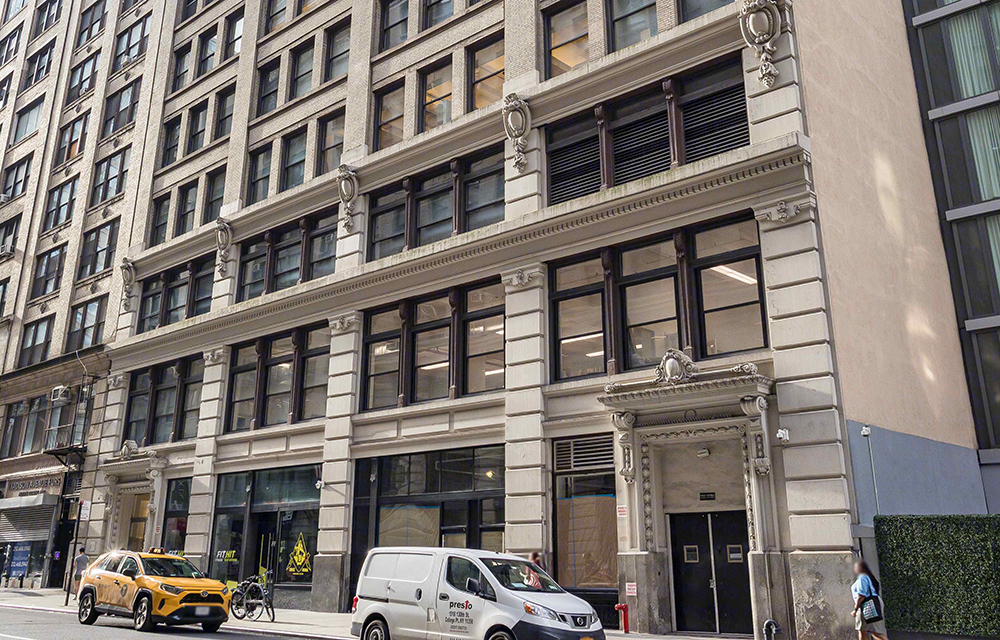
Koeppel Rosen inks 16-year 33,783 s/f lease for coworking firm Nomadworks at 122 West 27th St.
Manhattan, NY According to Koeppel Rosen LLC, leasing and management agent for the Rosen family portfolio, Nomadworks has signed a new 16-year, two-month lease totaling 33,783 s/f at 122 West




Quick Hits

Columns and Thought Leadership

Hunt commercial real estate question and answer: Fortune 500 wisdom - by David Hunt
Yes, there are lessons to be learned from the largest companies in America when comes to managing your real estate. But the decision to buy or lease real estate may not be one of
The art of investing in real estate - by Thomas Donovan
Real estate investing is as much an art as it is a skill. No one can time the market, or the factors that drive it, perfectly. Location, zoning, size, transportation, and neighborhood density give you a baseline for

New York’s streets are full again, and the retail numbers prove it - by Noam Aziz
Walk down any New York block this year and you can feel it. The sidewalks are crowded, the storefronts are lit, and the energy that defines this city is back at full volume.

Hunt CRE question and answer: Choosing a real estate agent - by David Hunt
First, we will only work with one agent exclusively. The primary reason is that we want that agent to legally represent our client’s interests. In New York State, a real estate agent has a fiduciary
.gif)