News: Brokerage

Rose Associates secures $158 million for development of 210 Livingston Street
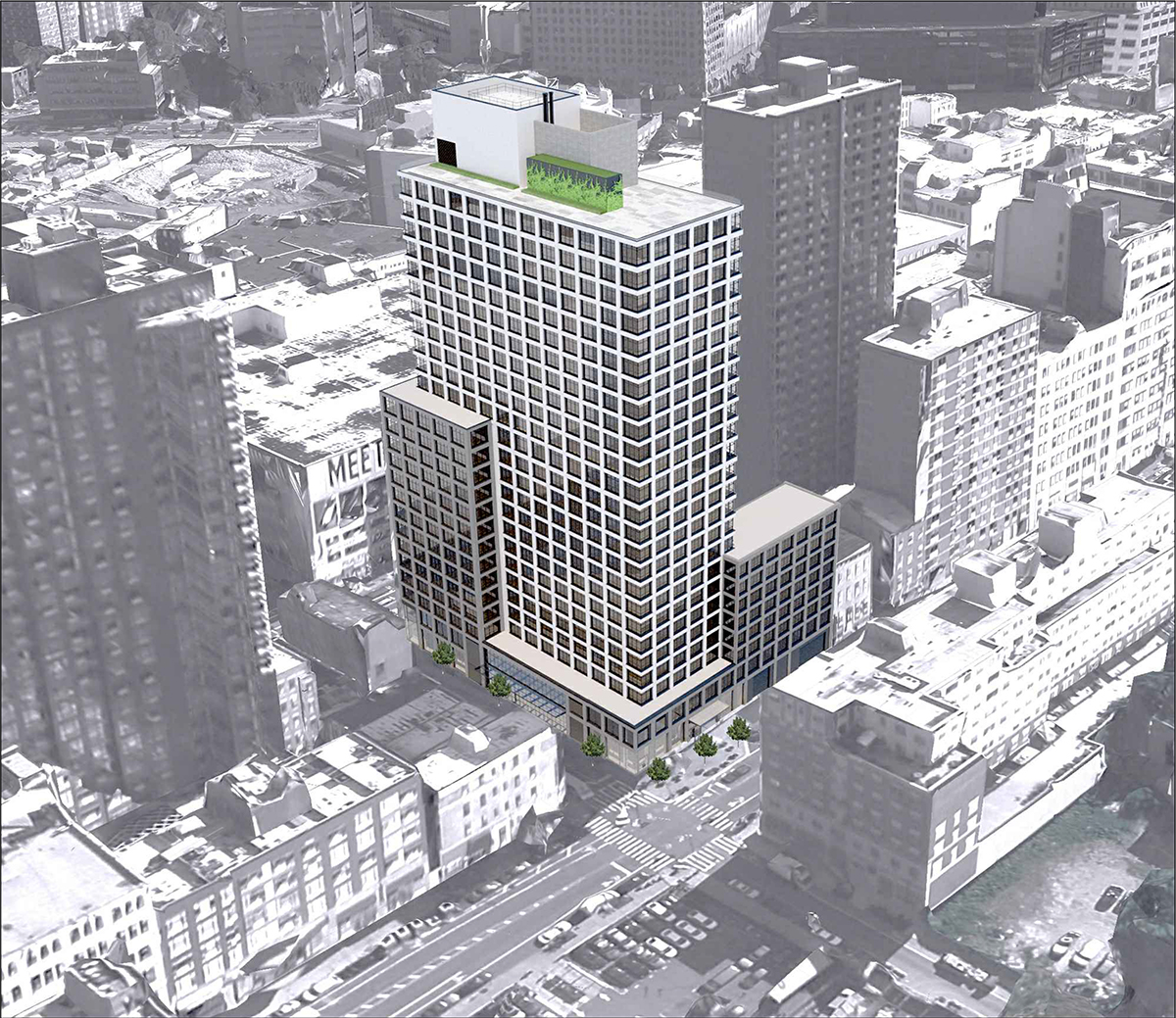
Rendering of 210 Livingston Street - Brooklyn, NY Rendering of 210 Livingston Street - Brooklyn, NY

New York, NY Rose Associates closed a $158 million loan for the construction of a residential property located at 210 Livingston St. being co-developed by Rose Associates and Benenson Capital Partners. The loan was funded by the issuance of bonds provided by the New York State Housing Finance Agency that were purchased by J.P. Morgan Chase and Sun Trust bank. An 80/20 development, the tower will be comprised of 294 market-rate apartments and 74 affordable units.
James Hedden, <a class=Rose Associates" width="150" height="150" /> James Hedden, Rose Associates
“We are thrilled to continue our involvement in the revitalization of downtown Brooklyn and proud to support NYC’s affordable housing programs,” said Greg Reimers, managing director and northeast market manager of real estate banking at J.P. Morgan Chase. “Our long-term clients, Benenson Capital Partners and Rose Associates, are bringing an exciting new development to this increasingly dynamic market.” Located between Hoyt and Bond Sts., 210 Livingston St. will be a 25-story tower with a total of 368 rental apartments. The building will include nearly 20,000 s/f of retail space along with an underground parking garage. Units will be offered in studio, one and two-bedroom configurations. “We have completed the design and pre-development work and are excited to begin construction with initial occupancy anticipated in late 2017,” said James Hedden, chief development officer of Rose Associates. “Brooklyn has become a destination and not just an alternative to Manhattan’s high rents.” Plans call for the creation of a new subway entrance within the building at the corner of Hoyt and Schermerhorn Sts. that will service the A, C and G lines. Tenants of 210 Livingston will have access to a resident club with lounges, a catering kitchen, bicycle storage, a fitness center, a landscaped terrace on the 15th floor and a finished rooftop with a grill area and sun deck. “We’re happy to be developing in Brooklyn and to be part of the evolution of the borough’s Downtown area,” said Richard Kessler, chief operating officer of Benenson Capital Partners. “The Benenson family is excited to be developing this property that has been in the family for nearly 50 years.”
READ ON THE GO
DIGITAL EDITIONS
Subscribe
Columns and Thought Leadership
Strategic pause - by Shallini Mehra and Chirag Doshi

Strategic pause - by Shallini Mehra and Chirag Doshi

Many investors are in a period of strategic pause as New York City’s mayoral race approaches. A major inflection point came with the Democratic primary victory of Zohran Mamdani, a staunch tenant advocate, with a progressive housing platform which supports rent freezes for rent
A fresh start - by Shallini Mehra and Amit Doshi

A fresh start - by Shallini Mehra and Amit Doshi

For the past several years, the New York City multifamily housing market has been defined by disruption. The combined impact of the HSTPA rent laws and a sharply higher interest rate environment has fundamentally reduced
AI comes to public relations, but be cautious, experts say - by Harry Zlokower

AI comes to public relations, but be cautious, experts say - by Harry Zlokower

Last month Bisnow scheduled the New York AI & Technology cocktail event on commercial real estate, moderated by Tal Kerret, president, Silverstein Properties, and including tech officers from Rudin Management, Silverstein Properties, structural engineering company Thornton Tomasetti and the founder of Overlay Capital Build,
Tri-state capital  migrates nationally amid  regulation pressure - by Reese Weaver

Tri-state capital migrates nationally amid regulation pressure - by Reese Weaver

New York tri-state multifamily investors are increasingly reallocating capital to less-regulated markets across the U.S. as rent control and legislative risk erode returns at home. With over 60% of New York City’s rental housing stock classified as rent-stabilized, the traditional value-add model — buying under-performing buildings,