


 (2).gif)
News:
Spotlight Content
Posted: January 13, 2012
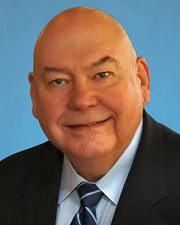
Ron Lo Russo 2012
Name: Ron Lo Russo
Title: Vice President
Company: Vornado Realty Trust
Location: New York, N.Y.
Birthplace: Englewood, N.J.
Family: Wife and 2 kids
College: New York University
First job outside of real estate: Prudential Investment, analyst
First job in real estate or allied field: The Mendik Company, building management
What do you do now and what are you planning for the future? Vornado Realty Trust is a publicly traded REIT and one of the largest owners, managers and developers of commercial real estate in the United States (over 100 million s/f). It is one of the largest landlords in New York City and Washington, D.C.
Hobbies: Boxing
Favorite book: "A Separate Peace"
Favorite movie: "The Godfather II"
Person you admire most (outside of family): Robert Cardillo
Key to success: Work hard
If you had to choose another vocation what would it be? Doctor
Tags:
Spotlight Content
MORE FROM Spotlight Content
The commercial classroom: Capital gains taxes - by Edward Smith
Generally, when you sell the home you live in and any commercial property you own, it may be subject to capital gains taxes. Always, before you take a listing, advise your client to speak to their accountant about




.png)

Quick Hits


Columns and Thought Leadership

CRE Guide Featured Company: Merritt Environmental Consulting Corp.
Merritt Environmental Consulting Corp. (MECC) was established in June of 2009 after being part of a larger engineering firm for almost 20 years. The focus of the company is to assist lending institutions, attorneys, real estate investors, and property owners with environmental concerns. Today, MECC has offices in New York, Florida, and Vermont and has grown into a regional consulting firm serving clients along the East Coast.

2026 Developing Long Island: ERG Commercial Real Estate launches its new Retail Leasing division
North Hempstead, NY ERG Retail Leasing is the dedicated leasing division of ERG Commercial Real Estate, an established full-service commercial real estate brokerage for over 35 years.

2026 Developing Queens: Long Island Board of Realtors advances commercial growth and advocacy in Queens
The Long Island Board of Realtors (LIBOR) Commercial Network continues to play a key role in advancing opportunities and strengthening the commercial real estate landscape across Queens. Through targeted programming and global outreach

From vacancy to vitality: How adaptive reuse is reshaping Long Island’s CRE landscape - by Andrea Tsoukalas Curto
Adaptive reuse has become one of the most important conversations in commercial real estate today. Long Island has a large inventory of aging retail, office and industrial