



News:
Brokerage
Posted: April 4, 2008
Robert Starzynski, CBRE / An investor overview
Average per unit sales results for the Buffalo Metropolitan Statistical Area (MSA) apartment market this past year may well prove to be an anomaly. This year's 44% increase in price per unit over last year, on top of a 17% increase from the prior year, equals a compound 68% increase over two years. This rate of price increase is clearly unsustainable in the long run.
Although the number of individual apartment units sold was up 16% year over year, the actual number of property transactions actually decreased substantially, from 400 to 252.
This survey considers transactions completed from the third quarter of 2006 thru the second quarter of 2007. This period was just prior to the 2007 credit market correction, when lender terms were still somewhat liberal.
Since this period the credit markets have been severely impacted by near meltdowns in general, and felt more severely by those lenders associated with mortgages (largely riskier residential). Financial institutions are continuing to deal with credit ratings and the book value pricings of securities in the form of collateralized debt obligations (which, by and large, didn't exist in any form as recently as 20 years ago). As a result, the cost of money to borrowers has faced increased rate spreads over base rates in order to satisfy lenders' risk premiums. Spreads, or risk premiums, increased drastically in the third quarter of 2007; money that was previously lent at a 6% interest rate changed to 7% or more. Lenders also required lower leverage (that is, the borrower was required to provide more equity), and allowed fewer or no provisions for interest only in initial loan term. This is likely to be the reality for the next 12-18 months, at the very least.
As all of this is playing out, market expectations must quickly adjust to higher interest rates, driving property sale prices down. The Western New York (WNY) market continues to receive inquiries from both local and out of town investors seeking apartment property investments. While, the frequency of the inquiries is down, one source of increased activity are Canadian investors. This is partially a result of the "Loonie's" recent rapid increase in value against the U.S. dollar.
Robert Starzynski is in the investment property sales group at CB Richard Ellis, Buffalo, N.Y.
Tags:
Brokerage
MORE FROM Brokerage
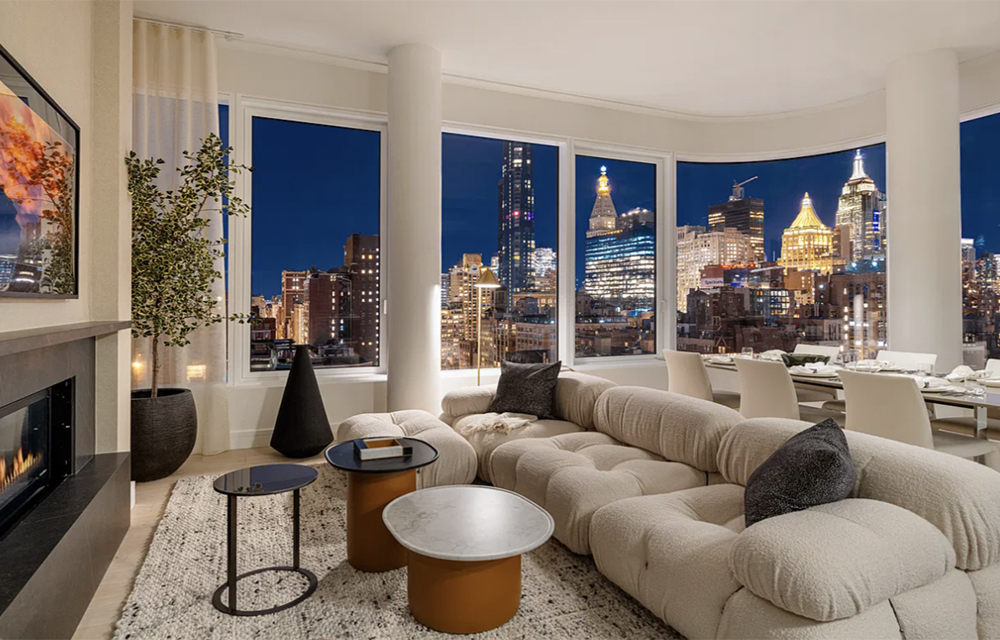
200E20TH sells out in Gramercy, penthouse A closes out sales at the CetraRuddy-designed condominium residences
Manhattan, NY 200E20TH, the CetraRuddy-designed architectural masterwork that brought a curved, contemporary sensibility to Gramercy’s Beaux-Arts streetscape, has





Quick Hits

Columns and Thought Leadership

Hunt CRE question and answer: Choosing a real estate agent - by David Hunt
First, we will only work with one agent exclusively. The primary reason is that we want that agent to legally represent our client’s interests. In New York State, a real estate agent has a fiduciary

New York’s streets are full again, and the retail numbers prove it - by Noam Aziz
Walk down any New York block this year and you can feel it. The sidewalks are crowded, the storefronts are lit, and the energy that defines this city is back at full volume.

Hunt commercial real estate question and answer: Fortune 500 wisdom - by David Hunt
Yes, there are lessons to be learned from the largest companies in America when comes to managing your real estate. But the decision to buy or lease real estate may not be one of

The art of investing in real estate - by Thomas Donovan
Real estate investing is as much an art as it is a skill. No one can time the market, or the factors that drive it, perfectly. Location, zoning, size, transportation, and neighborhood density give you a baseline for
.gif)