



News:
Brokerage
Posted: February 23, 2015
Recent Change in Law Clarifies Accrual Date of Contractor's Claims for Payment Against the N.Y.C. S.C.A.
On December 17, 2014, a new law was enacted which amends the accrual date for a contractor's construction contract claim against the New York City School Construction Authority (the SCA). The amendment provides that a contractor's claim against the SCA now accrues on the "date payment for the amount claimed is denied."
In New York, a contractor must file a written verified notice of claim within three months of when a "claim accrues," as a condition to filing any civil action against the SCA, or any school district, to recover monies owed on a contract.
Prior to the amendment, courts often held that a contractor's claim against the SCA accrues when "damages became ascertainable," which occurs when the project is "substantially completed or a detailed invoice of the work is performed."
However, in reality, a payment dispute with the SCA typically will not manifest itself until more than 90 days after substantial completion, or the submission of a detailed invoice for the work performed. This, therefore, required the contractor to either expend resources to immediately file a notice of claim (even if a dispute was not suspected), or risk forfeiting the entire claim in the event of a subsequent payment dispute. Unfortunately, the latter often occurred and the contractor was barred from filing an action before it even knew a payment was disputed.
This amendment should now clear up the ambiguity as to what events trigger the accrual of the period to timely file a notice of claim as it expressly states that a contractor's claim accrues on the date a claim for payment is denied by the SCA.
Joseph Asselta, Esq. is a partner and Raymond Castronovo, Esq. is an associate at Forchelli, Curto, Deegan, Schwartz, Mineo & Terrana, LLP, Uniondale, N.Y.
Tags:
Brokerage
MORE FROM Brokerage
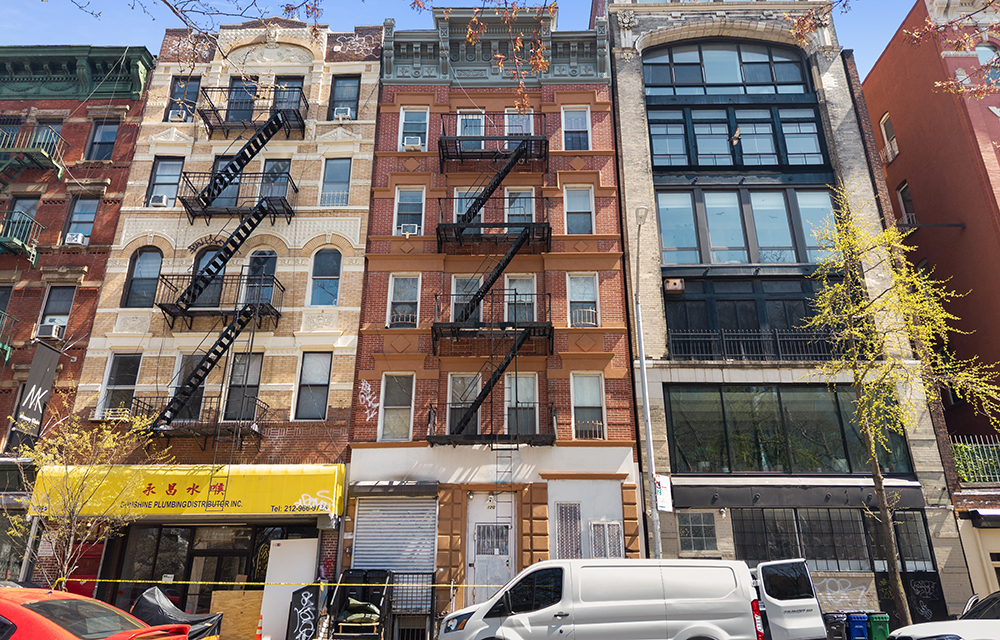
Investment Property Realty Group sells 120 Forsyth St. for $1.35 million
Manhattan, NY Investment Property Realty Group (IPRG) closed the sale of 120 Forsyth St., a mixed-use building located in the Lower East Side section of the city, for $1.35 million.




Quick Hits

Columns and Thought Leadership

Positive forecast for New York’s pro-housing push? - by Philip Butler
New York’s housing crisis remains a hot button topic despite growing consensus that varied and affordable housing is desperately needed statewide. Governor Hochul has recently introduced several initiatives to overcome N.Y.’s anti-housing

Hunt commercial real estate question and answer: Fortune 500 wisdom - by David Hunt
Yes, there are lessons to be learned from the largest companies in America when comes to managing your real estate. But the decision to buy or lease real estate may not be one of

New York’s streets are full again, and the retail numbers prove it - by Noam Aziz
Walk down any New York block this year and you can feel it. The sidewalks are crowded, the storefronts are lit, and the energy that defines this city is back at full volume.

A guide to finding the right NYC property management company - by Sanjay Gandhi
Being a small to midsize landlord in NYC is an increasingly demanding endeavor. From navigating complex regulations, increased compliance demands to dealing with tenant issues and remediating violations. It is wise to enlist the assistance of a partner, a professional
.gif)