



News:
Brokerage
Posted: May 27, 2014
REBNY Spring Retail Report: N.YC.'s hot shopping corridors see spring spikes for retail rents
Strong consumer demand and a tourism boom in New York City led to rising retail rents along Manhattan's most coveted shopping corridors this spring, according to The Real Estate Board of New York's (REBNY's) Spring Retail Report. Fifth Ave. between 49th and 59th Sts. had the highest average ground floor asking rent among all primary shopping corridors citywide and set a new record at $3,550 per s/f, with rents increasing 16% compared to last year. The Times Sq. retail corridor also reached a new high with average ground floor asking rents climbing 11% over last year to $2,407 per s/f.
Other primary shopping corridors with significant ground floor asking rent increases this spring include:
* Madison Ave. between 57th and 72nd Sts. where asking rents surged 24% to $1,643 per s/f after a period of store repositioning in that corridor.
* Herald Sq. along West 34th St., where rents increased 22% from last year to $883 per s/f.
* Broadway in SoHo between Houston and Broome with average asking rents increasing 19% to $890 per s/f.
"New York City's retail leasing market is seeing renewed vibrancy this spring as asking rents in the primary shopping corridors including Fifth Avenue, Madison Avenue and Broadway in SoHo, among others, are surging amid strong consumer demand and the continuing tourism boom," said Steven Spinola, REBNY president. "Our retail advisory group made up of the city's leading retail brokers tells us that low interest rates and high demand among retail tenants is leading to a more vibrant and desirable tenant mix particularly along Fifth Ave. and Broadway. The trend is clearly a benefit to residents and visitors alike as it brings more shopping options."
Beyond the major retail corridors with heavy tourist foot traffic, the report found that retailer demand is more price sensitive and focused on the bottom line. For example, Third Ave. corridor retailers may take more time to commit to leases and other factors such as street/avenue frontage and ceiling height may affect the space's value as much as locational factors.
Overall average asking rent for retail space (ground floor and other) throughout Manhattan was $139 per s/f, up 20% since last spring.
REBNY's retail report compiles data about asking rents for available space provided by a broad cross-section of the city's leading retail brokers. The report is compiled twice a year in the spring and fall.
To view the full report visit www.rebny.com.
Tags:
Brokerage
MORE FROM Brokerage
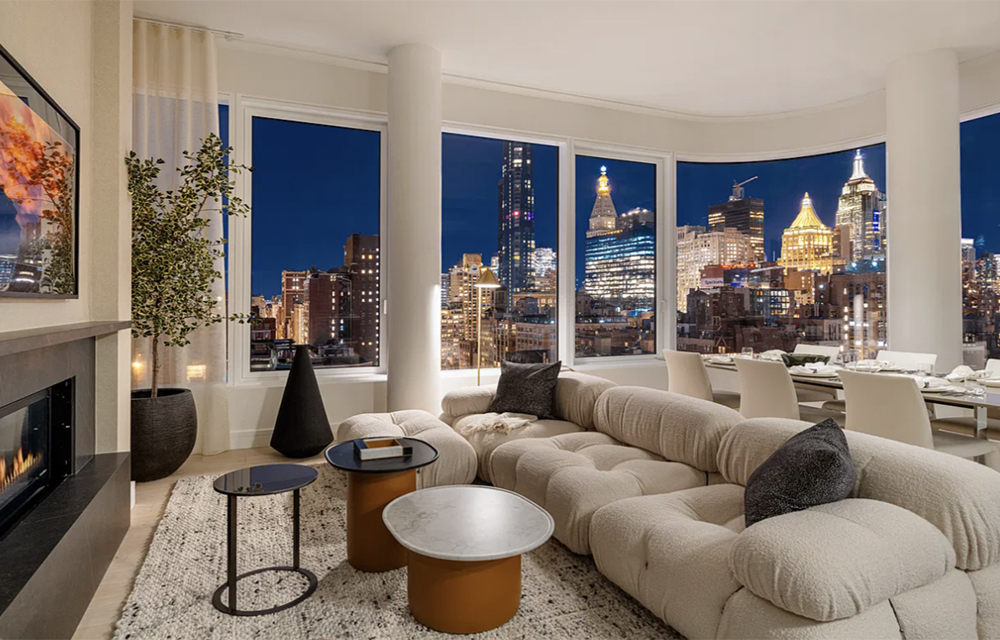
200E20TH sells out in Gramercy, penthouse A closes out sales at the CetraRuddy-designed condominium residences
Manhattan, NY 200E20TH, the CetraRuddy-designed architectural masterwork that brought a curved, contemporary sensibility to Gramercy’s Beaux-Arts streetscape, has



Quick Hits
 (2).gif)

Columns and Thought Leadership

Hunt commercial real estate question and answer: Fortune 500 wisdom - by David Hunt
Yes, there are lessons to be learned from the largest companies in America when comes to managing your real estate. But the decision to buy or lease real estate may not be one of

The art of investing in real estate - by Thomas Donovan
Real estate investing is as much an art as it is a skill. No one can time the market, or the factors that drive it, perfectly. Location, zoning, size, transportation, and neighborhood density give you a baseline for

Hunt CRE question and answer: Choosing a real estate agent - by David Hunt
First, we will only work with one agent exclusively. The primary reason is that we want that agent to legally represent our client’s interests. In New York State, a real estate agent has a fiduciary

New York’s streets are full again, and the retail numbers prove it - by Noam Aziz
Walk down any New York block this year and you can feel it. The sidewalks are crowded, the storefronts are lit, and the energy that defines this city is back at full volume.
.gif)