



News:
Brokerage
Posted: March 10, 2014
Real estate industry leaders share views at Ariel Property Advisors' Coffee & Cap Rates Breakfast
New York City's up-and-coming neighborhoods, affordable housing policies, and the outlook for the investment property sales market in 2014 were among the topics explored by speakers at Ariel Property Advisors' Coffee & Cap Rates breakfast on February 6, 2014. More than 250 real estate professionals attended the event, which was held at Club 101.
Following a networking breakfast, Shimon Shkury, president of Ariel Property Advisors, kicked off the program with a presentation summarizing highlights from the firm's six year-end research reports that were distributed at the event—Multifamily Year in Review: New York City 2013, Manhattan 2013 Year-End Sales Report, Queens 2013 Year-End Sales Report, Northern Manhattan 2013 Year-End Sales Report, Brooklyn 2013 Year-End Sales Report, and Bronx 2013 Year-End Sales Report.
Shkury then moderated a panel consisting of Kevin Davis, Taconic Investment Partners, David Dishy, L+M Development Partners, Joseph Kohl-Riggs, The Hudson Companies, and Justin Palmer, Synapse Capital Advisors, who shared their views about New York City's commercial real estate market.
New York City is a big city with a lot of little neighborhoods, Mr. Davis noted, which is creating opportunity because people are remaining in their communities rather than traveling to Manhattan. Demand for housing is increasing, which is benefiting Uptown, Harlem, especially the 125th Street corridor, and many Brooklyn neighborhoods including those along the L line and in Crown Heights around Franklin Avenue.
In the last 10 to 15 years, "the city's gotten much safer, more people want to live here, and people are willing to go outside of Manhattan," Davis said. "It used to be you had Manhattan and Brooklyn Heights and nothing else."
Synapse Capital Advisors is developing uptown in Hamilton Heights where Palmer said he sees more opportunity for capital appreciation and where rental rates are strong. In Brooklyn, the firm is building a hotel, residential, and retail project in Williamsburg, and Mr. Palmer also cited Sunset Park and Greenwood Heights as attractive locations in that borough.
Dishy said he sees opportunity in the east/west corridors along the 7 subway line from Hudson Yards to Long Island City and beyond, the Brooklyn neighborhoods along the L subway line, and communities from Newark and Jersey City to Lower Manhattan and Downtown Brooklyn.
In the area of affordable housing, Kohl-Riggs noted that land prices are rising across the city, even in the Bronx and central Brooklyn, which is making it more difficult to build affordable housing using tools such as the Low Income Affordable Marketplace Program, Low Income Housing Tax Credits, and HDC bonds.
"The city has a limited capital budget to allocate for these programs," he said. "Land prices that might have had been $15, $20, $30 five years ago, but landowners now expect $30, $40, or $60 dollars. It doesn't pencil with the city's underwriting at all. Even when you can find reasonably priced land you have to weigh the risk of purchasing land and then relying on the city to allocate limited capital to it, against competing for RFPs and incorporating affordable housing into mixed-use projects."
Kohl-Riggs suggested that either the de Blasio administration allocate more capital for affordable housing, come up with new programs, or look at land use because zoning density is probably the city's deepest reserve of affordable housing. "In certain markets, they have an infinite amount of space floating above the roofs of buildings if they are willing to tap into it," he said.
Dishy said he believes that the de Blasio administration will build on the strong policies of the Bloomberg administration, which built or preserved 165,000 units of affordable housing in 12 years.
"There's been a lot of talk both on the resources side as well as the zoning side," Dishy said. "I think for all buyers right now in the market there's wariness because of the unknown landscape regarding greater inclusionary and greater affordability as a requirement. There will be change and there will be greater affordability required for new development. Where, how, and what form it takes ... we'll wait to see."
Because subsidized housing needs capital and capital is scarce, Mr. Dishy said he predicts there will more development of unsubsidized work force housing, which he sees as an opportunity.
Davis noted that condo prices have driven up land values, which makes it very hard to make rental projects work without subsidies. "You can make rental work with subsidies," he said. "In our partnership with L + M and BFC Partners to redevelop the Seward Park Urban Renewal site, we're going to be developing 500 affordable units but that's because that was priced into the equation in our evaluation with the city."
Looking ahead to 2014, Davis said in certain areas of the economy he's more bullish than he was in 2013. Although interest rates have the potential to creep up, he believes they will be offset by more robust economic activity. He noted that GDP numbers have been strong and that the Fed's tapering is a good sign that the economy is recovering.
Palmer said he believes there will be opportunities for value oriented investors in Brooklyn and Upper Manhattan and strong rental growth as people flock to more affordable options, while Mr. Kohl-Riggs predicts that land prices will stay firm.
Dishy said he is generally optimistic about 2014, although he believes some investors may take a wait-and-see position until the new administration announces its new housing programs.
Funds raised in conjunction with Ariel Property Advisors' Coffee & Cap Rates were donated to Legal Outreach, a nonprofit that prepares urban youth from underserved communities in New York City to compete at high academic levels by using intensive legal and educational programs as tools for fostering vision, developing skills, enhancing confidence, and facilitating the pursuit of higher education.
Tags:
Brokerage
MORE FROM Brokerage
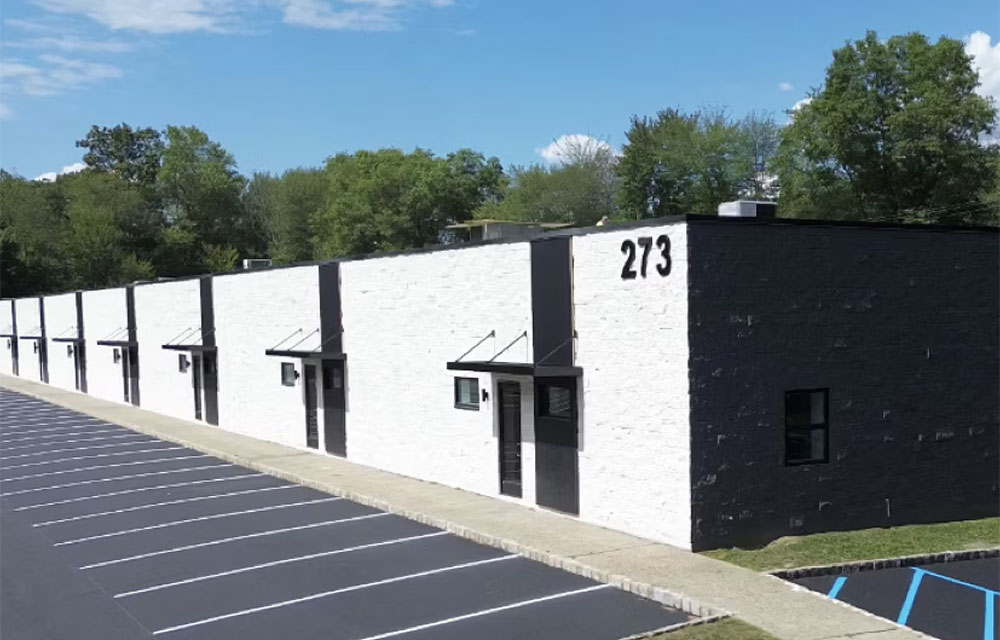
Resource Realty of Northern NJ delivers complete lease-up of 235 Franklin Rd. for Commerce Park Investors
Randolph, NJ Resource Realty of Northern New Jersey (RRNNJ) has completed the lease-up of a 10-unit small-bay industrial property at 273 Franklin Rd., marking the culmination of an investment strategy that began



 (2).gif)

Columns and Thought Leadership

New York’s streets are full again, and the retail numbers prove it - by Noam Aziz
Walk down any New York block this year and you can feel it. The sidewalks are crowded, the storefronts are lit, and the energy that defines this city is back at full volume.

A guide to finding the right NYC property management company - by Sanjay Gandhi
Being a small to midsize landlord in NYC is an increasingly demanding endeavor. From navigating complex regulations, increased compliance demands to dealing with tenant issues and remediating violations. It is wise to enlist the assistance of a partner, a professional

Positive forecast for New York’s pro-housing push? - by Philip Butler
New York’s housing crisis remains a hot button topic despite growing consensus that varied and affordable housing is desperately needed statewide. Governor Hochul has recently introduced several initiatives to overcome N.Y.’s anti-housing

Hunt commercial real estate question and answer: Fortune 500 wisdom - by David Hunt
Yes, there are lessons to be learned from the largest companies in America when comes to managing your real estate. But the decision to buy or lease real estate may not be one of
.gif)