



News:
Brokerage
Posted: June 27, 2011
Randall Beach and Cheryl Sarjeant - Syndication: An alternative financing tool for small to mid-sized real estate development projects
The economic upheaval of the last several years has resulted in the availability of many distressed properties that could once again be profitable under the right investment and management scenarios. This represents significant opportunities for the experienced real estate investor. However, one of the most common barriers to taking advantage of today's commercial real estate opportunities is the lack of access to capital. A solution for the real estate developer, therefore, is to seek alternative financing models to capitalize on current opportunities. Real estate syndication is one such alternative.
Real estate syndication is the pooling of capital from a group of individuals or entities to fund one or more real estate investments. Syndication is commonly used to: (i) fund the acquisition of real property in whole or in part; (ii) provide the necessary equity injection required by a lender; (iii) refinance or pay down existing debt; (iv) serve as working capital for the redevelopment, construction or improvement of real estate; or (v) reimburse capital investment made by project principals. By pooling funds, investors are able to get more property for their money and often be involved in exciting projects that they otherwise could not afford to participate in.
The concept of pooling funds for real estate investment is not new. Syndication, however, has not gained as strong a footing in small, regional commercial real estate markets. More common in smaller, local markets is an informal pooling of funds by friends and family often accomplished on the proverbial "back of the napkin." While these types of arrangements can be successful, they present significant limitations. Regardless of the type of arrangement (public or private), the pooling of funds must be in compliance with applicable federal and state securities laws and the investors ought to be sophisticated enough to know what they are getting into.
Before spending the time and expense of forming the syndicate, it is important to map out the syndicate by preparing a detailed business plan that identifies the investment property, any redevelopment or improvements necessary to meet the investment goals, and projected financial data. Syndicate sponsors should consider employing the services of an accountant to review financial information and anticipated budgets.
As part of the initial business plan, sponsors ought to determine the types of potential investors who may be interested in the project and where those investors are located (i.e., regionally or nationally). Where investors are located may impact the necessary regulatory filings since many states have different requirements.
After the business goals have been mapped out, a real estate syndicate is typically structured as a limited liability company or limited partnership. Once the investment structure is decided on, the syndicate must determine how the applicable securities laws and regulations could impact the offering of membership or partnership interests for sale.
In New York State, the regulations are designed to protect investors. Shares of limited partnerships or limited liability company membership interests are considered regulated securities. The developer will need to make certain disclosures and provide information about the syndicate to the government for approval. The approval process can take time and this should be factored into the project timeline.
Advance planning can assist the developer in preparing a strategy for budgetary concerns and time management. In today's market, the syndicate comes in all shapes and sizes, and planning with appropriate legal and financial professionals can assist the developer/sponsor in effectively implementing the business plan for the investment and carrying out the project with available private equity financing.
Randall Beach is a partner and Cheryl Sarjeant is an associate at Whiteman Osterman & Hanna LLP, Albany, N.Y.
Tags:
Brokerage
MORE FROM Brokerage
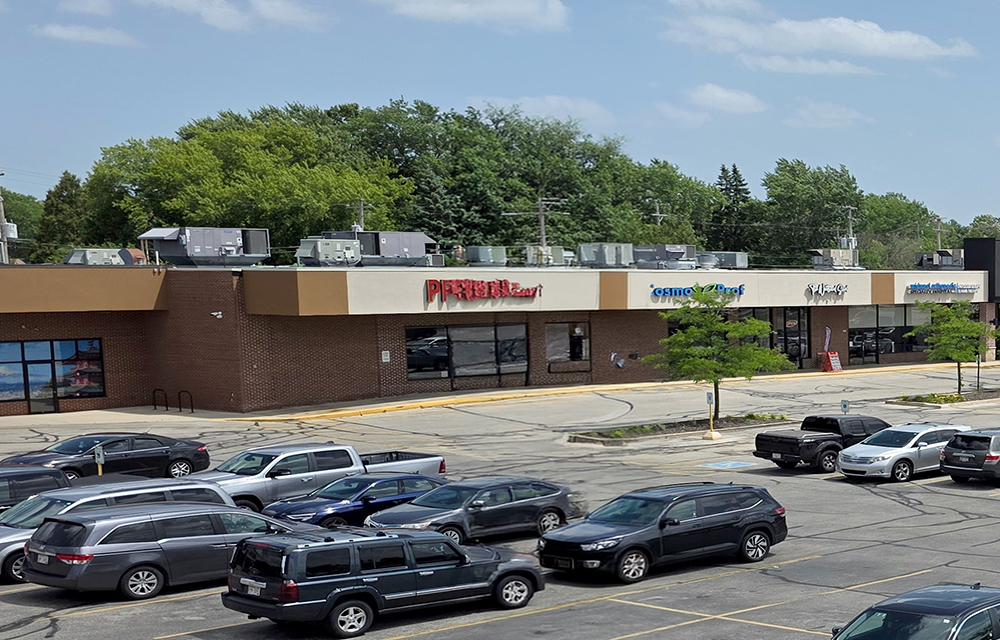
United Properties Corp. expands Wisconsin and Illinois retail presence adding 200,000 s/f
West Allis, WI United Properties Corp. completed two retail acquisitions totaling $27.4 million across Illinois and Wisconsin, adding 205,000 s/f of shopping center space to its portfolio







Columns and Thought Leadership

Positive forecast for New York’s pro-housing push? - by Philip Butler
New York’s housing crisis remains a hot button topic despite growing consensus that varied and affordable housing is desperately needed statewide. Governor Hochul has recently introduced several initiatives to overcome N.Y.’s anti-housing

New York’s streets are full again, and the retail numbers prove it - by Noam Aziz
Walk down any New York block this year and you can feel it. The sidewalks are crowded, the storefronts are lit, and the energy that defines this city is back at full volume.

Hunt commercial real estate question and answer: Fortune 500 wisdom - by David Hunt
Yes, there are lessons to be learned from the largest companies in America when comes to managing your real estate. But the decision to buy or lease real estate may not be one of

A guide to finding the right NYC property management company - by Sanjay Gandhi
Being a small to midsize landlord in NYC is an increasingly demanding endeavor. From navigating complex regulations, increased compliance demands to dealing with tenant issues and remediating violations. It is wise to enlist the assistance of a partner, a professional
.gif)