



News:
Brokerage
Posted: December 11, 2012
Question of the Month: What is your prediction regarding capitalization rates post election 2013?
I was right a year ago when I projected that when 2012 rolled around there would be a similarity to 2011 in the commercial, industrial, apartment and office real estate markets in the general region. There was stable low cap rates and modest value appreciation driven by the continuing low interest rates. There was some lack of demand due to a relatively weak recovery. Sales activity continued to be substantially less than pre-2008. Many investors continued to be locked into existing mortgages negotiated in the last few years with yield maintenance agreements which penalize borrowers who pay off existing mortgages. Fewer properties were "upside down" which increased refinancing and sales. However, some investors continued paying down debt. In a perfect world, investors dream about having their real estate portfolio free and clear and enjoying the cash flow. Thus, they will not be as apt to sell and therefore won't be subject to capital gains. The low rates in 2012 stimulated some refinancing for this type of property owner. The same will apply to 2013.
The smaller regional lenders and brokers in Upstate New York, Long Island, western Massachusetts and central/northern Connecticut remained relatively active in 2012 since many were able to maintain relatively stable operations even in 2009 when activity was most severely affected. The smaller lenders consistently have been the pipeline for the financing of properties of less than $2 million. Higher priced properties were more severely affected when the large lenders were most financially vulnerable when the Commercial Mortgage Backed Securities market (CMBS) was reduced to a trickle in 2009. The good news is since 2009 activity in overall properties has generally improved along with the health of the large lenders. Therefore, New York City and Boston activity also improved. Activity in 2012 was significant in many large and small properties. This same activity is anticipated to be maintained in 2013. However, the activity is still relatively slow compared to the mid 2000 levels. This is surprising considering the record low interest rates which were spurred by QE1-3. Reportedly, the Federal Reserve will keep a policy of low interest rates into 2015 to ease the risk of deflation and unemployment fears by continuing the QE3 stimulus which began a few months ago. Quantitative Easing (QE) 3's main thrust will be to buy $40 billion monthly in mortgage backed securities.
The chance of more promising growth and activity will not happen because of the outcome of the Presidential and national senatorial elections last month. The current administration is practicing Keynsian policies which has instituted and attempted to institute many new regulations, taxes, deficit spending, etc which stagnate economic growth and ultimately detrimentally affect real estate. Some Keynsian philosophy is prudent. However, the deficit spending over the past four years is nearing $6 trillion. Many investors will continue to "sit on the sidelines" because of these policies. Overall rates will not change substantially in 2013 because interest rates will remain relatively low because of QE3. After the Federal Reserve's window of 2013-15, there may be a significant increase in interest rates which will drive cap rates up. It will be like water running downhill; it's a natural reaction. In order to pay for QE3 instead of borrowing or taxing, the central bank is increasing the money supply. This will surely cause inflation in the long run.
Any surge in retail and office will be limited in the large markets of New York City and Boston because of billions of dollars of mortgages coming due. This hasn't been as much of a problem in some of the smaller markets of the region. In conclusion, the national election results will result in higher overall rates over the next few years. However, 2013 will have relatively stable overall rates because of QE3 and other Federal Reserve Bank policies. However, some substantial higher interest rates will be on the horizon later this decade because of probable high inflation. The good news for real estate is that interest rates will be at an extremely low level in 2013 which will keep the lid on overall capitalization rates. Go to our website at rynnemurphy.com and click on "Rate Survey" for general cap rates.
John Rynne, MAI, SRA is the president and owner of Rynne, Murphy & Associates, Inc., Rochester, N.Y.
Tags:
Brokerage
MORE FROM Brokerage
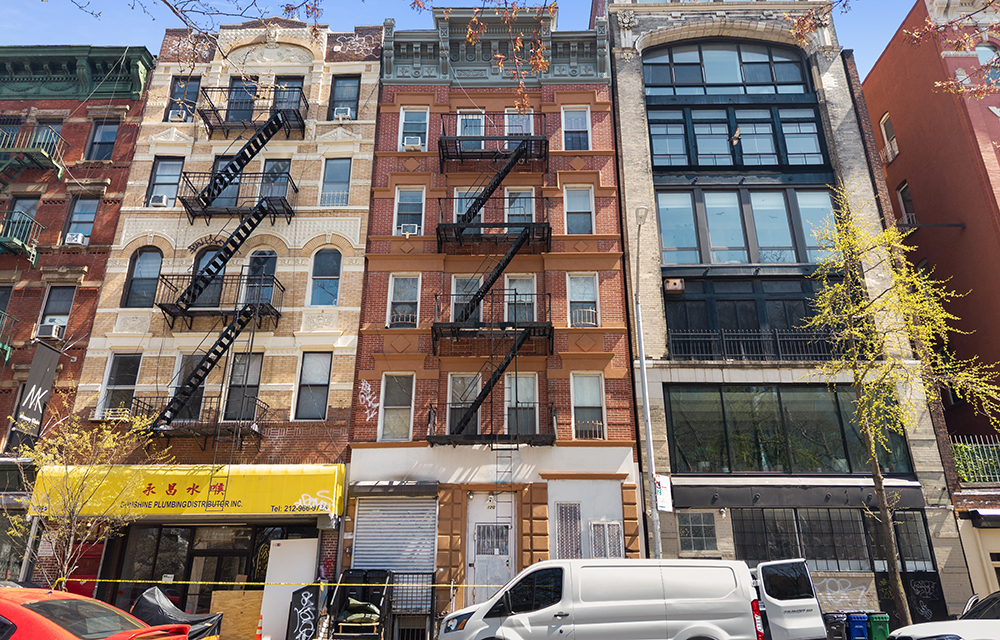
Investment Property Realty Group sells 120 Forsyth St. for $1.35 million
Manhattan, NY Investment Property Realty Group (IPRG) closed the sale of 120 Forsyth St., a mixed-use building located in the Lower East Side section of the city, for $1.35 million.



 (2).gif)

Columns and Thought Leadership

Hunt commercial real estate question and answer: Fortune 500 wisdom - by David Hunt
Yes, there are lessons to be learned from the largest companies in America when comes to managing your real estate. But the decision to buy or lease real estate may not be one of

New York’s streets are full again, and the retail numbers prove it - by Noam Aziz
Walk down any New York block this year and you can feel it. The sidewalks are crowded, the storefronts are lit, and the energy that defines this city is back at full volume.

Positive forecast for New York’s pro-housing push? - by Philip Butler
New York’s housing crisis remains a hot button topic despite growing consensus that varied and affordable housing is desperately needed statewide. Governor Hochul has recently introduced several initiatives to overcome N.Y.’s anti-housing

A guide to finding the right NYC property management company - by Sanjay Gandhi
Being a small to midsize landlord in NYC is an increasingly demanding endeavor. From navigating complex regulations, increased compliance demands to dealing with tenant issues and remediating violations. It is wise to enlist the assistance of a partner, a professional
.gif)