



News:
Brokerage
Posted: April 22, 2013
Question of the Month: "I'm ready to sell my property but am not ready to pay capital gains - What are my options?"
Many owners of multifamily real estate are generational owners or beneficiaries who have no interest in further real estate management. Often times, after a substantial period of ownership, owners have such a low basis in their property that nearly the entire portion of the sale is subject to either capital gains or depreciation recapture tax. So after many years, the problem arises of potentially paying taxes on what often is a sizable return on ones initial investment, a prospect which can be troublesome!
In order to defer this tax, or spread it out over a period of years, owners are increasingly turning to both 1031 transactions and 721/"UPREIT" contributions.
In a 1031 exchange, a seller of real estate can defer capital gains tax so long as they purchase "like-kind" real estate. There are several rules involved, whereby a seller has to identify replacement property within 45-days, as well as close on that property within 180-days. In addition, a seller must use a Qualified Intermediary (QI) to act as custodian of all sales proceeds between the sale of the relinquished property and the acquisition of the new property. This exchange allows sellers of real estate to continue to defer capital gains, as long as they keep owning real estate. For owners who prefer to get out of active management, a prime acquisition target is a net-leased retail property. A net-lease is a specific type of lease wherein the tenant, in addition to rent, pays all real estate taxes, insurance, and maintenance expenses. This type of lease structure leaves the rental income to the owner net, net, net (NNN) of all expenses. This type of property is perfect for an investor who wants a steady income flow without the inherent hassles of managing a typical piece of real estate. These properties are generally single-tenanted by large public corporations such as Walgreens, Dollar General, and Chase Bank. These properties typically have CAP rates between 5-8%, and have long-term leases, usually over 10-years. In addition to their ease of ownership, these properties are easy to finance which can bring cash-on-cash yields to 10% or higher.
For owners who truly want to absolve themselves of all real estate ownership, but still manage to defer capital gains taxes, the best option is to "contribute" rather than "sell" their property through a 721 Contribution (Internal Revenue Code 721). In a 721 Exchange, an owner of real estate contributes their property to a partnership, or LLC, in exchange for OP "Operating Partnership" units, or LLC interest. This contribution is not deemed as a sale, but rather a contribution and exchange. This contribution often leads to the owner participating in a much larger pool of real estate assets, that is both diversified as well as having a more advantageous debt structure. Depending on the LLC or partnership structure, the owner will be able to redeem or transfer their units, which may trigger a capital event whereby a gain might be subject to capital gains.
In the case of an UPREIT, in exchange for the contribution, the owner will receive OP units which are economically equivalent to the publicly traded shares of the REIT. Most UPREITs have a minimum holding period on OP units, after which they can be exchanged on a 1-to-1 basis for the publicly traded shares of stock. Since there are generally no requirements on the minimum/maximum amount of shares an owner can transfer at a time, this allows the owner to spread out tax liability over several years. Another benefit of a 721 contribution is the ability to take advantage of more aggressive debt. Most REITs have a substantially lower cost of debt than the average real estate investor can source; this allows the REIT to outbid other potential purchasers and yet receive the same yield.
In the case of a 721 contribution, since the REIT isn't paying cash for the property, the seller can often receive a higher price than could be obtained from a different purchaser - advantageous to both parties.
Contributions to a private real estate fund will have a similar structure. Since there is no publicly traded aspect, there are no conversions or transfers, only redemptions. They may also differ in their redemption time line, diversification, and yields, which may be a superior investment than contributing to a REIT. All these options should be discussed with your tax adviser as every scenario is unique.
Marilyn Kane is the president and Sean Shanahan is the CFO at Iridium Capital, New York, N.Y.
Tags:
Brokerage
MORE FROM Brokerage
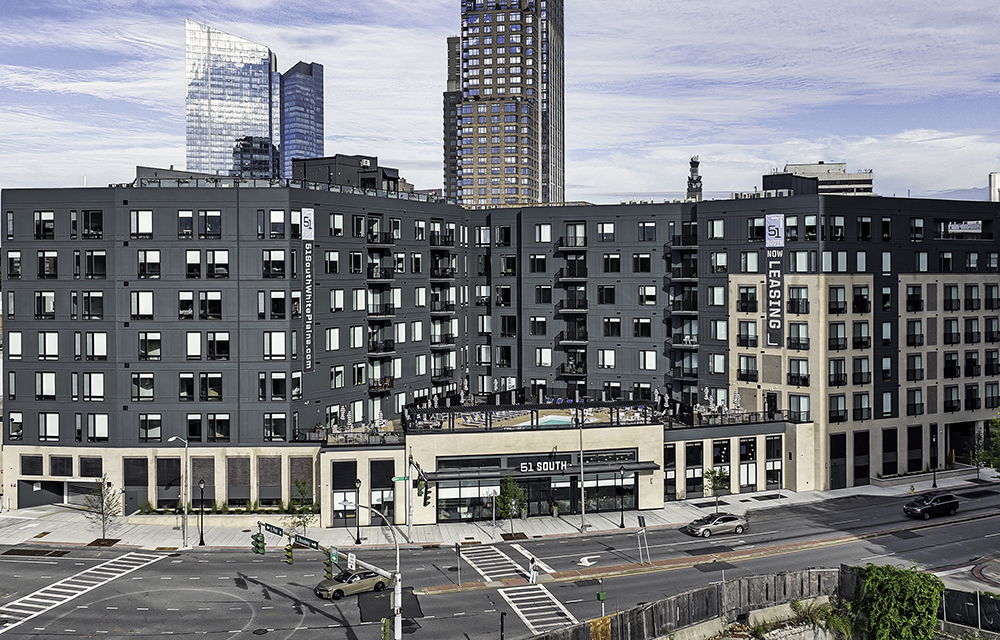
Dunne, MacKenzie, Apfel, Langer and Greenberg of CBRE sell 51 South Apartments for $64.3m
White Plains, NY Representatives of CBRE, led by Jeffrey Dunne, Stuart MacKenzie, Eric Apfel, Travis Langer, and Eric Greenberg of CBRE Institutional Properties announced the sale of 51 South Apartments, a Class A




Quick Hits

Columns and Thought Leadership

Hunt commercial real estate question and answer: Fortune 500 wisdom - by David Hunt
Yes, there are lessons to be learned from the largest companies in America when comes to managing your real estate. But the decision to buy or lease real estate may not be one of

A guide to finding the right NYC property management company - by Sanjay Gandhi
Being a small to midsize landlord in NYC is an increasingly demanding endeavor. From navigating complex regulations, increased compliance demands to dealing with tenant issues and remediating violations. It is wise to enlist the assistance of a partner, a professional

Hunt CRE question and answer: Choosing a real estate agent - by David Hunt
First, we will only work with one agent exclusively. The primary reason is that we want that agent to legally represent our client’s interests. In New York State, a real estate agent has a fiduciary

New York’s streets are full again, and the retail numbers prove it - by Noam Aziz
Walk down any New York block this year and you can feel it. The sidewalks are crowded, the storefronts are lit, and the energy that defines this city is back at full volume.
.gif)