



News:
Brokerage
Posted: April 6, 2021
Question of the Month: How can owners obtain a zoning variance at the NYC Board of Standards and Appeals? - by Christopher Wright

In 1961, NYC adopted the Zoning Resolution (ZR). The ZR assigns complex zoning regulations to every tax lot in the five boroughs. Like the Constitution, it is a comprehensive document and, just as importantly, it provides procedures to amend the zoning regulations as needed over time.
The ZR created the Board of Standards and Appeals (BSA), which is a governmental agency designed to process and enact zoning amendments. The BSA consists of five commissioners appointed by the mayor, ideally one from each borough. The commissioners have a mix of urban planning, architectural, engineering and financial expertise.
The relief granted by the BSA is targeted for a single tax lot—that is, relief for a single property owner. If a zoning regulation applicable to a single tax lot prevents a viable development, the BSA can waive the regulation. The relief must be based on a physical hardship: The lot must be irregularly shaped, such as L-shaped, narrow, shallow or have unusual topography. Alternatively, an existing building might be obsolete for modern users, such as an old manufacturing building that cannot be retrofitted for today’s industries and is better suited for residential use. New York City has numerous irregular tax lots and obsolete buildings, and these properties will remain underutilized without zoning relief.
Another type of hardship worth mentioning that the BSA can address is the programmatic needs of schools and churches. A school’s or church’s need to expand to accommodate programmatic needs is a viable hardship if the zoning regulations prevent an expansion without a waiver. In these cases, an irregular lot or obsolete building is not required, there just needs to be a lack of needed floor area and an identified programmatic need.
In my practice over the years, I have successfully obtained zoning relief from the BSA pursuant to each of these hardship categories. For example, in DUMBO, the BSA permitted the conversion of an empty pre-1950s multi-story building from manufacturing to residential on the basis of obsolescence. In Kissena Park, the BSA waived yard requirements to permit the construction of a community facility on a tax lot that lacked right angles. And in Manhattan an existing private school was granted height and setback relief by the BSA in order to allow for the expansion and modernization of its educational facilities.
The key to a successful BSA application is to properly prepare the application and clearly document the requested relief. Each application contains 18-20 supporting documents. Many of these documents provide neighborhood information such as maps showing land uses, zoning regulations, flood levels and tax lots. An important BSA “legal finding” is that the zoning waiver must not “alter the essential character of the neighborhood.” It must be compatible with the surrounding uses.
A BSA application starts with a detailed project statement that clearly identifies the property’s physical hardship and directly connects that hardship to the existing zoning regulations in order to demonstrate that a waiver is needed. The hardship cannot be ambiguous. Vague hardship cases are the downfall of many BSA applications.
Next, there is a financial report. This is crucial. Once the hardship and waiver are identified, the report will compare the financials of a proposed development that utilizes the requested zoning waiver to a development that does not have the waiver. The report, which uses basic appraisal methodology, must show that the non-waiver development is economically unviable (perhaps, for example, due to the loss of floor area) and that the proposed development (with the waiver) will generate a reasonable, but not excessive, rate of return. It is important that the proposed waiver not be more than what is needed. Another of the BSA’s “legal findings” is not to grant more relief than is necessary to generate an economically viable project. If four additional floors will work, then don’t ask for eight. You will not receive it and the process will be extended for months fighting a losing battle.
Lastly, an environmental analysis is also prepared to make certain that the proposed project (with the waiver) will not create unmitigated impacts within the subject community, such as traffic jams, lack of parking, excessive noise or contaminated soil, water or air.
Once an initial assessment of a tax lot demonstrates that a true and provable hardship exists and a waiver is needed, the owner must then work with the attorney, architect and the financial and environmental consultants to design a viable project. However, as mentioned above it is important not to go overboard. A BSA application is not a negotiation. It is a matter of connecting the hardship, the waiver and the financial needs as seamlessly as possible. That is the best way to navigate a successful BSA application in a timely manner.
Christopher Wright is a partner at Lasser Law Group, New York, N.Y.
Tags:
Brokerage
MORE FROM Brokerage
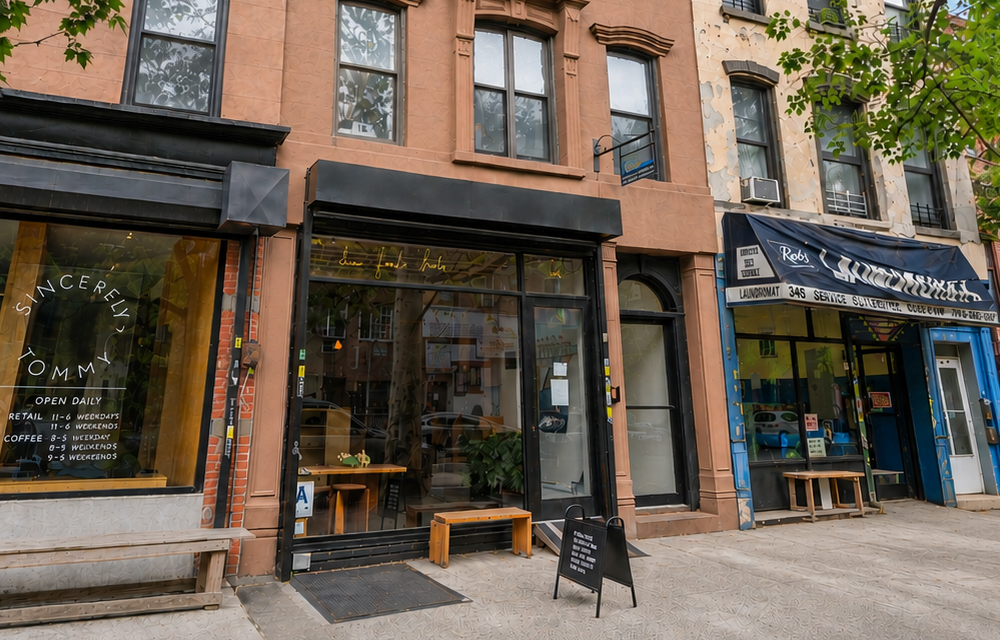
Bestreich, Reynolds, Davila, and Flaherty of Investment Property Realty Group close $1.97 million sale of 343A Tompkins Ave. in Bed-Stuy
Brooklyn, NY Investment Property Realty Group (IPRG) closed the sale of 343A Tompkins Ave., a mixed-use building located in the Bed-Stuy section of the borough, for $1.97 million.


Quick Hits

Columns and Thought Leadership

Hunt commercial real estate question and answer: Fortune 500 wisdom - by David Hunt
Yes, there are lessons to be learned from the largest companies in America when comes to managing your real estate. But the decision to buy or lease real estate may not be one of

A guide to finding the right NYC property management company - by Sanjay Gandhi
Being a small to midsize landlord in NYC is an increasingly demanding endeavor. From navigating complex regulations, increased compliance demands to dealing with tenant issues and remediating violations. It is wise to enlist the assistance of a partner, a professional

Hunt CRE question and answer: Choosing a real estate agent - by David Hunt
First, we will only work with one agent exclusively. The primary reason is that we want that agent to legally represent our client’s interests. In New York State, a real estate agent has a fiduciary

New York’s streets are full again, and the retail numbers prove it - by Noam Aziz
Walk down any New York block this year and you can feel it. The sidewalks are crowded, the storefronts are lit, and the energy that defines this city is back at full volume.
.gif)