



News:
Brokerage
Posted: June 9, 2014
PUMA North America achieves LEED Platinum certification at Destiny USA
The PUMA Store at Destiny USA was formally recognized by the United States Green Building Council (USGBC) as LEED Platinum. This certification is the first LEED certification for PUMA worldwide and the first Platinum level certification at Destiny USA.
PUMA, the fastest sport brand in the world, is known for their early adoption of sustainable practices in the industry and worked collaboratively with several key partners to achieve this milestone certification. Colkitt & Co. served as the architectural firm and Complete Construction Company served as the general contractor. KLH led the engineering effort. Lighting consultation was in partnership with Jim Schmidt at Nel Company, and Exclusive Retail Interiors served as PUMA's partner with fixtures. The LEED certification effort was led by Bergmann Associates.
LEED, or Leadership in Energy & Environmental Design, is a program administered by the USGBC that provides third-party verification of sustainably built buildings. Destiny USA's 1.3 million s/f expansion received LEED Gold certification in February 2012, making it the largest LEED Gold certified commercial building in the world. PUMA is one of 51 spaces within the facility that has earned LEED certification, and the first to achieve Platinum.
"This is quite an achievement for the facility and we're thrilled PUMA went above and beyond to accomplish Platinum certification from the USGBC," Sara Wallace, director of marketing of Destiny USA, said. "They were invested in this from the beginning and their success really showcases the hard work they put in to attain this. They're an excellent addition to our expansion."
"The PUMA project showed how a dedicated team consisting of the owner, designers, contractors, and Destiny USA can create a truly high performance, sustainable project," said Charles Bertuch, P.E., Bergmann's energy group leader. "As a LEED Platinum project, the store will provide an improved environment for customers and staff, reduce operating costs, and result in a lower the impact of the environment."
To obtain Platinum certification, PUMA received recognition for several initiatives including high-efficiency LED lighting, bamboo shelving, energy efficient HVAC system, and utilizing locally manufactured materials, thus decreasing fuel costs.
As part of PUMA's certification, PUMA worked closely with their partners to achieve key goals including:
* Optimal Energy Performance with over 40% below typical lighting usage in a retail environment
* More than 20% of build created from recycled content
* Use of low emitting materials for all adhesives, sealants, paints and coatings
* Locally sourced materials, decreasing our carbon footprint
Tags:
Brokerage
MORE FROM Brokerage
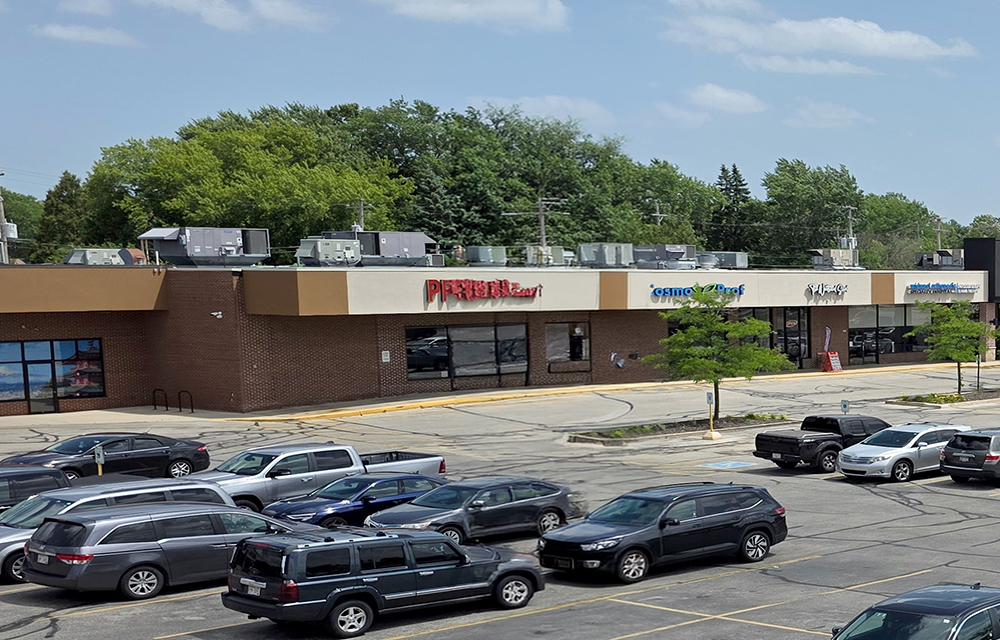
United Properties Corp. expands Wisconsin and Illinois retail presence adding 200,000 s/f
West Allis, WI United Properties Corp. completed two retail acquisitions totaling $27.4 million across Illinois and Wisconsin, adding 205,000 s/f of shopping center space to its portfolio



 (2).gif)

Columns and Thought Leadership

Hunt commercial real estate question and answer: Fortune 500 wisdom - by David Hunt
Yes, there are lessons to be learned from the largest companies in America when comes to managing your real estate. But the decision to buy or lease real estate may not be one of

A guide to finding the right NYC property management company - by Sanjay Gandhi
Being a small to midsize landlord in NYC is an increasingly demanding endeavor. From navigating complex regulations, increased compliance demands to dealing with tenant issues and remediating violations. It is wise to enlist the assistance of a partner, a professional

New York’s streets are full again, and the retail numbers prove it - by Noam Aziz
Walk down any New York block this year and you can feel it. The sidewalks are crowded, the storefronts are lit, and the energy that defines this city is back at full volume.

Positive forecast for New York’s pro-housing push? - by Philip Butler
New York’s housing crisis remains a hot button topic despite growing consensus that varied and affordable housing is desperately needed statewide. Governor Hochul has recently introduced several initiatives to overcome N.Y.’s anti-housing
.gif)