



News:
Brokerage
Posted: June 4, 2019
Prinzo’s Bakery celebrates completion of façade renovations: Part Albany's Small Business Façade Improvement Program
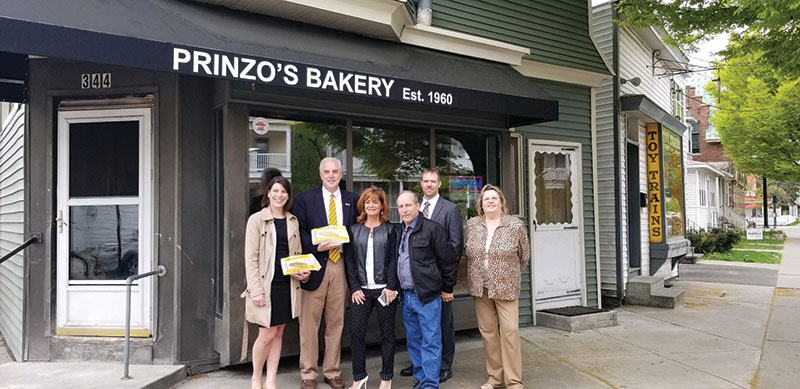
Albany, NY Applications are now available as part of the city’s Small Business Façade Improvement Program’s third-round spring funding window with an additional $100,000 in matching grants being made available to support small business owners citywide. The program can provide matching grants up to $10,000 to small businesses and/or commercial property owners for exterior renovations. The application window will close on June 6, concluding the program’s third round.
City leaders joined Prinzo’s Bakery owners Joe and Philomena Prinzo for the third-round spring funding window announcement of the program. This long-standing business received second-round program funds to replace the existing siding on the building, an awning, and new signage. In addition to added vibrancy, the awning enhances the entrance’s safety by helping to prevent slick conditions in times of inclement weather.
Located on Delaware Ave. since 1978, Prinzo’s Bakery is known for its Italian loaves of bread and hard rolls. Prinzo’s bread is delivered to many restaurants, delis, and sandwich shops within a 20-mile radius of the city, and serves as the daily bread for a number of local establishments.
A family-owned business, Prinzo’s has called the city its home for nearly 60 years, having first begun in the South End on Grand St. in 1960. It later expanded its product line to include donuts, opening Prinzo’s Dandy Donuts on Madison Ave. Soon after, the business moved to Delaware Ave., and 40 years later–it is still a staple of the Delaware Ave. neighborhood..
The Small Business Façade Improvement program is a matching grant program that helps small businesses throughout the city reinvest in their properties. Previous rounds of this small business program have been tremendously successful. With completion of all current awarded applicants’ renovations, the program is anticipated to have leveraged more than $750,000 in total project investment. Administered by Capitalize Albany Corp., the Small Business Facade Improvement Program is made possible by the City of Albany Capital Resource Corp. and the Albany Community Development Agency.
For more information regarding the program, please contact [email protected].
Tags:
Brokerage
MORE FROM Brokerage
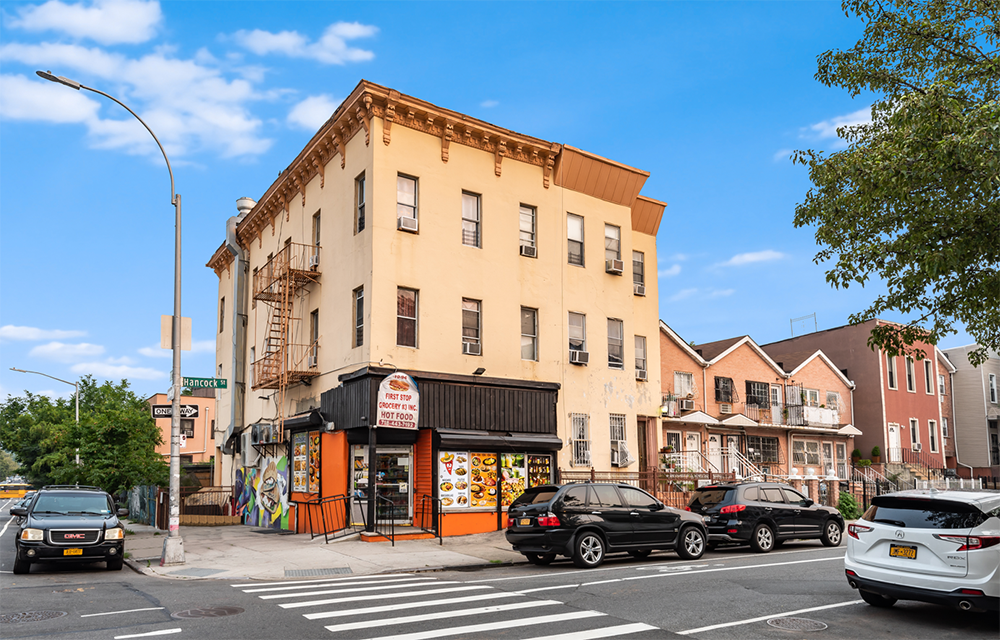
Investment Property Realty Group closes $1.75 million sale of 1094 Hancock Street in Brooklyn
Brooklyn, NY Investment Property Realty Group (IPRG), a New York-based commercial investment firm, has closed the sale of 1094 Hancock St., a mixed-use building in the Bushwick section, for $1.75 million.


Quick Hits

Columns and Thought Leadership

A guide to finding the right NYC property management company - by Sanjay Gandhi
Being a small to midsize landlord in NYC is an increasingly demanding endeavor. From navigating complex regulations, increased compliance demands to dealing with tenant issues and remediating violations. It is wise to enlist the assistance of a partner, a professional

Hunt commercial real estate question and answer: Fortune 500 wisdom - by David Hunt
Yes, there are lessons to be learned from the largest companies in America when comes to managing your real estate. But the decision to buy or lease real estate may not be one of

New York’s streets are full again, and the retail numbers prove it - by Noam Aziz
Walk down any New York block this year and you can feel it. The sidewalks are crowded, the storefronts are lit, and the energy that defines this city is back at full volume.

Hunt CRE question and answer: Choosing a real estate agent - by David Hunt
First, we will only work with one agent exclusively. The primary reason is that we want that agent to legally represent our client’s interests. In New York State, a real estate agent has a fiduciary
.gif)