



News:
Brokerage
Posted: June 4, 2019
National Association of Realtors members remain positive on commercial market as economy remains robust
Washington, DC While challenges remain, Realtors specializing in the commercial real estate sector should have confidence that growth will continue in the marketplace, according to speakers at the Commercial Economic Issues and Trends forum at the Realtors Legislative Meetings & Trade Expo.
National Association of Realtors chief economist Dr. Lawrence Yun led a panel discussion about the economic forces shaping commercial real estate markets and how high-tech company expansions, such as Amazon, will have a significant effect on regions across the country. During the session, Yun and fellow panelist Virginia secretary of commerce Brian Ball agreed that as a result of the current strong economy and other influential market factors, the commercial real estate market will continue to be robust.
“We may see commercial real estate prices rise for the next year, but I expect them to even out in 2020. Capital gain returns have grown from 90% with the rise in property prices. We can attribute the growth in commercial building investment spending to job additions and rising occupancy of buildings,” Yun said.
The biggest challenges facing the industry continue to be the lack of inventory, the cost and regulation of construction and at least for the retail sector, to the effects of growing e-commerce.
“I do not foresee any economic recession in the short-term, with gross domestic product expected to grow 2.5% in 2019 and with the unemployment rate at 4%. A strong economy will continue to reinforce the growth in commercial real estate, particularly the multifamily and industrial real estate markets,” said Yun.
The multifamily and industrial properties continue to be the best performing asset classes, given the low apartment vacancy rates in many metropolitan areas and with e-commerce driving the demand for industrial real estate. Cap rates for multifamily and industrial properties are trending at five to six percent, while hotel cap rates are at 8%.
Apartment vacancy rates are very low in many metro areas such as Boston (2.9%), Denver (3.4%), San Jose (3.4%) and Los Angeles (3.8%), pushing up rents in areas like Los Angeles and Atlanta by 5 to 6%.
The growth of e-commerce, which now accounts for about 10% of retail sales (from less than 1% in 2000), continues to drive up the demand for industrial real estate, for warehouses and last-mile distribution centers.
Transportation and warehousing jobs rose 176,000 in April 2019 from one year ago, while the retail sector lost 49,000 jobs.
Secretary Ball highlighted the economic impact of Amazon locating their second headquarters to Virginia and the effect the company will have on commercial real estate in the state. “The arrival of Amazon’s headquarters in Virginia will bring over two billion dollars to the state’s economy along with more than 25,000 jobs. This economic spike will position all aspects of the state’s commerce for success, and the commercial real estate market should expect vast growth,” secretary Ball said.
For more information on the commercial real estate market, visit nar.realtor/commercial.
The National Association of Realtors is one of America’s largest trade associations, representing 1.3 million members involved in all aspects of the residential and commercial real estate industries
Tags:
Brokerage
MORE FROM Brokerage
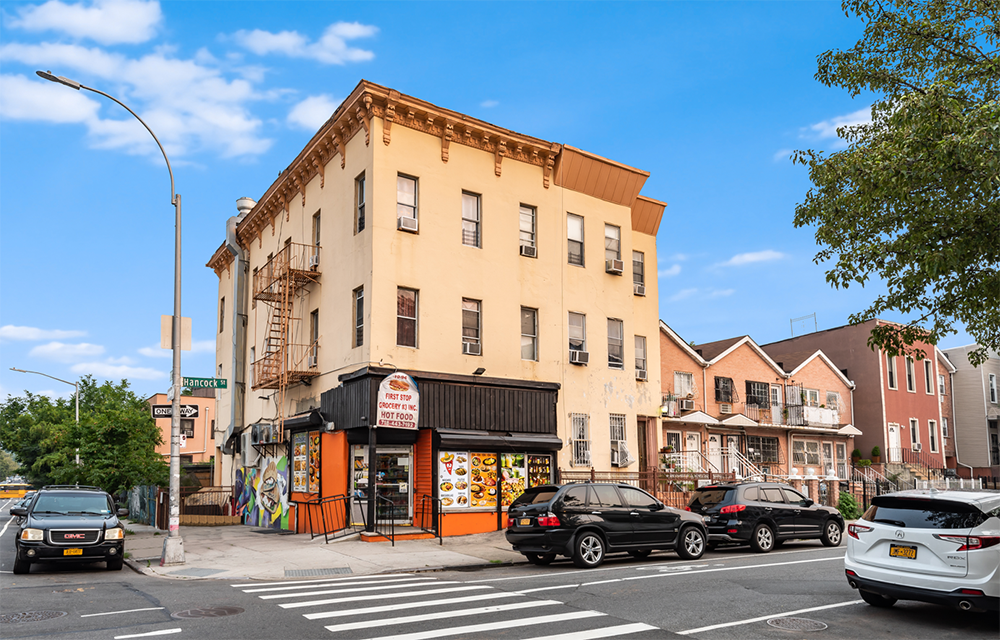
Investment Property Realty Group closes $1.75 million sale of 1094 Hancock Street in Brooklyn
Brooklyn, NY Investment Property Realty Group (IPRG), a New York-based commercial investment firm, has closed the sale of 1094 Hancock St., a mixed-use building in the Bushwick section, for $1.75 million.




Quick Hits

Columns and Thought Leadership

Hunt commercial real estate question and answer: Fortune 500 wisdom - by David Hunt
Yes, there are lessons to be learned from the largest companies in America when comes to managing your real estate. But the decision to buy or lease real estate may not be one of

Hunt CRE question and answer: Choosing a real estate agent - by David Hunt
First, we will only work with one agent exclusively. The primary reason is that we want that agent to legally represent our client’s interests. In New York State, a real estate agent has a fiduciary

A guide to finding the right NYC property management company - by Sanjay Gandhi
Being a small to midsize landlord in NYC is an increasingly demanding endeavor. From navigating complex regulations, increased compliance demands to dealing with tenant issues and remediating violations. It is wise to enlist the assistance of a partner, a professional

New York’s streets are full again, and the retail numbers prove it - by Noam Aziz
Walk down any New York block this year and you can feel it. The sidewalks are crowded, the storefronts are lit, and the energy that defines this city is back at full volume.
.gif)