


 (2).gif)
News:
Spotlight Content
Posted: May 5, 2008
President's message: The commercial real estate sector
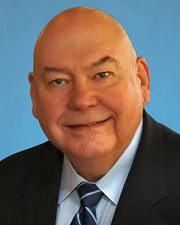
By William O'Brien, SIOR
As commercial practitioners, the question going into the summer of 2008 is what effect the faltering residential market and the collateral shake-out on Wall Street will have on the commercial real estate sector. Historically the commercial market lags the residential market by 18 to 24 months, and if this holds true in the present time frame, then the commercial market is due for a correction.
At present, we don't see the harbingers of a commercial meltdown in the outer boroughs as product in virtually all classes remain extremely tight with increasing rents in the retail, industrial, and office sectors. In addition, there is a scarcity of investment-grade property.
Having come in the business in 1989 during a significant recession and the collateral shakeout as evidenced by the Fed having to create the Resolution Trust Company and a virtual absence of liquidity (remember those days), I have to wonder out loud how bad the current situation may get in light of the same similarities. The next year and the presidential election will be the real deciding factor.
On the positive side having been through several real estate cycles, I know there are always opportunities in the market; but in tight times, there will be increasing pressure to win the business of potential clients. Therefore, professionalism, market knowledge, and a rock solid approach to the deal structure will help you establish and maintain client relationships.
I operate a small boutique firm in Brooklyn and have found my affiliation and subsequent designation with SIOR to be a valuable tool for professional development, educational opportunities, networking, camaraderie, credibility, and as a platform to provide clients representation across all of the major markets, internationally and in the U.S. Also, in many cases, SIOR affiliates provide access to the tertiary markets where most of the national companies have limited resources.
For those of you who don't know, SIOR is a professional affiliate of The National Association of Realtors and we have about 3,200 members in 562 cities and 22 countries.
SIOR also has about 800 affiliate members who have identified the benefits of membership. Non-broker members include developers, educators, corporate executives, and other professional aligned with the commercial real estate industry.
Most importantly to me, SIOR is dedicated to the practice and maintenance of the highest professional standards and all members take an oath to maintain the Society's standards of practice.
In the past, the application process has been deemed cumbersome by many, and I am glad to say the process has been significantly streamlined and if you are a top producer in your market or a potential affiliate who could benefit from a relationship with our group, you should explore the new application process at SIOR.com.
We had an exciting program the week of April 21 in Washington, D.C. where about 2,000 Commercial Practitioners will convened in the Nation's Capital for The SIOR's Spring Convention. The National Conventions always provide excellent educational programs, industry relevant speakers, and networking opportunities.
William O'Brien is the president of the Downstate Chapter of SIOR, Brooklyn, N.Y.
Tags:
Spotlight Content
MORE FROM Spotlight Content

The commercial classroom: 1031 tax-deferred exchanges - by Edwad Smith Jr.
The sale of real estate may trigger capital gains taxes on the net profits of that sale. These taxes may be deferred by participating in a 1031 tax exchange, in essence, by purchasing property(s) to replace the



.png)



Columns and Thought Leadership

2026 Developing Queens: Long Island Board of Realtors advances commercial growth and advocacy in Queens
The Long Island Board of Realtors (LIBOR) Commercial Network continues to play a key role in advancing opportunities and strengthening the commercial real estate landscape across Queens. Through targeted programming and global outreach

From vacancy to vitality: How adaptive reuse is reshaping Long Island’s CRE landscape - by Andrea Tsoukalas Curto
Adaptive reuse has become one of the most important conversations in commercial real estate today. Long Island has a large inventory of aging retail, office and industrial

CRE Guide Featured Company: Merritt Environmental Consulting Corp.
Merritt Environmental Consulting Corp. (MECC) was established in June of 2009 after being part of a larger engineering firm for almost 20 years. The focus of the company is to assist lending institutions, attorneys, real estate investors, and property owners with environmental concerns. Today, MECC has offices in New York, Florida, and Vermont and has grown into a regional consulting firm serving clients along the East Coast.

2026 Developing Long Island: ERG Commercial Real Estate launches its new Retail Leasing division
North Hempstead, NY ERG Retail Leasing is the dedicated leasing division of ERG Commercial Real Estate, an established full-service commercial real estate brokerage for over 35 years.