


 (2).gif)
News:
Finance
Posted: December 26, 2010
President Obama signs into law a package of business tax incentives: Small Business Jobs Act
On September 27, 2010, President Obama signed into law a package of enhanced business tax incentives called the Small Business Jobs Act (Jobs Act). The new law increases the Code Section 179 deduction and also expands the definition of Section 179 property to include qualified real property. In addition, the new law extends through December 31, 2010, the 50% first year bonus depreciation.
Section 179. To encourage investment in business assets, the Jobs Act, increases the expense deduction and phase-out limits of Section 179. Additionally, the Jobs Act expands the types of property available for the expense deduction to include certain business real property. To help small businesses quickly recover the cost of capital outlays, small business taxpayers can elect to write off these expenditures in the year they are made instead of recovering them through depreciation. Generally, Section 179 permits a business that satisfies limitations on annual investment to elect to deduct (or expense) the cost of qualifying property rather than depreciate the cost over time. For tax years beginning in 2010 and 2011, the Jobs Act permits taxpayers to expense up to $500,000 of the cost of qualifying property under Section 179. The deduction is reduced by the amount by which the qualified investment exceeds $2 million. Qualifying property includes depreciable tangible personal property purchased for use in the active conduct of a trade or business. The Jobs Act incentive provisions also temporarily expand the definition of qualifying property to include certain real property used in business, specifically, qualified leasehold improvement property, qualified restaurant property, and qualified retail improvement property. For purposes of applying the $500,000 expensing limitation under the Act, not more than $250,000 of the aggregate cost which is taken into account under Section 179 for any tax year can be attributable to qualified real property.
Qualified real property is defined as any interior improvements to nonresidential real property made under the terms of a lease by either the lessee or lessor provided the improvement is for the exclusive use of the lessee and the improvement is placed in service more than 3 years after the building was placed in service. The definition specifically excludes enlargement of the building, any elevator or escalator or any structural improvements. Taxpayers should consider making the expense election even in a year where a less than full tax benefit is derived from the election because of the taxable income limit. By doing this, the taxpayer's right to carry the expensing deduction forward to other years is preserved. Otherwise, the taxpayer can recover the cost of the investment only through depreciation deductions.
Retroactive extension of 50 percent bonus depreciation. Many businesses took advantage of bonus depreciation which generally expired after 2009. An additional first-year depreciation deduction equal to 50% of the adjusted basis was available for qualified property placed in service in 2008 and 2009 (2009 and 2010 for certain longer-lived property and transportation property). The Jobs Act extends bonus depreciation for qualified property acquired and placed in service during 2010 (or placed in service during 2011 for certain longer-lived property and transportation property). The definition of qualified property for the 50% bonus deduction is unchanged. It must have a recovery period of 20 years or less, the original use must commence with the taxpayer (i.e., the property is new rather than used), and the asset is both acquired and placed in service within the eligible time period. Qualified leasehold improvement property is specifically eligible, but qualified restaurant and qualified retail improvement property are not. In addition, there is pending legislation currently in Congress that will maintain the 15-year depreciable life of qualified leasehold improvements, qualified restaurant and qualified retail improvement property for 2010 and 2011. There is also an incentive to acquire new cars and light trucks for business use. An extra $8,000 of first-year depreciation is allowable, bringing the first-year maximum deduction to about $11,000. Bonus depreciation on most property will only be available for 2010. Although making the provision retroactive to January 1, 2010 will provide an unexpected windfall for some businesses, Congress hopes that the short deadline of December 31, 2010 for remaining purchases will trigger immediate spending to boost the economy. To qualify, however, the property must not only be purchased but also be placed in service before January 1, 2011, providing a very tight deadline for customized equipment orders.
Sandy Klein, CPA, is a partner at Shanholt Glassman Klein Kramer & Co., New York, N.Y.
Tags:
Finance
MORE FROM Finance
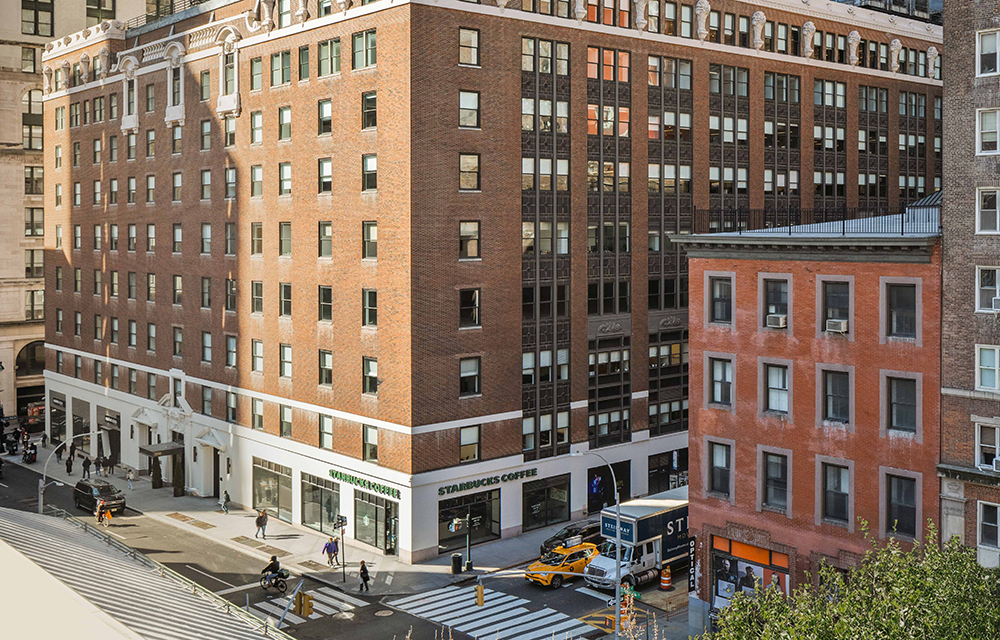
George Comfort & Sons completes $386 million refinance of 200 Madison Ave.
Manhattan, NY George Comfort & Sons, and its partners Loeb Partners Realty and Jamestown, completed a $386 million refinancing of 200 Madison Ave., its 750,000 s/f Grand Central district office



 (2).gif)

Quick Hits
.jpg)

