


 (2).gif)
News:
Finance
Posted: December 26, 2010
Cautious optimism for 2011 based upon the current state of the real estate market
My projections for 2010 were relatively accurate in regards to the real estate market in New York State and New England. With the continued low mortgage rates, values remained relatively stable in many of the areas in New York State and New England. Although net operating incomes, occupancies and rents did not improve substantially or decrease, debt service coverage ratios remained acceptable because of the low annual debt service. Some of the indicators showed some diminishment of rents and/or occupancy decreases. As an example, recent blended office vacancy in Downtown Albany is at 17% versus the 2nd quarter of 2009 of 14.4%. Based upon Loopnet statistics Metropolitan Buffalo area office asking rents decreased less than -1% between the end of the 2nd quarter of 2009 and the 2nd quarter of 2010. Asking sale prices for office space decreased -4.8% during the same time period. According to Loopnet, the Rochester Metropolitan area asking office rent decreases were -6.4% and asking sales price decreases were -11.6%. For the New York City metropolitan area the asking rent decrease was -12% and the asking sales price decrease for office was -5.3%.. For eastern Massachusetts the Metropolitan Worcester area office asking rents decrease were -7.9% and asking sale prices decrease was -7.9%. For central Massachusetts, in the Metropolitan Springfield market the asking office rentals decreased -3.3% and the asking sale prices decreased -6.2% . These Loopnet statistics were based upon the end of the 2nd quarter in 2010. Since that time, the market has generally improved during the last two quarters.
I've seen many transactions all over New York State and New England in smaller commercial and industrial properties because this type of properties tend to be geared toward owner occupancy. The large office, commercial and industrial investment property sales didn't appear to be as frequent unless they were distressed. Large investment properties that had stabilized operations were taken off the market until market values moved up. During the last half of 2010, values were reaching more of an acceptable level for sellers. Thus, some large transactions did increase as the year went on. I did put the caveat in my 2010 predictions which cautioned that if interest rates went up significantly this could be a disaster for the real estate market because of weakened demand. As I write this article for 2011, it's approaching mid-December. Unfortunately, interest rates are beginning to rise. One of the reasons is the continued "out of control" spending by the federal government. The stimulus bills did not focus on the majority of businesses in the country but instead focused on government, quasi governmental jobs and private union jobs. As an example, the GM recent stock offering could result in a net loss to the U.S. taxpayers of approximately -$20 billion. The net loss to the bond holders was approximately -$22 billion and the net loss to the Canadian taxpayers was approximately -$6 billion. Yet the UAW union's net position was a positive approximately +$2 billion.
It looks like the Bush tax cuts may be restored for all income levels. This is good because it should increase and encourage a growth of investment in new businesses and consumer spending. However, in order to get the bill passed, the Congress will probably have to agree to extend unemployment benefits at a cost of approximately $56 billion, extending the earned income tax payments to those who pay no federal taxes at an approximate cost of $40 billion. The approximate 30% reduction in the payroll tax will cost $120 billion. There is $425 billion tax breaks for households earning less than $250,000 and $175 billion for households earning more than $250,000. On top of this is the recent purchase by the Federal Reserve of treasuries at cost of $600 billion. The international markets have reacted negatively because these tax cuts are not being offset by spending cuts in the large federal bureaucracy which is the reason that interest rates may increase going forward. This federal spending craze could result in high interest rates which could derail a stable real estate market for 2011.
John Rynne, MAI, SRA, is the president and owner of Rynne, Murphy & Associates, Inc., Rochester, N.Y.
Tags:
Finance
MORE FROM Finance
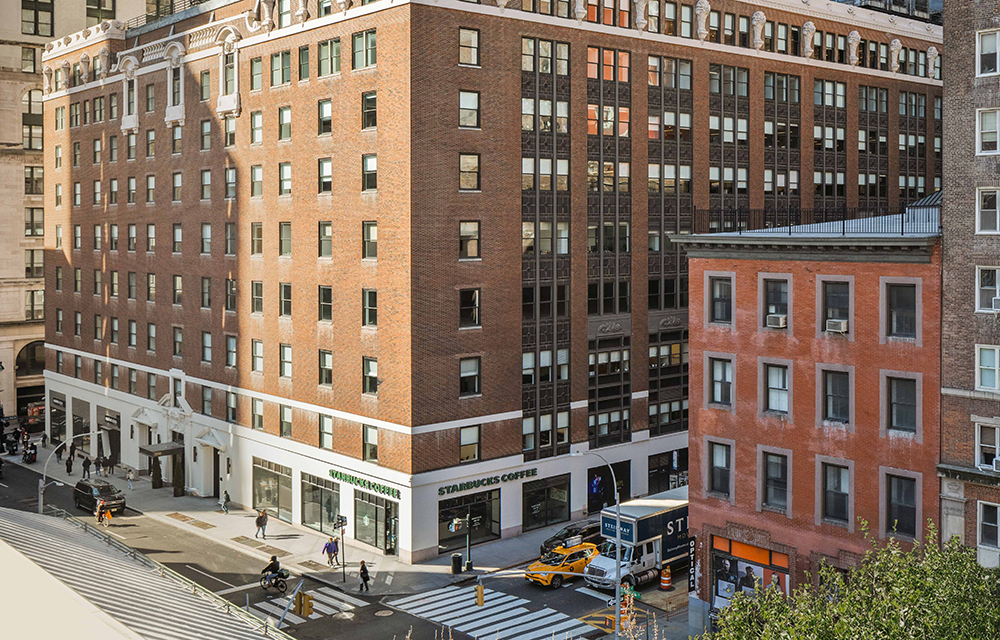
George Comfort & Sons completes $386 million refinance of 200 Madison Ave.
Manhattan, NY George Comfort & Sons, and its partners Loeb Partners Realty and Jamestown, completed a $386 million refinancing of 200 Madison Ave., its 750,000 s/f Grand Central district office

 (2).gif)

Quick Hits
.jpg)

