



News:
Brokerage
Posted: March 9, 2015
Poretsky and Gardner of Savills Studley arrange $50 million sale; Along with Ciraulo and Shapiro of Massey Knakal, now Cushman & Wakefield
RFR Holding LLC, along with joint venture partner Real Estate Capital Partners, has closed on the acquisition of 281 Park Ave. South, a historic pre-war 44,000 s/f office building in Midtown South, for a purchase price of $50 million. The transaction was brokered by Savills Studley, one of the leading global commercial real estate firms.
Savills Studley's senior managing director, Howard Poretsky, and senior managing director Patrick Gardner, along with John Ciraulo and Robert Shapiro of Massey Knakal, now Cushman & Wakefield, represented the seller in the transaction, the Federation of Protestant Welfare Agencies (FPWA). FPWA has owned and managed the landmark property for 50 years, and will reinvest the money from the sale in the organization to tackle social issues that affect the poor and working poor, and to support member agencies. Both Poretsky and Gardner have experience in representing not for profit organizations.
According to Poretsky, the transaction closed just before the end of Q4 2014 making it one of the biggest deals in the neighborhood during the quarter. However, he notes that the "social impact" of the transaction will influence the surrounding community for generations to come.
"This building, located in one of the most happening areas of Manhattan, is a building I've always admired as art," Poretsky said. "I've covered the Midtown South area long before the media/tech wave and have walked past this building over a thousand times in my career; not once could I walk past it without stopping to admire its magnificence and stature."
Located near Madison Sq. Park, Gramercy Park and Union Sq., the six-story property, located on the southeast corner of E22nd St., features a terra cotta stone façade, as well as a restored copper and terra-cotta roof, marble mosaic floors, wood wainscoting, and stained glass windows. The 106-year-old building was officially designated a New York City landmark in 1979 and was added to the National Register of Historic Places in 1982. New ownership plans to reposition the property for future office use.
"Besides the delight of crafting such an important and beneficial transaction on behalf of the Federation of Protestant Welfare Agencies that will sustain their mission of refining social issues, it was reassuring to find a buyer in Rosen who appreciates the architectural features throughout the entire building and who will likely preserve this incredible, centrally located city landmark," Poretsky said.
Tags:
Brokerage
MORE FROM Brokerage
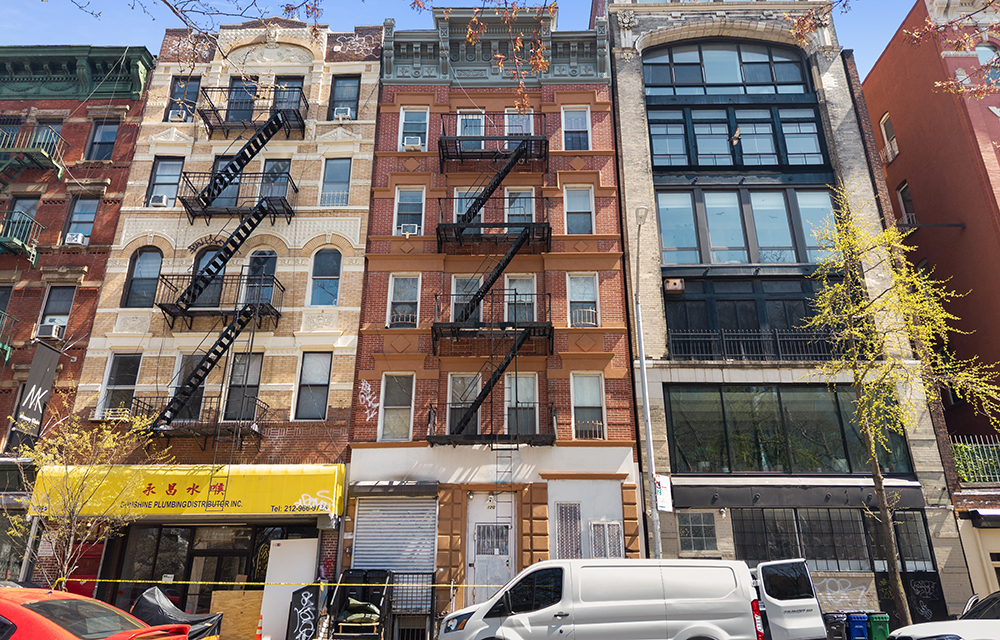
Investment Property Realty Group sells 120 Forsyth St. for $1.35 million
Manhattan, NY Investment Property Realty Group (IPRG) closed the sale of 120 Forsyth St., a mixed-use building located in the Lower East Side section of the city, for $1.35 million.



Quick Hits

Columns and Thought Leadership

Positive forecast for New York’s pro-housing push? - by Philip Butler
New York’s housing crisis remains a hot button topic despite growing consensus that varied and affordable housing is desperately needed statewide. Governor Hochul has recently introduced several initiatives to overcome N.Y.’s anti-housing

Hunt commercial real estate question and answer: Fortune 500 wisdom - by David Hunt
Yes, there are lessons to be learned from the largest companies in America when comes to managing your real estate. But the decision to buy or lease real estate may not be one of

A guide to finding the right NYC property management company - by Sanjay Gandhi
Being a small to midsize landlord in NYC is an increasingly demanding endeavor. From navigating complex regulations, increased compliance demands to dealing with tenant issues and remediating violations. It is wise to enlist the assistance of a partner, a professional

New York’s streets are full again, and the retail numbers prove it - by Noam Aziz
Walk down any New York block this year and you can feel it. The sidewalks are crowded, the storefronts are lit, and the energy that defines this city is back at full volume.
.gif)