



News:
Brokerage
Posted: November 25, 2013
Pembrook closes $7.5 million preferred equity for construction of Lincoln Park
Pembrook Capital Management LLC has closed a $7.5 million preferred equity transaction that will be used to facilitate the construction of Lincoln Park, a development consisting of two class A, multifamily apartment buildings, totaling 133 units.
The preferred equity Pembrook provided will serve as additional financing to a $32.1 million first mortgage construction loan that the borrower has secured from another lender.
"The borrower required additional funding and was looking to layer in preferred equity with accretive terms within the structure of this particular transaction," said Patrick Martin, managing director. "Pembrook came to the table with a customized financing solution that met the borrower's needs and provided the funds required to move forward with the construction of the project."
The Lincoln Park development includes the construction of new nine-story residential building located at 510 Flatbush Ave. and a new eight-story residential building located at 31 Lincoln Rd. Upon completion, the two buildings will contain 92,025 s/f of combined space, comprised of 39 studio units, 27 one bedroom units, and 67 two bedroom units. The entire development will contain 183,422 of total s/f, which includes additional space for parking and other accessory uses, as well as 22,000 s/f of ground floor retail, a community area, and other space. The construction commenced in September with an anticipated completion sometime in late 2015.
Pembrook works with real estate developers and investors to deliver financing for new construction, acquisition, and repositioning, focusing on primary and secondary markets with high barriers to entry. Since inception, Pembrook has originated or participated in over 50 investments totaling in excess of $600 million, involving properties with a total capitalization over $1.5 billion.
About Pembrook Capital Management, LLC
Founded in 2006 by Stuart J. Boesky, Pembrook Capital Management invests in and originates commercial real estate debt to finance all parts of a capital structure including first mortgages, mezzanine, bridge loans, note financings, and preferred equity across the United States. The firm invests in most commercial real estate property categories, including multifamily, office, retail and industrial.
Tags:
Brokerage
MORE FROM Brokerage
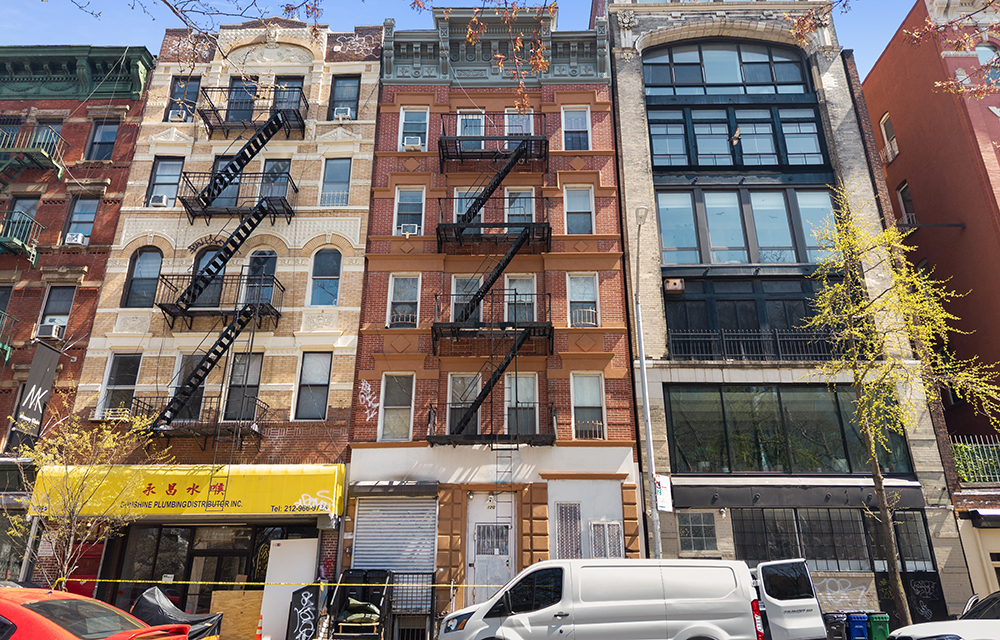
Investment Property Realty Group sells 120 Forsyth St. for $1.35 million
Manhattan, NY Investment Property Realty Group (IPRG) closed the sale of 120 Forsyth St., a mixed-use building located in the Lower East Side section of the city, for $1.35 million.




Quick Hits

Columns and Thought Leadership

Positive forecast for New York’s pro-housing push? - by Philip Butler
New York’s housing crisis remains a hot button topic despite growing consensus that varied and affordable housing is desperately needed statewide. Governor Hochul has recently introduced several initiatives to overcome N.Y.’s anti-housing

New York’s streets are full again, and the retail numbers prove it - by Noam Aziz
Walk down any New York block this year and you can feel it. The sidewalks are crowded, the storefronts are lit, and the energy that defines this city is back at full volume.

A guide to finding the right NYC property management company - by Sanjay Gandhi
Being a small to midsize landlord in NYC is an increasingly demanding endeavor. From navigating complex regulations, increased compliance demands to dealing with tenant issues and remediating violations. It is wise to enlist the assistance of a partner, a professional

Hunt commercial real estate question and answer: Fortune 500 wisdom - by David Hunt
Yes, there are lessons to be learned from the largest companies in America when comes to managing your real estate. But the decision to buy or lease real estate may not be one of
.gif)