



News:
Brokerage
Posted: December 14, 2021
Open Access Fellows return to Project REAP
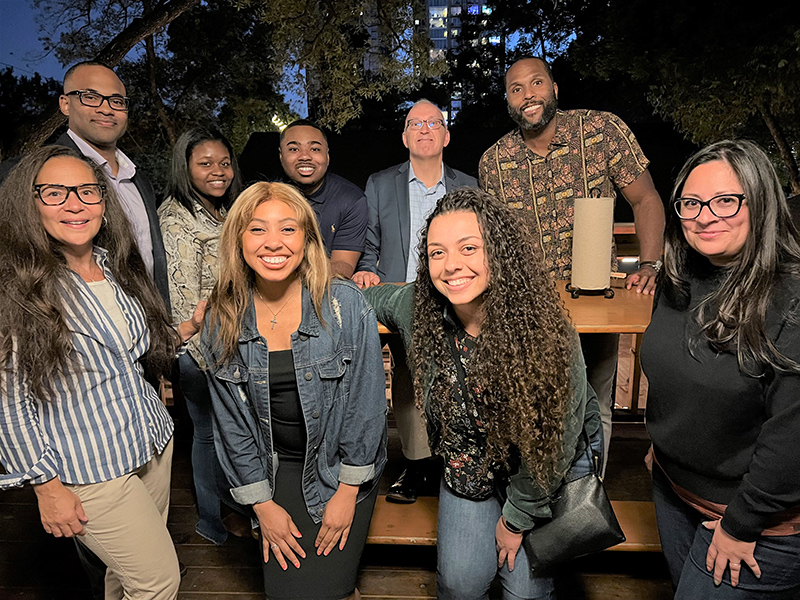 New York, NY Project Real Estate Associate Program (REAP), the nation’s leading effort to advance diversity, equity and inclusion in the commercial real estate industry, is announcing the return of Open Access, an initiative to increase diverse representation in community development finance.
The community development finance industry is dedicated to improving under-resourced and underrepresented communities nationwide, many of which are Black and Latinx areas disproportionately affected by the pandemic. Yet the industry itself is grossly underrepresented by BIPOC professionals on all levels. This across-the-board talent deficit often deprives organizations of the cultural affinities needed to best understand and relate to the populations they serve, while BIPOC professionals remain unaware of career opportunities in the industry and access to the marketplace.
“We need to have our industry be more representative of the communities where we work. There is great talent in the market. This is not just the right thing to do–the proper representation influences our allocation of resources, the projects we fund and the impacts we create and achieve in the communities,” said Gina Nisbeth, a director at Citi and co-founder of the Open Access initiative with Jeff Monge, president of Monge Capital.
Open Access Fellows will benefit from paid internships with industry leaders, training, networking, webinars and conference attendance sponsored by Novogradac & Company LLC, to prepare for community development careers in accounting, legal, finance, consultancy, development and related areas. The program will attract and cultivate an initial cohort of economic development talent—professionals seeking to become agents of change, restoration and empowerment in communities of color.
Applicants must have a four-year degree from an accredited institution and be able to commit to 160 hours (20 eight-hour days) over up to 12 weeks from January 17 through April 25, 2022. The application window is now closed. Accepted candidates will be announced January 2022; training and internships begin Monday, January 18, 2022. Sponsors include PNC, US Bancorp, Chase, Dudley Ventures, Hunt Companies, Merchants Capital, TELACU, Novogradac, NORF Companies, Advantage Capital, The Bernstein Companies and Monge Capital.
Tags:
Brokerage
MORE FROM Brokerage

Residential real estate consultancy and brokerage firm Nancy Packes, Inc. rebrands as NPI
Manhattan, NY The NYC-based premier residential real estate consultancy and brokerage firm, Nancy Packes Inc., has rebranded as NPI. Helmed by Seth Rosner, most recently the firm’s managing partner and now president, the company has been intricately involved in hundreds of Tri-State new developments and conversions, spearheading the full project life cycle, from assessment/pre-dev.





Columns and Thought Leadership

Hunt commercial real estate question and answer: Fortune 500 wisdom - by David Hunt
Yes, there are lessons to be learned from the largest companies in America when comes to managing your real estate. But the decision to buy or lease real estate may not be one of

A guide to finding the right NYC property management company - by Sanjay Gandhi
Being a small to midsize landlord in NYC is an increasingly demanding endeavor. From navigating complex regulations, increased compliance demands to dealing with tenant issues and remediating violations. It is wise to enlist the assistance of a partner, a professional

Hunt CRE question and answer: Choosing a real estate agent - by David Hunt
First, we will only work with one agent exclusively. The primary reason is that we want that agent to legally represent our client’s interests. In New York State, a real estate agent has a fiduciary

New York’s streets are full again, and the retail numbers prove it - by Noam Aziz
Walk down any New York block this year and you can feel it. The sidewalks are crowded, the storefronts are lit, and the energy that defines this city is back at full volume.
.gif)