



News:
Brokerage
Posted: November 5, 2019
Outside the Region: Panorama Tower wins award, DeSimone Consulting served as structural engineer
Miami, FL Panorama Tower, a mixed-use development located downtown, has won a 2019 Structures Award from South Florida Business Journal for innovative design and positive impact on the surrounding community. As “Best Mixed-Use Project,” the development will be honored at the 2019 Structures Awards gala on November 21st.
Located in the Brickell section of downtown, the 868-ft. structure is the tallest building in the state and the tallest residential building south of New York City. The entire development comprises 2.6 million s/f including 821 rental apartments, a 208-key Hyatt Centric hotel, 80,000 s/f of retail area, 100,000 s/f of commercial office space, parking accommodations for 2,000 vehicles, and a collection of resort-class amenities.
Today, the 83-story tower is equipped to support a community of over 3,000 people, representing one of the best examples of high-rise, urban living in Miami, Florida.
DeSimone Consulting Engineers served as structural engineer for the project and had the honor of collaborating with developer Tibor Hollo of Florida East Coast Realty (FECR), design architect Moshe Cosicher, and Baker Concrete Construction.
“DeSimone is honored to be recognized by the South Florida Business Journal for this extraordinary development,” said Stephen DeSimone, President and CEO of DeSimone Consulting Engineers. “It is extremely gratifying to work with visionary developers on projects like the Panorama Tower that require design innovation, technical expertise, and creativity.”
During construction, the project team completed a record-setting pile cap, as well as the largest, continuous, single foundation concrete pour in the state of Florida. More than 175 cement trucks and over 600 people were involved in the pour including 120 carpenters and laborers, 100 iron workers, 350 concrete truck drivers, and 20 management professionals. The entire foundation mat required nearly 15,000 cubic yards of high-strength concrete totaling 13.5 million pounds, six concrete pumps that ran continuously for 22.5 hours, and approximately 3,500 tons of steel.
Beyond South Florida Business Journal, Panorama Tower has won major design awards from CTBUH, the global authority on high-rise structures, Engineering News Record as part of the 2019 Best Project Awards, and the Concrete Industry Board in New York among others.
Tags:
Brokerage
MORE FROM Brokerage
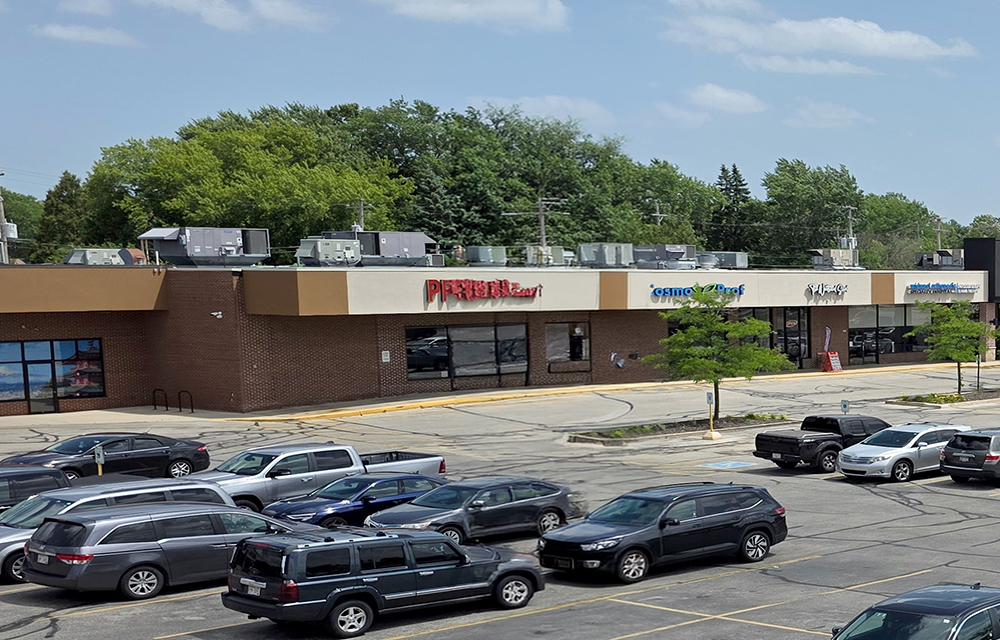
United Properties Corp. expands Wisconsin and Illinois retail presence adding 200,000 s/f
West Allis, WI United Properties Corp. completed two retail acquisitions totaling $27.4 million across Illinois and Wisconsin, adding 205,000 s/f of shopping center space to its portfolio



Quick Hits

Columns and Thought Leadership

Hunt commercial real estate question and answer: Fortune 500 wisdom - by David Hunt
Yes, there are lessons to be learned from the largest companies in America when comes to managing your real estate. But the decision to buy or lease real estate may not be one of

New York’s streets are full again, and the retail numbers prove it - by Noam Aziz
Walk down any New York block this year and you can feel it. The sidewalks are crowded, the storefronts are lit, and the energy that defines this city is back at full volume.

Positive forecast for New York’s pro-housing push? - by Philip Butler
New York’s housing crisis remains a hot button topic despite growing consensus that varied and affordable housing is desperately needed statewide. Governor Hochul has recently introduced several initiatives to overcome N.Y.’s anti-housing

A guide to finding the right NYC property management company - by Sanjay Gandhi
Being a small to midsize landlord in NYC is an increasingly demanding endeavor. From navigating complex regulations, increased compliance demands to dealing with tenant issues and remediating violations. It is wise to enlist the assistance of a partner, a professional
.gif)