



News:
Brokerage
Posted: January 27, 2014
NYU Schack Institute of Real Estate's Hersch named Distinguished Felow by NAIOP Research Foundation
Barry Hersh, a clinical associate professor at the NYU Schack Institute of Real Estate, a division of the NYU School of Continuing and Professional Studies (NYU-SCPS), has been named a Distinguished Fellow for 2014 by the NAIOP Research Foundation for his exemplary research on environmentally sustainable real estate. NAIOP, the Commercial Real Estate Development Association, is the leading organization for developers, owners, and related professionals in office, industrial, retail, and mixed-use real estate.
The Distinguished Fellows program serves as a bridge between industry and academia and is comprised of highly-regarded academicians and industry executives working together to enhance synergy on a number of economic and social issues affecting the industry. As a Distinguished Fellow, Hersh will assist NAIOP in conducting cutting-edge research and in expanding the Association's presence within the academic community.
"We congratulate Barry Hersh on this well-deserved honor," said NYU Schack Institute of Real Estate divisional dean Rosemary Scanlon. "I join with the entire Schack faculty to commend Professor Hersh for his longtime efforts in sustainable real estate and brownfield redevelopment. NAIOP has chosen a most experienced and knowledgeable professional as their designee this year."
Hersh teaches graduate courses in property development and coordinates the development program at NYU Schack. He has dedicated his academic career to promoting environmentally responsible construction and has advised on local, state, and national projects.
In 2012, NAIOP commissioned him to explore the challenges that real estate developers face when tasked with revitalizing contaminated waterfronts or brownfield sites. Hersh compiled his findings and remediation solutions in his study, "The Complexity of Urban Waterfront Redevelopment."
Tags:
Brokerage
MORE FROM Brokerage
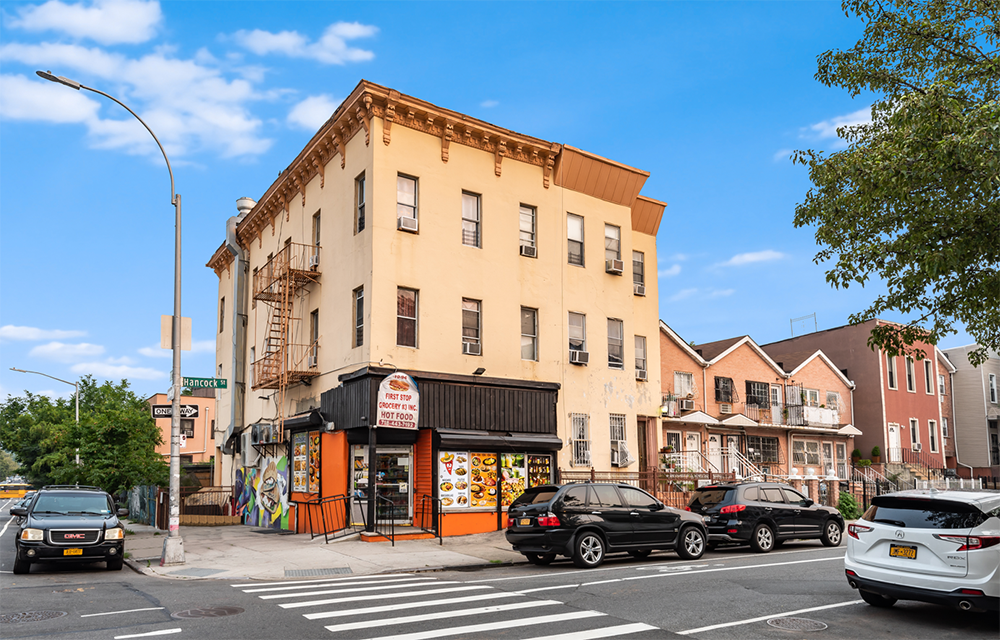
Investment Property Realty Group closes $1.75 million sale of 1094 Hancock Street in Brooklyn
Brooklyn, NY Investment Property Realty Group (IPRG), a New York-based commercial investment firm, has closed the sale of 1094 Hancock St., a mixed-use building in the Bushwick section, for $1.75 million.


 (2).gif)

Columns and Thought Leadership

Hunt commercial real estate question and answer: Fortune 500 wisdom - by David Hunt
Yes, there are lessons to be learned from the largest companies in America when comes to managing your real estate. But the decision to buy or lease real estate may not be one of

Hunt CRE question and answer: Choosing a real estate agent - by David Hunt
First, we will only work with one agent exclusively. The primary reason is that we want that agent to legally represent our client’s interests. In New York State, a real estate agent has a fiduciary

New York’s streets are full again, and the retail numbers prove it - by Noam Aziz
Walk down any New York block this year and you can feel it. The sidewalks are crowded, the storefronts are lit, and the energy that defines this city is back at full volume.

A guide to finding the right NYC property management company - by Sanjay Gandhi
Being a small to midsize landlord in NYC is an increasingly demanding endeavor. From navigating complex regulations, increased compliance demands to dealing with tenant issues and remediating violations. It is wise to enlist the assistance of a partner, a professional
.gif)