



News:
Brokerage
Posted: March 9, 2015
NY Appeals Court rules in favor of former property owners in Long Beach Superblock Condemnation
The New York State Appellate Division has upheld the State Supreme Court's 2012 determination that two former property owners within the Long Beach "Superblock" are owed $5.5 million in additional compensation, as well as interest which to date has accrued to $3.1 million, for their condemned properties based on the value of those parcels being part of a larger development.
In 2006, the City of Long Beach acquired, via condemnation, five undeveloped parcels of oceanfront property which had been owned by Louis Bombart and Steve Silverberg since the late 1970's. The properties are within the last remaining block of undeveloped oceanfront city land in New York State -- a 6-acre area known as the "Superblock".
"While the property owners paid taxes and insurance on these properties, development had continually been blocked for decades, first when the city cut off ingress and egress to these parcels in the 1980s and then by a construction moratorium on the Superblock site in the 1990s," said Mark Mulholland, of Ruskin Moscou Faltischek (Uniondale, NY).
"Throughout the years there had been numerous private Superblock proposals that were based on the assemblage of properties, and in fact the City of Long Beach itself had solicited proposals for Superblock development as a single site," Mulholland noted. "The Supreme Court, and ultimately the Appellate Division, concurred with our argument that the highest and best use of these parcels should be determined as part of an assembled site."
In its decision, the Appellate Division recognized the property owners' argument that "...a claimant is entitled to the fair market value of its property for its highest and best use even though that use is in connection with adjoining properties, provided there is a reasonable probability that the condemned property would be combined with other tracts in the reasonably near future." (Matter of Metropolitan Transp. Auth., 86AD3d 314, 320, quoting Olson v United States, 292 US 246, 256).
In 2012 the Supreme Court ordered an additional $5.5 million to be paid to the former owners on top of the initial $3 million advance payment, as well interest which continues to accrue at 6%; this decision was upheld by the Appellate Division January 14, 2015. With the award of legal fees, the former property owners are now owed more than $10 million from the City of Long Beach.
For more than 45 years, Ruskin Moscou Faltischek, a sixty member professional firm, headquartered in Uniondale, New York, has built a reputation as one of the region's leading providers of innovative legal services. Its attorneys are practical, experienced advocates who measure their success by their clients' success. Cornerstone groups in all major practice areas of the law are represented at the firm, including corporate & securities, financial services, commercial litigation, digital media, energy, intellectual property, health care, real estate, employment and trusts & estates. Clients include large and mid-sized corporations, privately held businesses, institutions and individuals.
Tags:
Brokerage
MORE FROM Brokerage

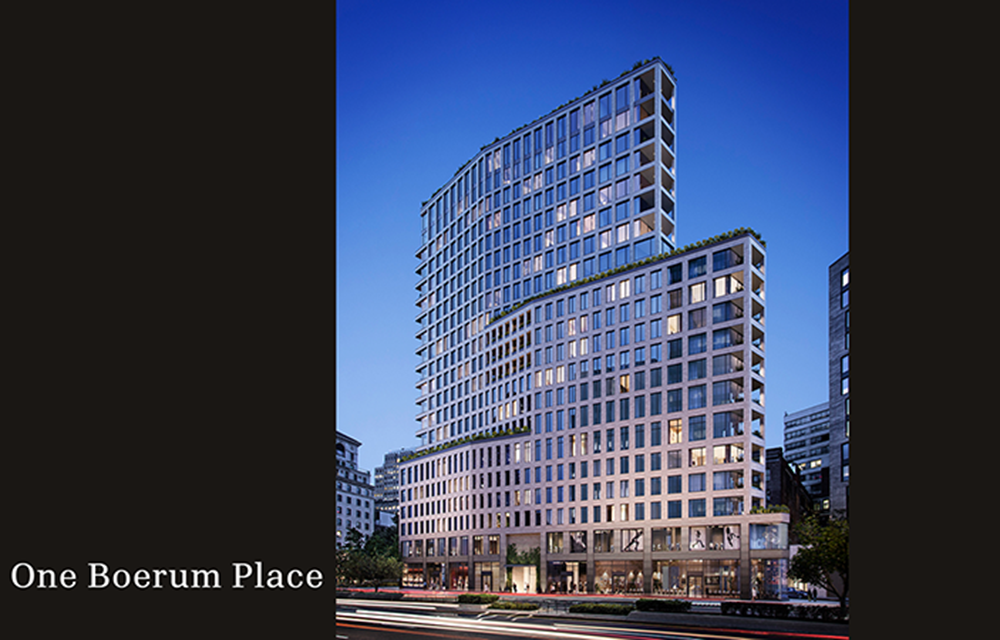
200E20TH sells out in Gramercy, penthouse A closes out sales at the CetraRuddy-designed condominium residences
Manhattan, NY 200E20TH, the CetraRuddy-designed architectural masterwork that brought a curved, contemporary sensibility to Gramercy’s Beaux-Arts streetscape, has



 (2).gif)

Columns and Thought Leadership

The art of investing in real estate - by Thomas Donovan
Real estate investing is as much an art as it is a skill. No one can time the market, or the factors that drive it, perfectly. Location, zoning, size, transportation, and neighborhood density give you a baseline for

New York’s streets are full again, and the retail numbers prove it - by Noam Aziz
Walk down any New York block this year and you can feel it. The sidewalks are crowded, the storefronts are lit, and the energy that defines this city is back at full volume.

Hunt commercial real estate question and answer: Fortune 500 wisdom - by David Hunt
Yes, there are lessons to be learned from the largest companies in America when comes to managing your real estate. But the decision to buy or lease real estate may not be one of

Hunt CRE question and answer: Choosing a real estate agent - by David Hunt
First, we will only work with one agent exclusively. The primary reason is that we want that agent to legally represent our client’s interests. In New York State, a real estate agent has a fiduciary
.gif)