



News:
Brokerage
Posted: June 1, 2021
Nuveen Real Estate begins renovations at 440,000 s/f Princeton Point
Princeton, NJ Nuveen Real Estate has begun renovations at Princeton Point, the 440,000 s/f office complex formerly known as 600- and 650 College Rd. in the Princeton Forrestal Center campus. The improvements will focus on increased utilization of outdoor facilities, including patios and walking trails, and community engagement through expanded onsite amenities. Featured among these enhancements are retrofitted onsite cafés and upgraded lobbies with green walls and natural light.
In line with its commitment to hospitality-inspired service, Nuveen will introduce a mobile application in September 2021 that will allow Princeton Point tenants to communicate directly with property management. The multi-channel program will offer users access to building directories, maintenance requests, discounts at local stores and restaurants, building event notifications, and more. Tenants will be able to use the app to order food delivery from each buildings’ onsite café.
“We’re committed to creating hospitality driven and productivity enhancing work spaces, and are excited to introduce the tenants of Princeton Point to a state-of-the-art complex tailored to reinvigorate office life,” said Ines Olesen, director of New York investments at Nuveen Real Estate. “In addition to the health and wellness focused renovations, the new mobile app will enhance the overall consistent tenant experience that we offer across the Tri-State area. We’re excited to roll out the complex’s major points of distinction—creativity, innovation, and wellness—while reacquainting tenants with industry-leading services our tenants expect from Nuveen.”
Princeton Point, located within Princeton University’s bucolic 2,000-acre master-planned business/research campus, features a town-hall style conference center, 60-ft. glass atrium and courtyard seating areas at 600 College Rd. At 650 College Rd., there is a furnished private patio. Both buildings are surrounded by forests, with access to walking, jogging and biking trails.
The office complex boasts a tenant roster that includes State Street Bank, BT Americas, RCN/ Patriot Media, Saul Ewing Arnstein & Lehr, Axens NA, Coface, UnitedSiC, and Hamilton & Company.
Princeton Point, which offers access to Rte. 1 and downtown, is close to Newark Liberty International Airport, Princeton Junction Commuter Rail, retail stores, restaurants, and hotels at the Forrestal Center.
Tags:
Brokerage
MORE FROM Brokerage
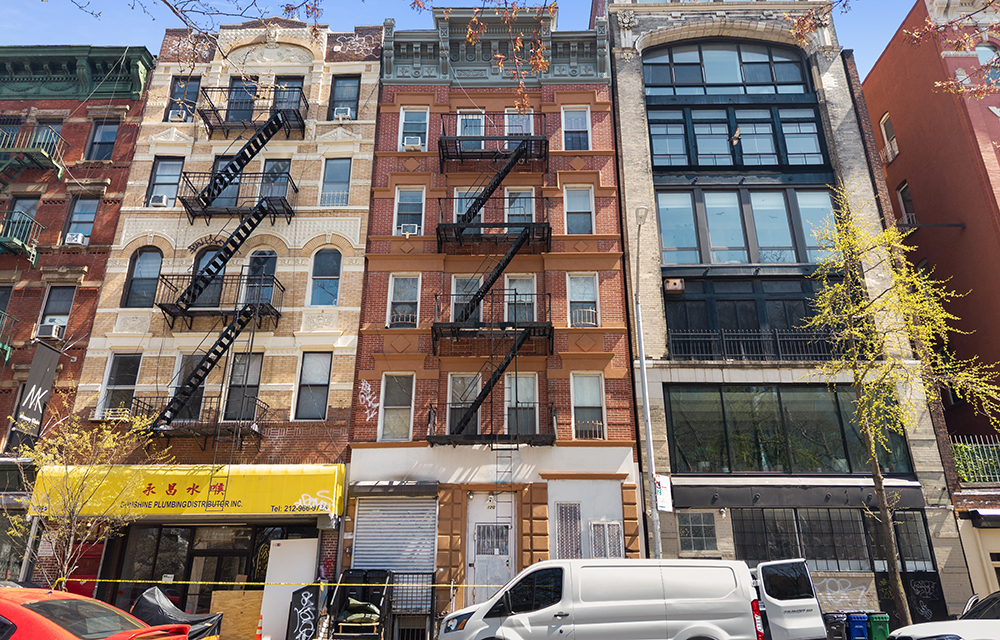
Investment Property Realty Group sells 120 Forsyth St. for $1.35 million
Manhattan, NY Investment Property Realty Group (IPRG) closed the sale of 120 Forsyth St., a mixed-use building located in the Lower East Side section of the city, for $1.35 million.



Quick Hits
 (2).gif)

Columns and Thought Leadership

A guide to finding the right NYC property management company - by Sanjay Gandhi
Being a small to midsize landlord in NYC is an increasingly demanding endeavor. From navigating complex regulations, increased compliance demands to dealing with tenant issues and remediating violations. It is wise to enlist the assistance of a partner, a professional

New York’s streets are full again, and the retail numbers prove it - by Noam Aziz
Walk down any New York block this year and you can feel it. The sidewalks are crowded, the storefronts are lit, and the energy that defines this city is back at full volume.

Positive forecast for New York’s pro-housing push? - by Philip Butler
New York’s housing crisis remains a hot button topic despite growing consensus that varied and affordable housing is desperately needed statewide. Governor Hochul has recently introduced several initiatives to overcome N.Y.’s anti-housing

Hunt commercial real estate question and answer: Fortune 500 wisdom - by David Hunt
Yes, there are lessons to be learned from the largest companies in America when comes to managing your real estate. But the decision to buy or lease real estate may not be one of
.gif)