



News:
Brokerage
Posted: July 19, 2016
New York City real estate fueling the 1031 business: What does the future hold? - by Michael Packman
 Micahel Packman, PNI Equities
What does the future hold for New York City real estate? Just like any market, you need sellers and buyers and there doesn’t seem to be a shortage on either side in New York. One of the main driving forces is an enormous amount of overseas money pouring into the market.
There are many factors driving this investment. One is the growth in countries like China that has created huge amounts of wealth. Especially with the recent slowing of the economy in China, there is a large interest in diversifying. According to Real Capital Analytics (RCA) on May 24th, Chinese companies have purchased or are buying 47 U.S. properties worth $9.3 billion, making the Chinese the most active foreign buyers in the U.S. More lenient tax laws for overseas pension funds and the perceived safe-haven of New York are a couple of others. The ability to do a 1031 exchange and defer the taxes on what for many are substantial gains has also contributed to this boom.
Working very closely in the New York market has led me to see this first hand. I have met several large Chinese builders that are aggressively looking for land in the New York City area. I also see the other side, as we help many people with their 1031 exchanges who are very happy to sell in the same areas. While some don’t want to invest outside of New York, many are not excited exchanging into the same low cap rate environment they are selling into.
My experience in financial markets in general, for over two decades has led me to view this market very cautiously. Construction and property costs have become so expensive that many major New York real estate companies are stepping away from building and only buying in very select scenarios. While this would normally be a big red flag as to where the market is going, the interesting thing is that most of these New York moguls aren’t selling many properties either. As far has residential development, we are seeing significant growth in the outer boroughs as a way to participate for a fraction of the cost. Even the most desirable parts of Brooklyn for instance are about half the cost to build in as the city. However, some areas in Flushing for example are commanding Manhattan like prices in due to the huge growth of the Chinese population. I have seen the effects of this first hand as we recently opened an office in the area. Some of the rents are Park Ave. prices, however, like anyone else that wants to do expand their presence in the Chinese market, we paid the astronomically priced rent.
All of this has helped demand in other parts of the country where cap rates are more attractive. We are seeing cap rates start to compress on triple net properties all over the country, especially with credit tenants. A lot of this demand is being driven by sellers in the coastal areas like New York and California that want to defer their taxes while still getting a decent return on their investment. When exchangers are investing outside of their known areas, we have seen a big interest in solutions that require little or no management responsibilities. This is where the triple net properties have become extremely popular due to the small amount of management required. This has also been a driving force in the increased demand for securitized options as exchange solutions. The most common form, Delaware Statutory Trusts (DSTs)saw over a billion dollars last year invested in the structure.
Whether or not the New York market is in for a major decline or not, is a question for the crystal ball, but the 1031 market should be strong until it does.
Michael Packman is chief executive officer at PNI Equities, a division of PNI Capital Partners, Westbury, N.Y.
PNI Capital Partners Inc. is a branch office of, and offers securities through Axiom Capital Management, Inc. member FINRA/SIPC. PNI Capital Partners, Inc. and Axiom Capital Management, Inc. are independent of each other. PNI Capital Partners does not offer tax advice. Please consult your tax professional for tax advice.
Tags:
Brokerage
MORE FROM Brokerage
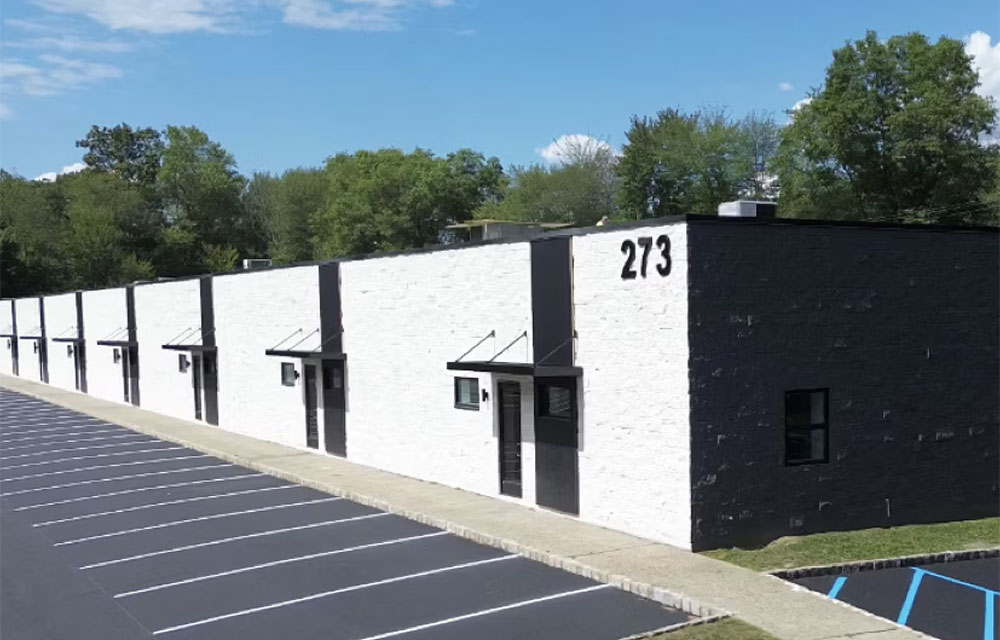
Resource Realty of Northern NJ delivers complete lease-up of 235 Franklin Rd. for Commerce Park Investors
Randolph, NJ Resource Realty of Northern New Jersey (RRNNJ) has completed the lease-up of a 10-unit small-bay industrial property at 273 Franklin Rd., marking the culmination of an investment strategy that began



Quick Hits
 (2).gif)

Columns and Thought Leadership

Positive forecast for New York’s pro-housing push? - by Philip Butler
New York’s housing crisis remains a hot button topic despite growing consensus that varied and affordable housing is desperately needed statewide. Governor Hochul has recently introduced several initiatives to overcome N.Y.’s anti-housing

Hunt commercial real estate question and answer: Fortune 500 wisdom - by David Hunt
Yes, there are lessons to be learned from the largest companies in America when comes to managing your real estate. But the decision to buy or lease real estate may not be one of

A guide to finding the right NYC property management company - by Sanjay Gandhi
Being a small to midsize landlord in NYC is an increasingly demanding endeavor. From navigating complex regulations, increased compliance demands to dealing with tenant issues and remediating violations. It is wise to enlist the assistance of a partner, a professional

New York’s streets are full again, and the retail numbers prove it - by Noam Aziz
Walk down any New York block this year and you can feel it. The sidewalks are crowded, the storefronts are lit, and the energy that defines this city is back at full volume.
.gif)