



News:
Brokerage
Posted: July 19, 2016
Hudson Yards’ race to become residential area: To create 13,500 new residential units in the area - by Howard Raber
 Howard Raber, Ariel Property Advisors
A major breakthrough was reached this past June when 10 Hudson Yards was the first building in Manhattan’s newest neighborhood on the Far West Side to officially open its doors with its first corporate tenant, Coach. It is evident that the redevelopment of Hudson Yards is now taking a front seat in driving New York City’s economic engine fueling new jobs and economic activity.
The project, which has an estimated completion date of 2024, will bring 16 new skyscrapers containing more than 12 million s/f of office, residential, and retail space, according to plans provided by Kohn Pedersen Fox Associates. Expected to contribute nearly $19 billion annually to New York City’s Gross City Product, Hudson Yards is poised to transform both the geographic and economic landscape of New York City.
Most Hudson Yards coverage tends to focus on the gRand Commercial developments and newsworthy anchor tenants, but new residential properties will provide housing, public open space, and amenities to create an exciting and desirable residential community.
With a projected 47,000 new residents coming to New York City each year, the Hudson Yards rezoning is allowing the city to expand capacity for both housing and commercial space in a very planned and methodical way, according to Ariel Property Advisors’ newly released Neighborhood Report on Hudson Yards.
The Special Hudson Yards District which roughly runs from 30th St. to 41st St. between Eleventh and Eighth Aves. will create 13,500 new residential units in the neighborhood and is destined to be a desirable live and work destination.
Several new multifamily projects are underway and have yet to open, but recently constructed residential buildings within Hudson Yards’ immediate vicinity give a sense of what is to be expected. Notably, Port 10, a 91-unit mixed-use building located at 303-309 10th Ave., completed construction and began leasing units in 2007. The property has unobstructed views of Chelsea to the east and sits on the east side of the High Line, surrounded by a number of high-profile residential developments.
Despite ongoing construction, market rents for the area currently range between $75-90 per s/f. Tenants are clearly eager to be part of the evolution of this neighborhood and pay market rents, as seen by the values being achieved in Port 10, Avalon West Chelsea, as well as the Abington House at 505 West 29th St.
Some of Hudson Yards’ most exciting residential projects include the following:
• 15 Hudson Yards: One of three new towers being jointly developed by the Related Companies and Oxford Property Group, this 910-ft. building will include a mix of 385 rentals and condos. The design is a collaboration between Diller Scofidio + Renfro and David Rockwell, and will stand 70-stories when complete. The project is expected to wrap up sometime in 2018. Additionally, The Shed, a structure that will span six levels and will be used for performances and installation will be located at the base of the building.
• 520 West 28th St.: Designed by Zaha Hadid, 520 West 28th Street in New York’s High Line district in West Chelsea, is identified as the cultural hot spot in Manhattan. Hadid’s NYC condos will be home to 39 new luxury apartments come 2017. A reflection of the popularity of the thriving arts district, the Manhattan condos will start at $4.95 million and rise up to $50 million for the development’s largest penthouse.
• 507-515 West 28th St.: Lalezarian Properties’ 507-515 West 28th St. plans to launch leasing this summer at its 375-unit development in West Chelsea, where one-bedrooms will range from $5,000 to $6,000. The tallest of the three buildings is a 35-story tower stretching 420 ft. in the air along 10th Ave.
• 522 West 29th St.: Singapore-based Architect Soo Chan’s 522 West 29th Street, is an 11-story, 31-unit luxury residential project. The building is now on the rise, courtesy of Tectonic, with concrete being poured for the third floor. Its completion is expected towards the end of this year.
Moreover, because projects of this scale are rarely seen in Manhattan, the Hudson Yards redevelopment project has granted the city an unprecedented opportunity to design an innovative self-contained community from the ground up that will in turn provide residents a new neighborhood to choose to call home.
For the full Neighborhood Report on Hudson Yards please see here: http://arielpa.nyc/investor-relations/research-reports
Howard Raber is a vice president at Ariel Property Advisors, New York, N.Y.
Tags:
Brokerage
MORE FROM Brokerage
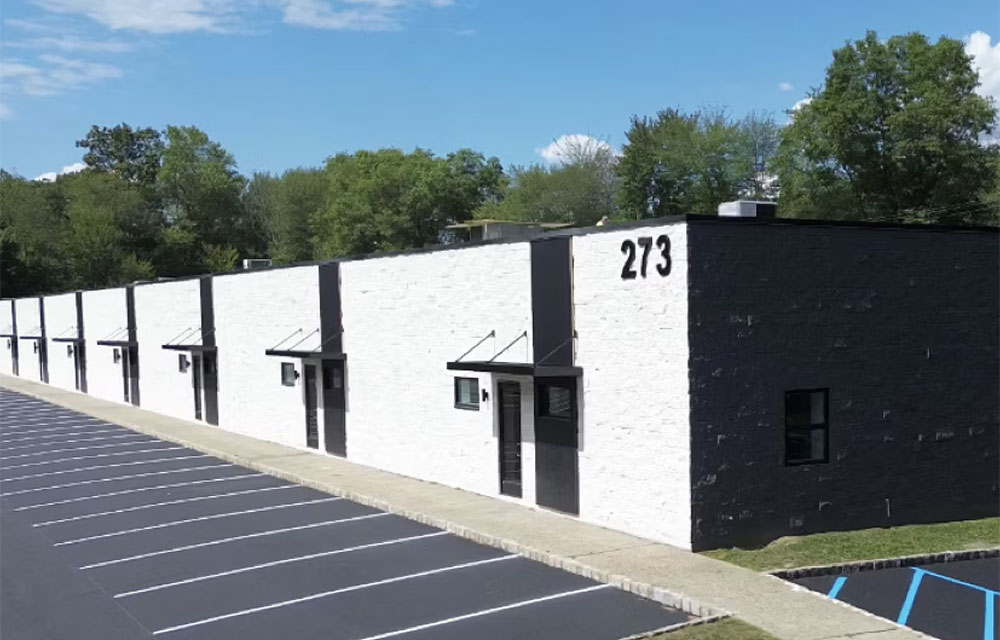
Resource Realty of Northern NJ delivers complete lease-up of 235 Franklin Rd. for Commerce Park Investors
Randolph, NJ Resource Realty of Northern New Jersey (RRNNJ) has completed the lease-up of a 10-unit small-bay industrial property at 273 Franklin Rd., marking the culmination of an investment strategy that began



Quick Hits
 (2).gif)

Columns and Thought Leadership

Hunt commercial real estate question and answer: Fortune 500 wisdom - by David Hunt
Yes, there are lessons to be learned from the largest companies in America when comes to managing your real estate. But the decision to buy or lease real estate may not be one of

A guide to finding the right NYC property management company - by Sanjay Gandhi
Being a small to midsize landlord in NYC is an increasingly demanding endeavor. From navigating complex regulations, increased compliance demands to dealing with tenant issues and remediating violations. It is wise to enlist the assistance of a partner, a professional

Positive forecast for New York’s pro-housing push? - by Philip Butler
New York’s housing crisis remains a hot button topic despite growing consensus that varied and affordable housing is desperately needed statewide. Governor Hochul has recently introduced several initiatives to overcome N.Y.’s anti-housing

New York’s streets are full again, and the retail numbers prove it - by Noam Aziz
Walk down any New York block this year and you can feel it. The sidewalks are crowded, the storefronts are lit, and the energy that defines this city is back at full volume.
.gif)