



News:
Brokerage
Posted: July 19, 2016
Tax commision protest should be on the mind of all property owners and developers - by Peter Blond
 Peter Blond, Brandt,
Steinberg, Lewis
& Blond LLP
The end of June is usually hectic with clients and prospective clients calling about their newly issued NYC tax bills due July 1st. What isn’t typical, from all types of property owners, is the level of concern and frustration in their voices. In fact, I have not experienced a June like this since 2008. There are other similar scents in the air from 2008. On the residential front, vacancy rates are climbing and rents appear to have topped out. On the commercial front, storefronts in customarily superior locations are increasingly vacant. On the geopolitical front, a two-term President will be replaced by a possible “wildcard.”
Of course there are folks trying to sell Brexit as a good thing for the U.S. real estate market. Or maybe you’re a believer that Chinese investors will continue parking their money in U.S. assets? When people are postulating to forecast continued increases in U.S. property values, it seems to me they are in tacit agreement that leading domestic indicators have turned negative.
As Louis Pasteur said, albeit in French, “Chance favors the prepared mind.” As I wrote back in 2005, landlords that fail to protest their real estate tax assessment - because their tenant or tenants pay most or all of the corresponding taxes – risk angering their tenants at best; at worst, they risk having to pay the taxes themselves while receiving little or no base rent. While troubled tenancies are often noticeable, sometimes a net or anchor tenant can stop paying or even vacate with little notice. This is particularly true when there is a widespread negative economic event, like 2008.
Prudent commercial landlords file a yearly tax assessment protest, regardless of macro or micro-economics, to protect their rights and interests. An example of why this can prove critical: Property owner A files a NYC Tax Commission protest by March 1st, 2016, even though the property is performing well relative to the assessment. On March 2nd, the landlord receives notice that the tenant will be vacating immediately. In this example, the landlord preserved its recourse as to the tax assessment and corresponding taxes that run from July 1st to the following June 30th.
Protective measures by landlords, like the above example, can often prove prescient. If property owner A failed to file by March 1st, it would be liable for the full-year tax bill despite the dramatic negative change in circumstance. Additionally, commercial tenants paying a pro-rata portion of the tax bill expect their landlord to protect their interests as well. A partial tenant usually has no legal standing to protest on their own. Nonetheless, actions have been commenced against landlords for failure to protest, regardless of whether the lease indicated such responsibility existed.
Residential ownership has different concerns, since there are no “pass-throughs” involved. The topic causing the most anxiety, lately, is new residential condominiums. Much of the uneasiness originates from 421a exemptions or, more to the point, over-assessments which leave substantial tax burdens on new unsuspecting purchasers. Several years ago, before the sun-setting of the 421a program as we knew it, the program’s benefits were scaled back. Specifically, a “cap” was legislated where each condo unit had a maximum benefit regardless of how high the assessment was for that one unit.
The “cap” created a situation where purchasers – who were used to prior 421a buildings/benefits – anticipated a full exemption for a period of years or little to no near-term tax liability. However, the city assessor’s office has different ideas and many of these buildings encounter artificially high assessments that focus more on construction costs than on rental economics as dictated by current law.
Sponsors are increasingly surprised by the excessive level of assessment ascribed to their projects. Yet, what I’ve been witnessing is much more troubling; sponsors that fail to protest the post-construction assessments by making the same assumptions as their ill-informed buyers. While liability and damages are difficult to evaluate, some boards are commencing actions against the sponsor for the failure to protest. Additional claims include failure to adequately apprise the buyers that the exemption may not cover the entire tax bill.
Ultimately, a sponsor can’t know with certainty what the assessments will be. Accordingly, the age old “caveat emptor” applies to buyers more than ever. Furthermore, sponsors and landlords aren’t clairvoyant, insofar as they can’t forecast what may happen months after the March 1st assessment protest deadline. The only guarantee in assessments, and tax certiorari, is failure to protest automatically means your tentative assessment will be confirmed as accurate. With tenants and buyers relying more on litigation - possibly in greater numbers with many 421a projects still not complete – preemptive action via an annual tax commission protest should be on the minds of all property owners and developers, regardless of exemptions or abatements.
Peter Blond, Esq. is a partner at Brandt, Steinberg, Lewis & Blond LLP and the chair of the NYC Bar committee on condemnation & tax certiorari, New York, N.Y.
Tags:
Brokerage
MORE FROM Brokerage
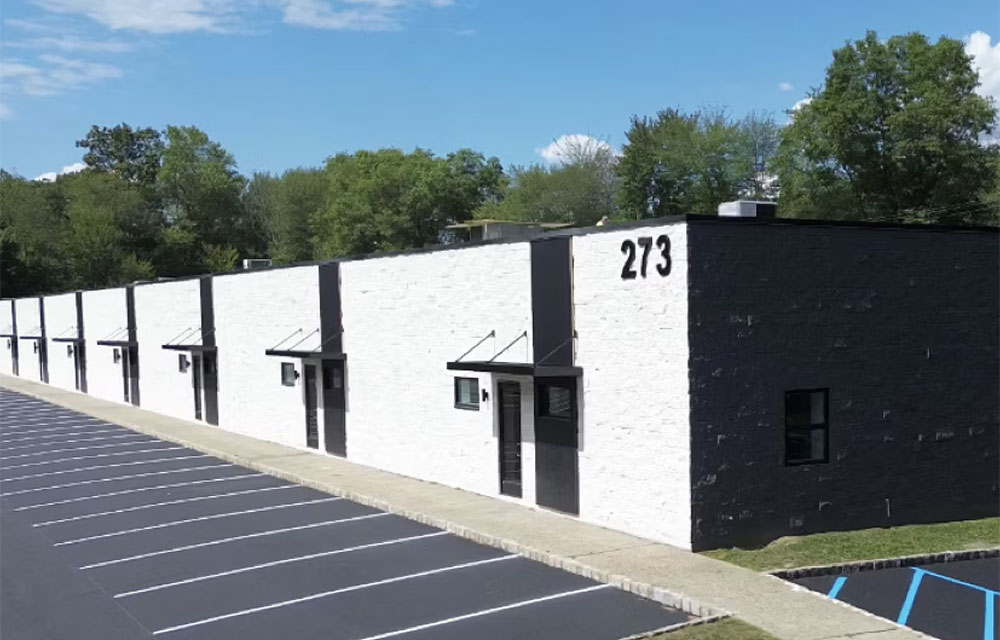
Resource Realty of Northern NJ delivers complete lease-up of 235 Franklin Rd. for Commerce Park Investors
Randolph, NJ Resource Realty of Northern New Jersey (RRNNJ) has completed the lease-up of a 10-unit small-bay industrial property at 273 Franklin Rd., marking the culmination of an investment strategy that began




Quick Hits

Columns and Thought Leadership

New York’s streets are full again, and the retail numbers prove it - by Noam Aziz
Walk down any New York block this year and you can feel it. The sidewalks are crowded, the storefronts are lit, and the energy that defines this city is back at full volume.

Positive forecast for New York’s pro-housing push? - by Philip Butler
New York’s housing crisis remains a hot button topic despite growing consensus that varied and affordable housing is desperately needed statewide. Governor Hochul has recently introduced several initiatives to overcome N.Y.’s anti-housing

A guide to finding the right NYC property management company - by Sanjay Gandhi
Being a small to midsize landlord in NYC is an increasingly demanding endeavor. From navigating complex regulations, increased compliance demands to dealing with tenant issues and remediating violations. It is wise to enlist the assistance of a partner, a professional

Hunt commercial real estate question and answer: Fortune 500 wisdom - by David Hunt
Yes, there are lessons to be learned from the largest companies in America when comes to managing your real estate. But the decision to buy or lease real estate may not be one of
.gif)