



News:
Brokerage
Posted: July 18, 2017
New York City deserves design-build authority - by Carlo Scissura

New York Building Congress
New York City is increasingly reliant on an outdated infrastructure system that is straining to keep pace with the city’s growing population and employment base. In order for the city to maintain its economic strength and mobility, it is essential that this aging infrastructure is modernized and expanded, and as quickly and efficiently as possible. For that reason, it is crucial that the State legislature extend design-build authorization to New York City.
The streamlined approach to construction is proven to shorten timelines and cut costs for major projects, yet its broad use is still not permitted for the city. Under the leadership of governor Andrew Cuomo, design-build has been utilized with great success to build new bridges, airport facilities and schools, as well as for emergency construction following Superstorm Sandy. In each case, it has led to dramatic reductions in both cost and schedule.
Using design-build, the Kosciuszko Bridge was recently completed four years ahead of schedule, giving the city its first significant new bridge in more than 50 years. And construction is continuing at the Tappan Zee Bridge, another design-build project, on budget and ahead of schedule.
Mayor Bill de Blasio has recognized the need for design-build as his administration undertakes the infrastructure improvements necessary for the city to remain competitive. He recently called for its authorization for a number of critical projects, including the rehabilitation of the Brooklyn-Queens Expressway triple-cantilever. The 1.5-mile stretch of highway is a critical piece of infrastructure that serves as a major transit artery in our city, but it needs a major overhaul. Department of Transportation commissioner Polly Trottenberg has indicated that by using design-build for the BQE project, the city could save as much as $300 million and two years construction time.
Design-build has passed every test. The state legislature owes it to residents across the five boroughs to authorize design-build, so that the city’s vital assets can be improved and expanded in the most expeditious and cost-effective manner.
Carlo Scissura is the president and CEO of the New York Building Congress, New York, N.Y.
Tags:
Brokerage
MORE FROM Brokerage
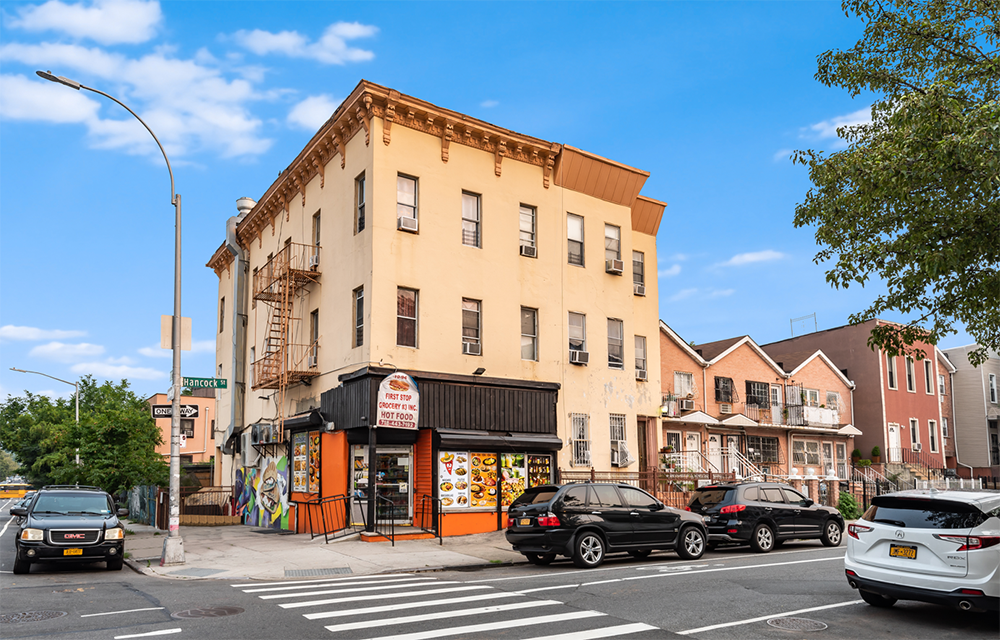
Investment Property Realty Group closes $1.75 million sale of 1094 Hancock Street in Brooklyn
Brooklyn, NY Investment Property Realty Group (IPRG), a New York-based commercial investment firm, has closed the sale of 1094 Hancock St., a mixed-use building in the Bushwick section, for $1.75 million.


Quick Hits

Columns and Thought Leadership

Hunt commercial real estate question and answer: Fortune 500 wisdom - by David Hunt
Yes, there are lessons to be learned from the largest companies in America when comes to managing your real estate. But the decision to buy or lease real estate may not be one of

A guide to finding the right NYC property management company - by Sanjay Gandhi
Being a small to midsize landlord in NYC is an increasingly demanding endeavor. From navigating complex regulations, increased compliance demands to dealing with tenant issues and remediating violations. It is wise to enlist the assistance of a partner, a professional

New York’s streets are full again, and the retail numbers prove it - by Noam Aziz
Walk down any New York block this year and you can feel it. The sidewalks are crowded, the storefronts are lit, and the energy that defines this city is back at full volume.

Hunt CRE question and answer: Choosing a real estate agent - by David Hunt
First, we will only work with one agent exclusively. The primary reason is that we want that agent to legally represent our client’s interests. In New York State, a real estate agent has a fiduciary
.gif)