



News:
Brokerage
Posted: April 27, 2015
New and proposed legislation passed to preserve the "Mom and Pop stores" in Manhattan
New York City retail stores have always been a vital part of defining the "fabric" of many neighborhoods with unique and trendy new stores which attract tourists and shoppers. Many of these retail stores have been in their present locations from 10 to 30 years. These "Mom and Pop stores" fight for space against the large retail chain stores, i.e drug stores, banks and clothing chains. As these Mom and Pop store leases expire, the tenants find themselves in a natural dilemma of having been in spaces for long terms with historic favorable low rents. The issue is whether the owner of a property has the right to charge the market rent which the Mom and Pops cannot generally afford against the large banks and national chain stores.
Gale Brewer, the borough president of Manhattan was a proponent of saving the Mom and Pop stores when she was a council person for the Upper West Side (UWS) of Manhattan. Under Brewer's influence and direction she was able to have the city council pass legislation with the Department of City Planning assistance to approve frontage limitations on three UWS corridors (Broadway, Amsterdam and Columbus) that serve the large residential population in the area. The regulations only affect new frontages and theoretically does not affect the type or size of retail allowed on these avenues, the ownership or operation of these stores. Two Special Enhanced Commercial Districts (SECD) in Manhattan Community District 7 were passed which would only apply to 77 block fronts along Amsterdam and Columbus Aves. and 73 block fronts along Broadway with the goal to encourage diverse retail, preserve the multi-store character of Amsterdam and Columbus Aves. and promote a vibrant and attractive streetscape for pedestrians. These new SECDs mostly limit the frontage of most new and expanding retail and commercial establishments, and limit the frontage of new and expanding banks and residential lobbies along the corridor.
Owners of many of these buildings along the corridor originally opposed these new frontage restrictions because the city was restricting their right to rent to whoever was willing to pay the market rent based on the combing of new stores with large frontages. It is argued that these small businesses have historically provided the majority of jobs for New Yorkers and is a gateway to the middle class, especially for immigrants and ethnic communities.
Brewer as Manhattan borough president has once again "picked up the mantel" to advocate on behalf of small businesses (100 employees or less), retail stores and restaurants throughout Manhattan. Brewer has made four recommendations: 1. Help small businesses cope in the current real estate market; 2. Improve government interaction with small businesses; 3. Reform the city's commercial rent tax; and 4. Maximize resources among government agencies.
Brewer has advanced some recommendations to assist the small business retail store owner. As long term leases get closer to expiring and landlords and tenants are unable to agree upon the new rent for the extended term, she recommends a mandatory negotiation and mediation period, with the option of a short-term lease extension. This concept will not dictate the new rent to the landlord or tenant, but will require both parties to speak to each other through mediation. If an agreement is not reached, the lease will be extended to give the tenant a reasonable amount of time to move. Under this proposal, the landlord will have to notify the tenant 180 days prior to lease termination whether the landlord intends to offer a renewal with the terms. If the tenant wants to negotiate with the landlord, or landlord's representative, they would have to do so within 30 days of receiving landlord's terms. If the negotiation does not produce an agreement, the landlord or tenant may invoke non-binding mediation within 30 days. The mediation must have a mediator present and if the mediator feels that progress is being made toward an agreement, the mediator can order a second round of mediation. If both parties agree that no progress is being made, the tenant's current lease is extended for one year with up to a 15% rent increase. This gives the tenant sufficient time to search for a new retail space.
Brewer would also like to see an increase in the supply of ground-floor retail space to provide more competition between building owners and for the city to allow for additional commercial retail density in places where upzonings occur to create more commercial activities. In conclusion, the health of retail storefronts are on the "front burner" since several of our city politicians are working aggressively to preserve them for future generations and for our neighborhoods.
Pierre Debbas, Esq. is a managing partner and Peter Reiter, Esq. is a partner at Romer Debbas, LLP, New York, N.Y.
Tags:
Brokerage
MORE FROM Brokerage
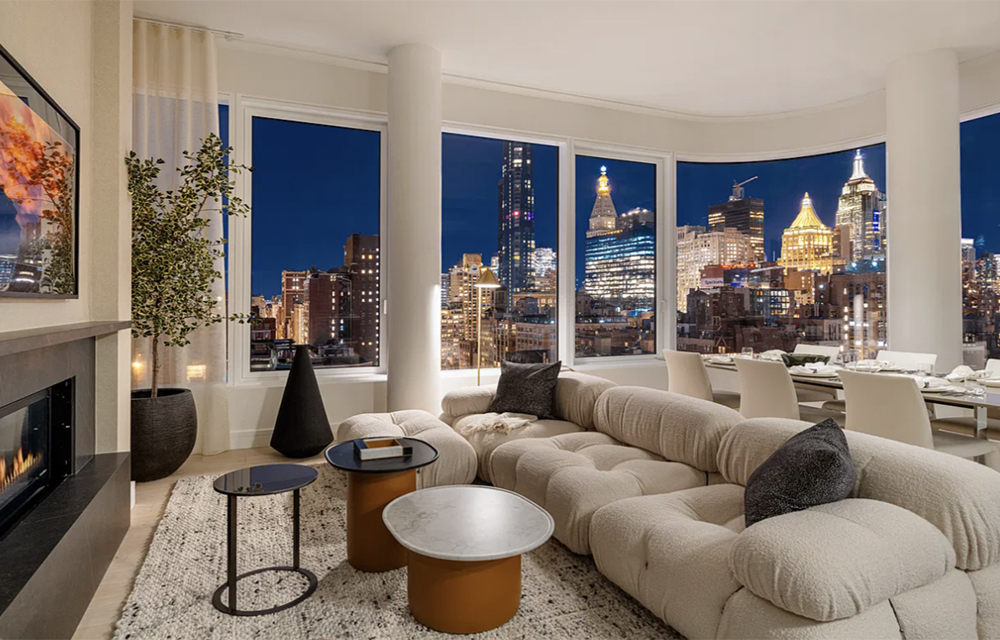
200E20TH sells out in Gramercy, penthouse A closes out sales at the CetraRuddy-designed condominium residences
Manhattan, NY 200E20TH, the CetraRuddy-designed architectural masterwork that brought a curved, contemporary sensibility to Gramercy’s Beaux-Arts streetscape, has




Columns and Thought Leadership

Hunt commercial real estate question and answer: Fortune 500 wisdom - by David Hunt
Yes, there are lessons to be learned from the largest companies in America when comes to managing your real estate. But the decision to buy or lease real estate may not be one of

The art of investing in real estate - by Thomas Donovan
Real estate investing is as much an art as it is a skill. No one can time the market, or the factors that drive it, perfectly. Location, zoning, size, transportation, and neighborhood density give you a baseline for

Hunt CRE question and answer: Choosing a real estate agent - by David Hunt
First, we will only work with one agent exclusively. The primary reason is that we want that agent to legally represent our client’s interests. In New York State, a real estate agent has a fiduciary

New York’s streets are full again, and the retail numbers prove it - by Noam Aziz
Walk down any New York block this year and you can feel it. The sidewalks are crowded, the storefronts are lit, and the energy that defines this city is back at full volume.
.gif)