


News: Brokerage

Nelson, Polakoff and Rothschild of Avison Young broker $35.5 million

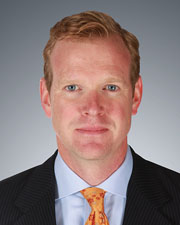
James Nelson, Avison Young


Brandon Polakoff, Avison Young


Manhattan, NY The tri-state investment sales group for Avison Young has brokered the $35.5 million sale of three residential buildings, located at 344, 346 and 348 East 62nd St. in the Lenox Hill neighborhood. The three properties total 40,612 gross s/f across 72 units, comprised of 70 apartments and two retail units. 
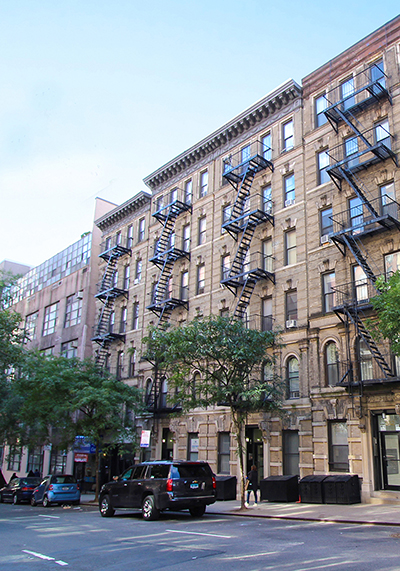
344, 346 and 348 East 62nd Street, Lenox Hill - Manhattan, NY

The sale was arranged by an Avison Young group led by principal and head of tri-state investment sales James Nelson, along with director Brandon Polakoff and associate Bradley Rothschild. The group represented the sellers, private investors William Koch and Shimmie Horn. The buyer was a private investor. 

“We introduced this investment opportunity to the market at the perfect time. We were able to quickly identify a 1031 buyer for all three properties,” said Polakoff. “Lenox Hill is one of the city’s most sought-after neighborhoods and also part of the Midtown East rezoning project, which will add 6.5 million s/f of new office space as well as over 28,000 permanent jobs to the region. This important process, paired with the area’s new Second Ave. Subway line and Cornell Tech Campus on Roosevelt Island, is fueling high demand for these types of assets.”

The property is located between First and Second Aves., with direct access to a number of transportation options, including the F, N, Q, R, W, 4, 5 and 6 subway lines. FDR Drive is easily accessible and there are bus lines on both First and Second avenues, allowing for connection to the rest of New York City. The area is also home to many dining and shopping options and convenient amenities including Gristedes, Equinox, Magnolia Bakery, and City Cinemas.

MORE FROM Brokerage

NYSCAR June 2026 president’s message - by Mercedes Brien

As I write this letter, we are preparing to be at the Annual Conference being held at the Rivers Casino, Schenectady, New York. I look forward to reporting on the conference in my next letter. We have some great courses coming up via Zoom. Please be sure to keep watch on upcoming courses by visiting nyscar.org/resources and tools/professional development.
READ ON THE GO
DIGITAL EDITIONS
Subscribe
Columns and Thought Leadership
A fresh start - by Shallini Mehra and Amit Doshi

A fresh start - by Shallini Mehra and Amit Doshi

For the past several years, the New York City multifamily housing market has been defined by disruption. The combined impact of the HSTPA rent laws and a sharply higher interest rate environment has fundamentally reduced
Tri-state capital  migrates nationally amid  regulation pressure - by Reese Weaver

Tri-state capital migrates nationally amid regulation pressure - by Reese Weaver

New York tri-state multifamily investors are increasingly reallocating capital to less-regulated markets across the U.S. as rent control and legislative risk erode returns at home. With over 60% of New York City’s rental housing stock classified as rent-stabilized, the traditional value-add model — buying under-performing buildings,

The death of the generic offering memorandum: What buyers expect in 2025 - by Kimberly Zar Bloorian

The death of the generic offering memorandum: What buyers expect in 2025 - by Kimberly Zar Bloorian

There was a time when an offering memorandum (OM) was pretty bare bones, some photos, a few bullet points on income, and a rent roll thrown in at the back. That used to get the job done. Not anymore. In 2025, buyers are sharper, faster, and more selective. They’re looking
The anticipated effect of Basel III and ISO 20022 implementation on commercial real estate - by Michael Zysman

The anticipated effect of Basel III and ISO 20022 implementation on commercial real estate - by Michael Zysman

July 1, 2025 is the deadline for US banks to begin to adopt Basel III banking standards and July 14, 2025 is the deadline for U.S. banks to adopt ISO 20022 messaging standards. Both will have a significant effect on the banking and commercial real estate (CRE) finance sectors.