



News:
Construction Design & Engineering
Posted: June 22, 2021
MWSK delivers water source heat pump recovery chillers for Marcus Garvey complex
Brooklyn, NY MWSK is proud to work recently with the Marcus Garvey Extension Project, a 100% affordable and supportive housing complex in the Brownsville neighborhood of Brooklyn. This construction project will deliver 348 units and 13,400 s/f of commercial and community facility space, including services for families coming out of shelters—and MWSK worked with the complex to deliver HVAC capabilities at the complex with the water source heat pump recovery chillers installed throughout.
Marcus Garvey “B” Building, the seven-story 215 Livonia Ave. construction, will include 96 residential units, including 52 supportive housing units, and 6,000 s/f of ground-floor retail and community space. The 52 supportive housing units will be dedicated to families coming out of shelters, with (WiN) Women in Need providing services and programming for those units.
Skyline Engineering, alongside Curtis + Ginsberg Architects, have worked diligently with MWSK HVAC Sales Inc. to design around a trailblazing new product for the Marcus Garvey Village expansion: Modular water-cooled heat pump recovery chillers used to produce 140° domestic hot water supply out of the project’s geothermal ground loop. In cold winter months, this equipment will be able to take a subfreezing propylene glycol-and-water mixture from below ground and supply an entire affordable housing complex with a domestic hot water supply.
The heat pump recovery chiller constitutes an advanced modification to a decades-long emerging trend in professional engineering, which is to utilize natural heat sinks and heat sources in the city’s ground supply in order to minimize the dependence upon fossil fuels when heating and cooling buildings. Now, moving one step further along in geothermal design, the heat pump recovery chillers will utilize refrigerant reversing valves to generate domestic hot water by withdrawing heat from a natural source, thereby eliminating the need for fossil fuel-burning alternative designs.
In addition, by code, the use of the reversing valve in this heat pump equipment application will further allow the project’s owners and developers an opportunity to apply for specific energy rebates currently offered on state and commercial platforms.
MWSK’s sales engineers envisioned the success latent in pushing for the application of this modular heat pump recovery chiller equipment. With dual-circuit, double wall vented, brazed plate heat exchangers on each condenser module, the equipment design meets important refrigeration standards required for healthy domestic hot water generation. The modular system’s individual power connections and BACnet communication interface capability make ease of installation and building management incorporation readily apparent, and the equipment’s coefficients of performance and energy efficiency ratios deliver sustainable returns for the entire project.
MORE FROM Construction Design & Engineering
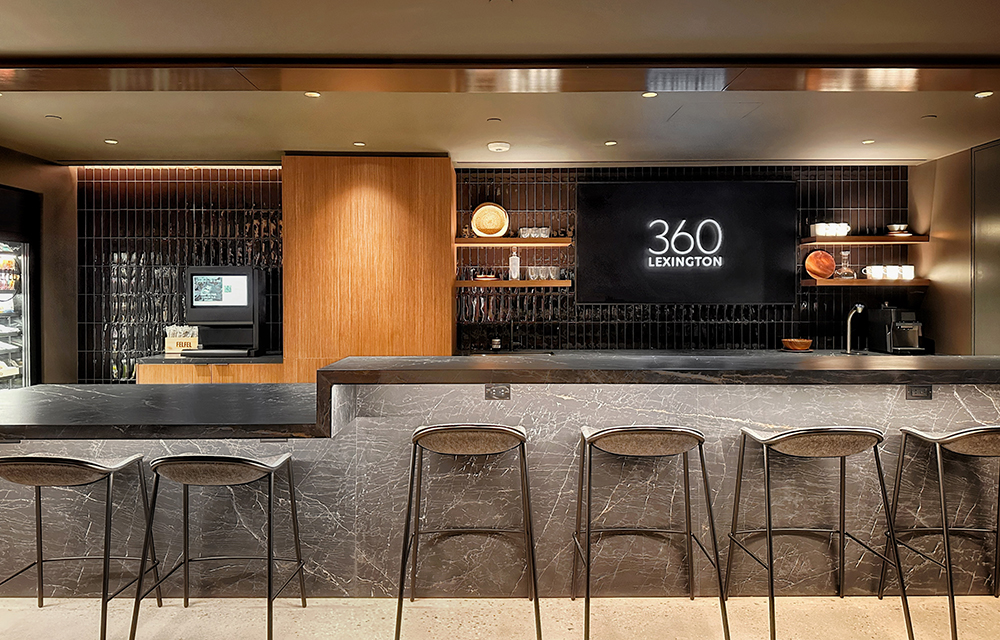
AmTrustRE and MdeAS Architects complete modernization of 360 Lexington Ave. in Midtown
Manhattan, NY AmTrustRE has completed a comprehensive modernization at 360 Lexington Ave. Led by New York-based architecture firm MdeAS Architects, the project reimagines the 268,000 s/f office building as a modern, hospitality-driven workplace designed to meet the evolving needs of tenants.

Quick Hits


Columns and Thought Leadership

We support green construction. Just not this kind - by Tammy Smith
Most people think of St. Patrick’s Day as a fun footnote on the calendar. In construction logistics, however, it’s a full-scale operational variable — especially if your work touches major metro areas with major parades and, let’s call it what it is, enthusiastic celebrants.

Premium experiences, proven returns: The New revenue playbook for sports venues - by Terry McIntyre
Investing in the Fan Experience as a Revenue Strategy The sports and entertainment venues that bet on premium experiences years ago are now seeing those investments pay off in packed seats, increased revenue, and industry recognition.

The Façade is no longer just a finish. It’s a risk strategy. - by Bentley Zhao
Twelve-billion-dollar weather disasters have already hit the U.S. through the first half of 2026, causing at least $31.9 billion in damage, according to Climate Central, the nonprofit that now maintains the disaster database NOAA discontinued.
