



News:
Brokerage
Posted: March 7, 2011
Miller and Ortiz of Eastern Consolidated procure buyer in $7.6 million sale
According to Eastern Consolidated, Louzon Group has acquired 347-349 Bowery for $7.6 million. The development site is now occupied by a three-story commercial building formerly used as an SRO by the Salvation Army.
The property is the first U.S. acquisition for the Louzon, an investment group. The group has plans to construct a 72-room hotel at the site with a restaurant.
Eastern Consolidated's senior directors and principals Alan Miller and Robert Ortiz procured the Louzon Group, while Jonathan Plotkin of Colliers International acted on behalf of The Salvation Army, the seller.
"I was tapped by Gene Kaufman, an architect who, on behalf of his French client, was searching for a development site in New York's East Village that would accommodate a between 15,000-50,000 s/f buildable," Miller said. "I knew there were no sites available that fit those parameters, but I also knew that the Salvation Army's site was vacant and hoped that their broker, Jonathan Plotkin, might be amenable to a sale, even though it was not on the market at that time."
According to Miller, the site perfectly suited Louzon's criteria—an East Village location, the appropriate size, and vacant. Plotkin marketed the site through his firm Colliers requesting proposals from previous interested parties. Ultimately, Louzon prevailed in the bidding, closing the transaction for all cash.
"Until recently, the Bowery was one of the last places one would go to find great design, or great food, but now that it is already the epicenter of cool, this project will advance the qualitative side, bringing established, internationally renowned hoteliers and restaurateurs and a new signature building that speaks about seriousness as much as--or even more than--style," said Kaufman who is the design architect for the project.
The site is now occupied by two three-story, vacant, 11.944 s/f buildings with designated usages residential and retail.
Attorneys in the transaction were Howard Jacobson, Esq. and Mark Uzzo Esq. of Scancarelli, Jacobson & Uzzo LLP for the seller; and Robert Bachner, Esq., Stephen Kramer, Esq. and Leonard Budow, Esq, of Phillips Nizer LLP for the buyer.
Tags:
Brokerage
MORE FROM Brokerage
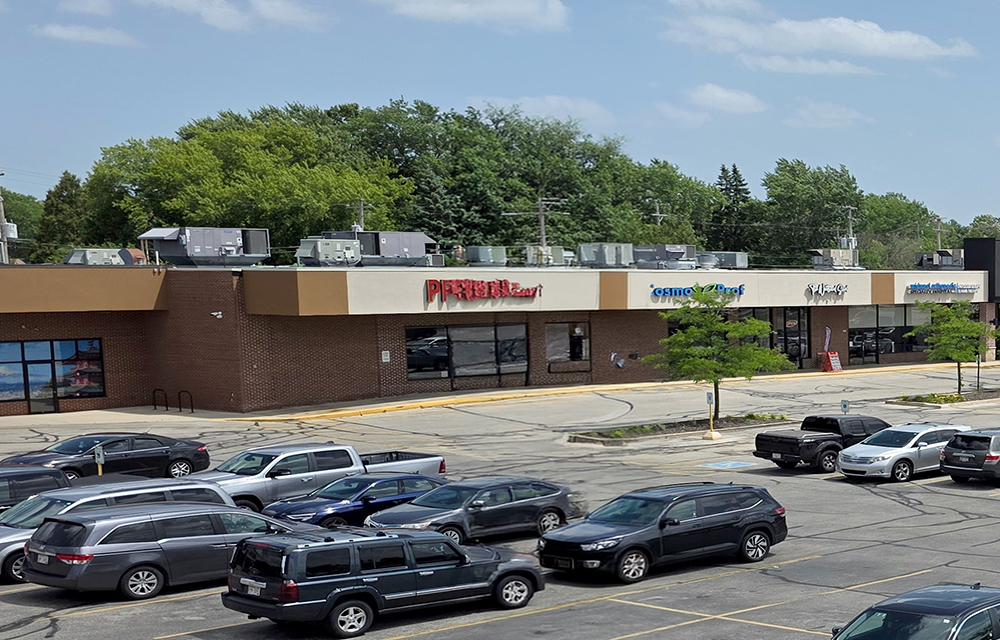
United Properties Corp. expands Wisconsin and Illinois retail presence adding 200,000 s/f
West Allis, WI United Properties Corp. completed two retail acquisitions totaling $27.4 million across Illinois and Wisconsin, adding 205,000 s/f of shopping center space to its portfolio


Quick Hits
 (2).gif)

Columns and Thought Leadership

A guide to finding the right NYC property management company - by Sanjay Gandhi
Being a small to midsize landlord in NYC is an increasingly demanding endeavor. From navigating complex regulations, increased compliance demands to dealing with tenant issues and remediating violations. It is wise to enlist the assistance of a partner, a professional

Hunt commercial real estate question and answer: Fortune 500 wisdom - by David Hunt
Yes, there are lessons to be learned from the largest companies in America when comes to managing your real estate. But the decision to buy or lease real estate may not be one of

Positive forecast for New York’s pro-housing push? - by Philip Butler
New York’s housing crisis remains a hot button topic despite growing consensus that varied and affordable housing is desperately needed statewide. Governor Hochul has recently introduced several initiatives to overcome N.Y.’s anti-housing

New York’s streets are full again, and the retail numbers prove it - by Noam Aziz
Walk down any New York block this year and you can feel it. The sidewalks are crowded, the storefronts are lit, and the energy that defines this city is back at full volume.
.gif)