



News:
Spotlight Content
Posted: June 14, 2022
Message from REBNY president Jim Whelan
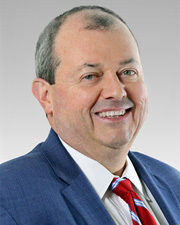 There is much to be said about the last two and half years.
Our city has been challenged in ways never thought possible, but we’ve persevered, as New Yorkers do. We’ve weathered the pandemic to date and are emerging as a more resilient, collaborative and forward-looking community.
The residential market has come in line with pre-pandemic growth expectations, and a diverse range of retailers are filling out short-lived vacancies along our commercial corridors. Workers are utilizing our subways again, finally surpassing March 2020 daily ridership figures in early May, and many of the most influential companies in the world have announced plans over the last year to invest further in their New York office footprint.
But there is more work to be done and the real estate industry will continue to be a critical economic engine for New York’s post-pandemic recovery. To help ensure this, REBNY’s work is focused on building coalitions to support smart policy around three key underlying themes: Housing, Workforce Development and Diversity & Inclusion.
We all know there is an affordable housing crisis in our city—a multi-faceted challenge that requires multiple initiatives to address. New York City needs far more housing to sufficiently address the population it already has, let alone what is projected. REBNY is committed to working closely with elected officials to continue advancing fair housing goals and expanding access to housing for New Yorkers of all backgrounds. We feel strongly that the private sector must continue to play a key role in producing this housing.
We are proud of REBNY Foundation’s efforts surrounding Project Parachute—an initiative seeded by REBNY members in collaboration with the non-profit community to provide rental assistance and other support for thousands of vulnerable New Yorkers impacted by the pandemic. We have advocated for additional, coordinated support from state and city governments to produce more housing through measures like zoning changes and tax tools, mobilizing a diverse coalition in support of these measures.
On the workforce development front, the REBNY Foundation is actively engaged in social impact programming including a collaboration with the City University of New York and the non-profit Project Destined to provide paid internship opportunities to diverse CUNY undergraduate students. REBNY also partners with Building Skills NY to connect underemployed New Yorkers with jobs and training to create new career pathways into the construction industry.
We believe these measures will help sustain the economic recovery and see us through to a more equitable city. In line with this, we realize our moral and business imperative must continually move beyond valuing diversity and focus on implementing actionable plans that truly foster an expansive and inclusive culture. REBNY is dedicated to advancing efforts that help attract, retain, and advance women, people of color, and others from diverse backgrounds in the real estate industry.
To that end, we are proud of our continued work with the REBNY Fellows Leadership Program, formed in 2020 in partnership with Coro New York to bring in real estate professionals from diverse backgrounds for a six-month training program to help elevate their careers and prepare them for opportunities that increase their impact on the industry. In addition to gaining networking exposure and civic leadership training, REBNY Fellows become part of a lifelong professional network that will support their continued success. This year’s program included 14 amazing and impressive Fellows who just graduated this month.
All of these efforts will be celebrated on June 23 at our iconic annual event, titled this year: “New York Forever: A Celebration of Our City.” The event will reflect the value REBNY places on coalition building and public-private partnerships to achieve our collective hopes for a better city. Joined by real estate industry, government and business leaders, this year’s event will feature a tasting experience with some of NY’s most renowned chefs and mixologists, with a portion of proceeds going to social impact initiatives.
This is an exciting time for New York City and the real estate industry at large. While there has been tremendous loss over the last two years, difficult and important work has been carried out over this time that should not be forgotten. We look forward to recognizing that work at our upcoming annual event, along with building on this foundation to see a better city in the years to come.
Jim Whelan is the president, Real Estate Board of New York.
Tags:
Spotlight Content
MORE FROM Spotlight Content
Participate in Developing New York Featuring Westchester County - November 24, 2026
Choose how you’d like to participate in this edition of NYREJ’s Developing New York series featuring Westchester County.


.png)

Quick Hits
 (2).gif)

Columns and Thought Leadership

2026 Developing Queens: Long Island Board of Realtors advances commercial growth and advocacy in Queens
The Long Island Board of Realtors (LIBOR) Commercial Network continues to play a key role in advancing opportunities and strengthening the commercial real estate landscape across Queens. Through targeted programming and global outreach

CRE Guide Featured Company: Merritt Environmental Consulting Corp.
Merritt Environmental Consulting Corp. (MECC) was established in June of 2009 after being part of a larger engineering firm for almost 20 years. The focus of the company is to assist lending institutions, attorneys, real estate investors, and property owners with environmental concerns. Today, MECC has offices in New York, Florida, and Vermont and has grown into a regional consulting firm serving clients along the East Coast.

2026 Developing Long Island: ERG Commercial Real Estate launches its new Retail Leasing division
North Hempstead, NY ERG Retail Leasing is the dedicated leasing division of ERG Commercial Real Estate, an established full-service commercial real estate brokerage for over 35 years.

From vacancy to vitality: How adaptive reuse is reshaping Long Island’s CRE landscape - by Andrea Tsoukalas Curto
Adaptive reuse has become one of the most important conversations in commercial real estate today. Long Island has a large inventory of aging retail, office and industrial