



News:
Brokerage
Posted: October 27, 2015
Medeiros and Bruck of Time Equities arrange $56.75 million loan

Aaron Medeiros, TEI

Stuart Bruck, TEI
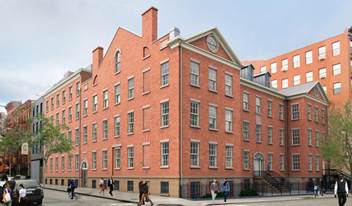 34 Prince Street, Nolita - Manhattan, NY
Manhattan, NY Full-service real estate firms Time Equities Inc. (TEI) and Hamlin Ventures (Hamlin) have closed a three-year construction and development loan totaling $56.75 million on behalf of their latest new development located in Nolita at 34 Prince St. TEI and Hamlin’s second venture together, the co-developers originally acquired the site for $30.7 million. The capital provided under the terms of the new loan will be used to redevelop the site for residential use, which will be comprised of seven condominium units and two townhomes.
“With almost 4,000 new residential units in the pipeline, downtown Manhattan has quickly grown into a coveted location and with 34 Prince’s chic neighborhood and historically significant character, we found the site to be incredibly desirable,” said Francis Greenburger, founder and CEO of TEI. “Once complete, we are confident that the development will be a notable addition to the neighborhood’s rapidly evolving landscape.”
Built in 1825, 34 Prince was once the home of St. Patrick’s Old Cathedral, initially known as the premiere cathedral church for the Diocese of New York. After originally being purposed as a Roman Catholic Orphanage, the building evolved into St. Patrick’s Convent and Girl’s school, New York’s oldest parochial school, eventually becoming an educational institution for both boys and girls in 1931. Led by Joseph Francois Mangin, who also designed New York City Hall, the building is one of New York’s most revered federal style three-story structures, declared a city landmark in 1966 and listed on the National Register of Historic Places.
34 Prince St. is located on the block south of the cathedral between Prince and Spring Sts., on the southwest corner of Prince and Mott Sts.
Known as the northern area of Little Italy, Nolita continues to distinguish itself as a neighborhood that boasts intimate cafes, designer boutiques and narrow, walkable roadways. Adjacent to SoHo, Nolita consists of roughly 16 blocks and is bounded by East Houston St. to the north, Kenmare St. to the south, the Bowery to the east and Lafayette St. to the west.
Aaron Medeiros, director of acquisitions and policy at TEI, arranged the refinance of the property through Stuart Bruck, director of TEI’s mortgage brokerage division, and will represent TEI as development manager.
Tags:
Brokerage
MORE FROM Brokerage
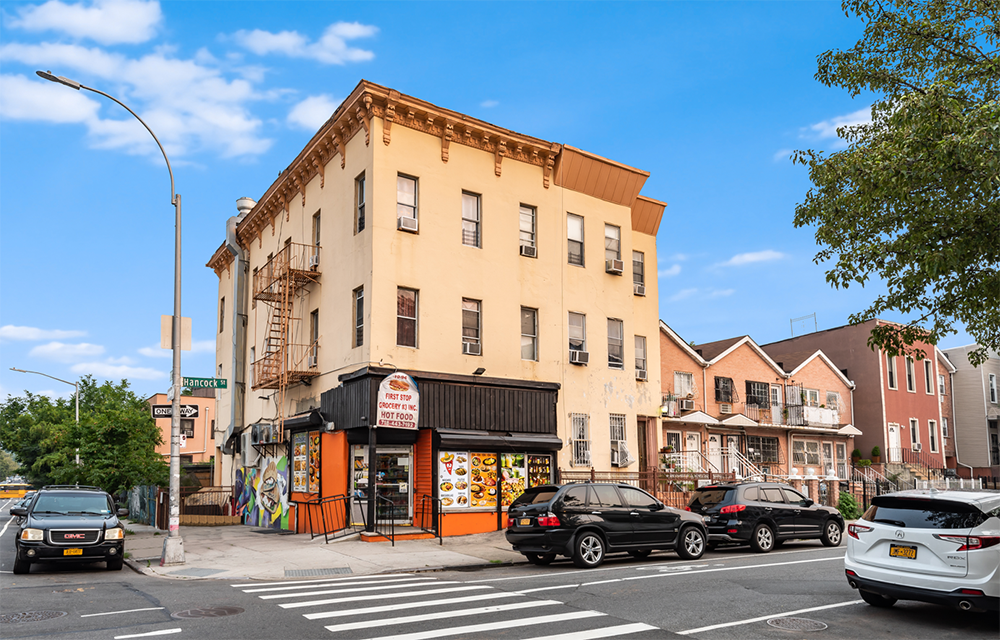
Investment Property Realty Group closes $1.75 million sale of 1094 Hancock Street in Brooklyn
Brooklyn, NY Investment Property Realty Group (IPRG), a New York-based commercial investment firm, has closed the sale of 1094 Hancock St., a mixed-use building in the Bushwick section, for $1.75 million.




Columns and Thought Leadership

A guide to finding the right NYC property management company - by Sanjay Gandhi
Being a small to midsize landlord in NYC is an increasingly demanding endeavor. From navigating complex regulations, increased compliance demands to dealing with tenant issues and remediating violations. It is wise to enlist the assistance of a partner, a professional

New York’s streets are full again, and the retail numbers prove it - by Noam Aziz
Walk down any New York block this year and you can feel it. The sidewalks are crowded, the storefronts are lit, and the energy that defines this city is back at full volume.

Hunt CRE question and answer: Choosing a real estate agent - by David Hunt
First, we will only work with one agent exclusively. The primary reason is that we want that agent to legally represent our client’s interests. In New York State, a real estate agent has a fiduciary

Hunt commercial real estate question and answer: Fortune 500 wisdom - by David Hunt
Yes, there are lessons to be learned from the largest companies in America when comes to managing your real estate. But the decision to buy or lease real estate may not be one of
.gif)