



News:
Brokerage
Posted: April 8, 2013
Mayor Bloomberg cuts ribbon for new Central Park Precinct station; Multi-million dollar modernization of historic landmark
Mayor Michael Bloomberg, police commissioner Raymond Kelly and design and construction commissioner David Burney joined to cut ribbon on the recently renovated Central Park Precinct station house, the national and N.Y.C. landmark that since 1936 has served as base for N.Y.C.'s 22nd Precinct covering Central Park. The 22nd Precinct was redesignated "Central Park Precinct" in August 1968. The mayor and commissioners were joined at the station house on the 86th St. Transverse by NYPD chief of department Joseph Esposito; NYPD captain Jessica Corey, commanding officer of the Central Park Precinct; first deputy commissioner, parks and recreation Liam Kavanagh; architect Fred Basch; president and CEO of the Central Park conservancy Douglas Blonsky; elected officials; police executives and personnel.
"With the opening today of the beautifully restored Central Park Precinct Station, we have updated a police station that dates back to 1936," said Bloomberg. "The newly restored precinct gives officers in Central Park an expanded and modernized working environment and conserves many beautiful architectural elements that distinguish this 19th century building. Central Park is safer than ever - with crime down by more than 20% since 2001 - and the enhancement to the station will help police officers build on this record of success."
"The city's oldest precinct is now wired for the latest computer and communications technology, with new phones and computers and better heating, ventilation and air conditioning. It also has a new lobby and main desk, with additional space for officers to better serve the public," Commissioner Kelly said. "It brings a 19th century station house into the 21st century."
"The Central Park Precinct is a terrific example of adaptive re-use: converting an old building - in this case from the era of horses and stables - into a 21st century facility," said Commissioner Burney. "The precinct's landmark design has been preserved while the building has been brought up to modern standards - and while this stationhouse will be secure, it will also be welcoming to the community. The restored precinct's lobby was originally a courtyard - but is now enclosed with a lightweight metal canopy and self-supporting glass wall, which protects the space from the elements while maintaining its transparency. To maintain its historic integrity, our team also restored the precinct's stonework, dormer windows, doors and fixtures, and slate and copper roofing materials. DDC is grateful for the support of the Landmarks Preservation Commission, the Parks Department, Commissioner Kelly and all our partners at NYPD to help put the Central Park Precinct back in service."
The two-story station features an updated and expanded new lobby with a partially bullet-proof glass atrium; improved staging, arrest processing and interview rooms, mechanical ventilation and central air-conditioning. There is 2,300 more square feet of additional space than the previous station house provided.
Originally stables and sheds in 1871, the park complex was converted into a garage in 1915 and reconstructed and redesignated as a police station in 1936. Part of the complex underwent additional restoration in the 1950s after a fire damaged the structure. In 2002, uniformed and civilian personnel assigned to the Central Park Precinct relocated to a temporary building elsewhere on the site after deterioration, structural stress and roof leaks required a full renovation. The station house grounds make it the oldest Police Department building in the City.
Uniformed and civilian personnel assigned to Central Park were able to begin working in the new station house last year. Also in attendance Tuesday were NYPD Detective Steven McDonald, who was paralyzed in 1986 after he stopped to question and was shot by three young men in the northern section of the park, and the family of Lieutenant Steven Cioffi, who was assigned to Central Park Precinct for 11 years, first as a police officer and later becoming a platoon commander. Lieutenant Cioffi passed away in March after battling cancer. He was among the first responders who responded to the World Trade Center attacks and recovery effort that followed.
Central Park is among the safest urban parks of its size in the world, with crime in the park down by more than 20 percent since 2001. Approximately 40 million people enjoy Central Park each year and since November 2002, there have been a total of 400 million visitors to the 842-acre park without a murder.
Tags:
Brokerage
MORE FROM Brokerage
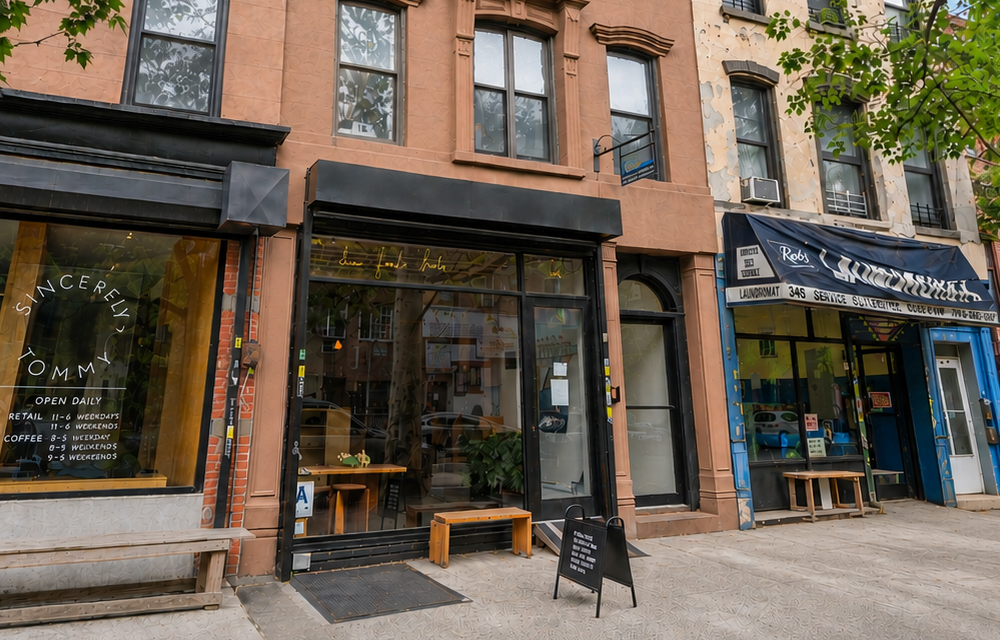
Bestreich, Reynolds, Davila, and Flaherty of Investment Property Realty Group close $1.97 million sale of 343A Tompkins Ave. in Bed-Stuy
Brooklyn, NY Investment Property Realty Group (IPRG) closed the sale of 343A Tompkins Ave., a mixed-use building located in the Bed-Stuy section of the borough, for $1.97 million.


Quick Hits

Columns and Thought Leadership

New York’s streets are full again, and the retail numbers prove it - by Noam Aziz
Walk down any New York block this year and you can feel it. The sidewalks are crowded, the storefronts are lit, and the energy that defines this city is back at full volume.

Hunt commercial real estate question and answer: Fortune 500 wisdom - by David Hunt
Yes, there are lessons to be learned from the largest companies in America when comes to managing your real estate. But the decision to buy or lease real estate may not be one of

A guide to finding the right NYC property management company - by Sanjay Gandhi
Being a small to midsize landlord in NYC is an increasingly demanding endeavor. From navigating complex regulations, increased compliance demands to dealing with tenant issues and remediating violations. It is wise to enlist the assistance of a partner, a professional

Hunt CRE question and answer: Choosing a real estate agent - by David Hunt
First, we will only work with one agent exclusively. The primary reason is that we want that agent to legally represent our client’s interests. In New York State, a real estate agent has a fiduciary
.gif)