



News:
Brokerage
Posted: May 11, 2009
Mayor Bloomberg and speaker Quinn unveil package legislation
According to mayor Michael Bloomberg and council speaker Christine Quinn, one of the world's most comprehensive packages of legislation to reduce greenhouse gas emissions from existing government, commercial, and residential buildings has been launched. A six-point plan, when enacted as part of PlaNYC, will reduce the city's energy usage and save consumers money, while creating thousands of well-paying jobs and reducing the city's carbon footprint. The six-point plan consists of four pieces of new legislation and two PlaNYC programs that will achieve carbon reductions, train workers for the estimated 19,000 construction jobs that will be created, and help finance energy-saving improvements using $16 million available from the American Recovery and Reinvestment Act. The plan will also result in cleaner air, since emissions from boilers, furnaces, and local power plants will also be reduced.
According to the PlaNYC inventory of greenhouse gas emissions, almost 80% of the city's carbon footprint comes from buildings' energy use. Once implemented, the legislation will reduce citywide emissions by 5%, the equivalent of eliminating all carbon emissions from Oakland, Calif.
The reductions will be achieved through the six point green buildings plan:
* Legislation that creates a N.Y.C. Energy Code that existing buildings will have to meet whenever they make renovations.
* Legislation that requires buildings of 50,000 s/f or more to conduct an energy audit once every ten years and make any improvements that pay for themselves within five years.
* Legislation that requires commercial buildings of 50,000 s/f or more to upgrade their lighting to more energy-efficient systems that pay for themselves through energy savings.
* Legislation that requires buildings of 50,000 s/f or more to make an annual benchmark analysis of energy consumption so building owners can better understand what steps they can take to increase efficiency.
* A jobs program that will work with the real estate and construction industries to train the workforce that will fill the estimated 19,000 construction jobs the legislation will create.
* An innovative financing program that uses federal stimulus money to provide loans for property owners to pay the upfront costs for the efficiency upgrades that eventually pay for themselves.
The mayor and speaker were joined at the 620 Loft & Garden in Rockefeller Center, by N.Y.C. central labor council president Jack Ahern, N.Y. Building Congress president Richard Anderson, U.S. Green Building Council president & CEO and founding chairman Rick Fedrizzi, 32BJ Service Employees International Union secretary-treasurer Héctor Figueroa, environmental protection committee chair James Gennaro, Environmental Defense Fund president Fred Krupp, Building and Construction Trades Council of Greater N.Y. president Gary LaBarbera and Sierra Club executive director Carl Pope.
"Today we're introducing the greener, greater buildings plan, a far-reaching package of new local laws that will dramatically improve N.Y.'s energy efficiency and reduce energy costs by some three-quarters of a billion dollars a year," said Bloomberg. "This will significantly improve our economic competitiveness, put thousands of New Yorkers to work in green jobs, and do more to shrink our own direct impact on global warming than any other actions imaginable."
"Our skyline has been a symbol of our city's identity since the Flatiron Building was constructed over a hundred years ago," said Quinn. "By announcing the first-of-its-kind legislation that will upgrade the city's existing buildings with energy efficient technology, we are bringing that proud tradition into the 21st Century - and creating jobs is the process. I want to thank mayor Bloomberg, all my colleagues in the council and the many advocates that are lining up behind this crucial package."
"The plan we crafted with our partners in the city council can make a real difference to reducing the city's energy consumption in the long-term," said mayor's office of long term planning and sustainability director Rohit Aggarwala. "This is a complex plan. To get the details right, we look forward to working with the real estate industry, labor, and the environmental movement. We want as many people as possible to be a part of the Greener, Greater Buildings Plan - that's why as part of N.Y.C. Service we're encouraging New Yorkers to volunteer to paint the roofs of their homes white - a good way to cut energy use and reduce energy costs."
"We all have a stake in recharging our economy, but our job is to ensure that the blue collar can become green by paying decent wages and benefits that can support a family, creating a real career path with apprenticeship programs and upward mobility, and improving the environment by reducing waste and pollution," said Ahern. "Our proud public and private unionized workforce are up for the hard work of making our buildings green. The Central Labor Council looks forward to a productive and viable partnership with city hall and the real estate and construction trade industry on this historic effort."
"This legislation is far-reaching and promises great progress in our effort to create healthier, greener and more affordable housing and neighborhoods for all New Yorkers," said New York City Department of Housing Preservation and Development Commissioner Rafael Cestero. "Every New Yorker should understand that his or her effort to make their homes greener means that they are making a contribution, which goes for the big developers as well as individual tenants. This is a citywide effort and thanks to mayor Bloomberg and speaker Quinn, N.Y.C. is once again leading the way."
"The unionized construction industry is excited that the city has such a bold vision for the greening of New York," said Building Trades Employers Association President Lou Coletti. "We look forward to working with the mayor in retrofitting these buildings with a quality and skilled workforce."
"Buildings must be part of the solution to the climate crisis and the economic crisis," said Fedrizzi. "There are millions of buildings that can be upgraded to save money and save energy, which can create millions of green jobs that cannot be sent overseas. The leadership of mayor Bloomberg, speaker Quinn and the entire coalition behind the initiative will encourage other communities to take a look at how they can find their own solutions through green building."
"The mayor and city council should be commended for introducing a plan to green New York's buildings," said 32BJ president Mike Fishman. "Going green in a City where 80% of the carbon emissions come from buildings is the type of investment we need to protect our environment, boost the real estate industry and get workers the training they need to get ahead. Working New Yorkers stand to gain from the promise of new, green-collar jobs, and all New Yorkers will be better off with a cleaner, greener N.Y. in which to live and raise a family. We look forward to working with the mayor and the council to ensure that making N.Y. green benefits all New Yorkers, including the creation of good, family supporting jobs."
"New construction according to the highest standards is critical, however, retrofitting existing buildings is crucial to meeting the challenge of reducing greenhouse gas emissions," said Vice President Al Gore. "Mayor Bloomberg has set very positive and ambitious emission reduction goals in PlaNYC. By seeking efficiencies in existing buildings, N.Y. can make a real difference in carbon emissions, and hopefully bring us a step closer to solving the climate crisis."
"Smart, green solutions are on the way of the future for all Americans - whether they wake to see N.Y.C.'s skyline or Seattle's Space Needle," said Van Jones, President Obama's special advisor for Green Jobs, Enterprise and Innovation. "Our nation's mayors are showing leadership from coast to coast regardless of their backgrounds or the very different cities they represent. We know they hold one thing in common: a passionate commitment to cutting wasted energy, reducing carbon pollution and increasing jobs for their citizens. We are proud to support these efforts as they help lead American cities to a better future. President Obama shares this dedication to a green recovery."
"N.Y.C. is offering a game-changer in the effort to cut energy demand and carbon emissions from America's buildings," said Krupp. "Literally billions of s/f of N.Y. real estate could be harnessed to solve global warming in ways that also save families and businesses money on their energy bills. With thousands of jobs created and clear financial returns for property owners, this initiative can be a model for urban communities around the world, proving that cities can grow in a way that delivers economic opportunity and a cleaner environment."
"We look forward to working with the mayor and council to have this legislation promote sustainability and create economic opportunities for employees of contractors that participate in apprenticeship training programs to demonstrate a commitment to the skilled work force needed to competently perform this important work," said LaBarbera.
"I am pleased to join mayor Bloomberg in announcing programs to increase the energy efficiency of our cities' buildings," said Seattle mayor Greg Nickels, who unveiled his own far-reaching green buildings plan. "N.Y.'s ambitious program will greatly reduce greenhouse gas emissions and improve the lives of city residents. Once again, N.Y. and Seattle are showing that cities are leading the way in the fight against climate change."
"N.Y. has always been the Big Apple. It's also been the city of skyscrapers and big real estate," said Pope. "But thanks to mayor Bloomberg, N.Y. is now going to have the lightest footprint on the planet, and the smartest real estate - Big Apple, small footprint, smart buildings."
"The mayor and speaker have rightly taken the lead in proposing a bold program to make existing buildings more efficient," said chairman of the Real Estate Board of New York and Related Companies Stephen Ross. "We need this kind of vision. I look forward to working with them to refine this plan to ensure that property owners across all asset classes can capture efficiency opportunities in the most cost-effective and fair way."
"Our efforts to protect the environment and the economy are paying off, with Californians using 40% less energy than the average American and our first-in-the-nation statewide green building codes further reducing our carbon footprint," said California governor Arnold Schwarzenegger. "Mayor Bloomberg is a great partner of mine in our fight against climate change, and today's action will help N.Y.C. reduce its greenhouse gas emissions while encouraging innovation and creating green jobs. I applaud this historic announcement and look forward to continuing to work with mayor Bloomberg on protecting our environment, building our infrastructure and other priorities to move our country forward."
"The business community agrees with the need to upgrade the city's building stock in order to reduce energy consumption, lower business operating costs and combat climate change," said Partnership for New York City president Kathryn Wylde. "By ensuring that all buildings are more energy-efficient, the mayor's plan will make N.Y. a more efficient and economical place to do business."
N.Y.C. Energy Code Bill
Currently, N.Y. is one of 42 U.S. states using the standard energy code known as the International Energy Conservation Code (IECC). However, New York is the one of the only states that amends this code with a loophole that allows buildings to skirt the energy code if they are not taking on massive renovations. A critical component of NYC's Green Buildings Plan is to move beyond this amendment and create an N.Y.C. code that would require all buildings to comply with the un-amended version. This means any time a renovation takes place in one of N.Y.C.'s 1 million buildings, this work would be required to conform to a set of easily applied standards, resulting in both a significant energy reduction and cost savings.
Benchmarking Bill
This legislation would require a benchmarking standard for all city buildings. Benchmarking is the practice of evaluating a building's energy efficiency so a building owner can identify what improvements he or she should make. The Environmental Protection Agency (EPA) has an online benchmarking tool to track buildings' annual energy and water consumption. Tracking allows building owners and operators to see how efficiently their buildings function and enable prospective buyers to better assess the value of a building. Benchmarking provides the basis for empowering building owners to take steps towards minimizing energy use and maximizing the economic benefits of energy conservation.
Audits and Retrofits Bill
This legislation would require owners of existing buildings over 50,000 s/f to make cost-effective energy efficiency improvements to their buildings once every 10 years by conducting an audit, retro-commissioning, and retrofitting their building. Buildings will undergo energy audits with results determining the necessary improvements to be undertaken, including insulating pipes, replacing inefficient lighting, and installing low-flow water fixtures. The legislation requires spending by building owners for only those retrofits that will pay for themselves in less than five years through energy-related cost-savings. Many of the required measures are low- to no-cost. Those savings will then continue beyond recovery of initial outlays. This bill would apply to all classes of buildings over 50,000 s/f, both private and city-owned, and will cover nearly half of the built s/f of the city.
Lighting Upgrades Bill
In the city, lighting accounts for approximately 20% of the energy used in buildings and roughly 20% of a building's carbon emissions. The proposed legislation requires that lighting systems in buildings over 50,000 s/f be upgraded to meet the requirements of the N.Y.C. Energy Conservation Code. Over the past few decades, there have been rapid improvements in lighting technology, which have resulted in a dramatic reduction of energy use. By addressing lighting in the building sector, the city can reduce its CO2 emissions.
Green Workforce Development Training
To address the increased demand for energy auditors, contractors, construction workers, and other related professionals, the city has been working with key stakeholders in the labor and real estate sectors, the New York State Energy Research and Development Authority (NYSERDA) and the N.Y.C. Economic Development Corp. (EDC) to identify the workforce needs and opportunities created by the legislation. This will ensure that there is an adequate supply of skilled technicians to implement the legislation. The legislation will be a key economic driver in the green economy, creating an estimated 19,000 construction jobs as part of the Five Borough Economic Opportunity Plan.
Green Building Financing
Retrofits pay for themselves, reduce utility bills and improve buildings' financial health. However, some owners may not have the ability to finance these improvements up front. To begin to assist owners, the city will establish a revolving loan fund, using $16 million in federal money from the American Recovery and Reinvestment Act. Loans will be offered to owners who demonstrate financial need or have already completed an energy audit. Energy savings data will be collected to encourage private sector lending in the long-term.
PlaNYC Releases Two-Year Progress Report
The mayor also announced the release of the 2009 PlaNYC progress report, available on nyc.gov. According to the report, 85 of the 127 initiatives in PlaNYC are either on-time or ahead of schedule. The mayor also said that a new sustainability indicator dashboard that will be incorporated into the City's Citywide Performance Reporting tool (CPR). The dashboard will be updated regularly with progress on key environmental and infrastructure goals and is also available on nyc.gov.
Some of the PlaNYC progress detailed in the progress report includes:
* 21 transit-oriented rezonings with inclusionary zoning approved or in pipeline.
* 91 schoolyards opened or under renovation through Schoolyards to Playgrounds initiative.
* 174,189 trees planted by March.
* N.Y.C. Office of Environmental Remediation opened.
* 20 stormwater retention pilot projects launched over 13,500 acres acquired to protect the upstate water supply.
* 31 state-of-good repair projects begun, leveraging $261 million in federal stimulus funding.
* 141 miles of bike lanes and 2,011 new bike racks installed.
* 76,751 city parking placards reduced.
* 64 responses received to the city's renewable energy request for expressions of interest.
* 224 energy efficiency projects on city government buildings begun.
* 15% of the yellow taxi fleet converted to hybrid vehicles.
* 327 tons of NOx per year saved due to retrofits to Staten Island Ferry fleet.
* 56% initiated or proposed GHG reductions needed to reach citywide target.
* 42% of Department of Environmental Protection methane emissions have been reduced.
Tags:
Brokerage
MORE FROM Brokerage
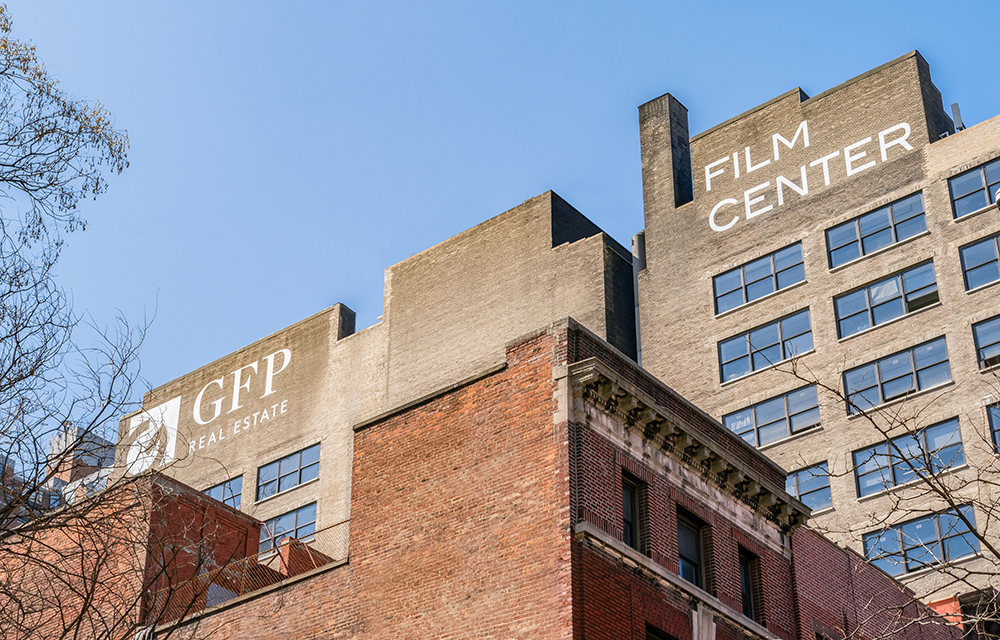
GFP Real Estate signs 11,078 s/f of leasing activity at 630 Ninth Ave.
Manhattan, NY GFP Real Estate closed three office leasing transactions totaling 11,078 s/f at 630 Ninth Ave. in Midtown, including a new lease with Irish Arts Center and extensions by existing



Quick Hits

Columns and Thought Leadership

A guide to finding the right NYC property management company - by Sanjay Gandhi
Being a small to midsize landlord in NYC is an increasingly demanding endeavor. From navigating complex regulations, increased compliance demands to dealing with tenant issues and remediating violations. It is wise to enlist the assistance of a partner, a professional

Hunt commercial real estate question and answer: Fortune 500 wisdom - by David Hunt
Yes, there are lessons to be learned from the largest companies in America when comes to managing your real estate. But the decision to buy or lease real estate may not be one of

Positive forecast for New York’s pro-housing push? - by Philip Butler
New York’s housing crisis remains a hot button topic despite growing consensus that varied and affordable housing is desperately needed statewide. Governor Hochul has recently introduced several initiatives to overcome N.Y.’s anti-housing

New York’s streets are full again, and the retail numbers prove it - by Noam Aziz
Walk down any New York block this year and you can feel it. The sidewalks are crowded, the storefronts are lit, and the energy that defines this city is back at full volume.
.gif)
September Promotion
