



News:
Brokerage
Posted: February 24, 2014
Mack-Cali Realty Corp. in JV with Ironstate break ground on URL Harborside
Mack-Cali Realty Corp. and its joint venture partner, Ironstate Development Company, broke ground January 14th, on a new type of residential tower: URL Harborside. URL, which stands for Urban Ready Living, is a direct response to the needs and desires of those looking to live in apartments that use less energy, provide more innovative spaces, and offer public areas that foster community.
URL Harborside 1, a 69-story, multifamily residential tower, will bring 763 contemporary rental residences to Mack-Cali's Harborside and the Jersey City Waterfront. The $291 million development, the first phase of URL Harborside which will feature three towers comprising 2,358 residences overlooking the Manhattan skyline, is expected to be completed in mid-2016. The project will create hundreds of jobs in Jersey City, including construction and other full-time employment opportunities.
Jersey City mayor Steven Fulop was on hand to announce the groundbreaking of the development. "This project speaks to the vibrancy of Jersey City, where development and investment continue to thrive," said Mayor Fulop. "Not only will this be the tallest residential building in the state, the project also incorporates sustainability elements and develops a community-style concept through public spaces. We are pleased to break ground on this exciting project today."
The move to start construction on a project of this magnitude signifies the continued confidence developers, business and civic leaders place in Jersey City as flourishing residential, lifestyle, and employment destination. There are currently approximately 5,000 residential units under construction in Jersey City and another 12,000 have approvals - with work expected to commence on more than half of them this year. In 2014, there will be more than 11,000 units under construction in Jersey City, illustrating the demand of the Jersey City residential market.
Mitchell Hersh, president and chief executive officer of Mack-Cali, said, "We believe there is strong demand for a live-work-play environment that offers a true sense of community - all in an amenity-rich, transit-oriented location. We chose to partner with Ironstate because of their vast experience and exceptional reputation in the development and management of high-rise residential real estate."
Tags:
Brokerage
MORE FROM Brokerage
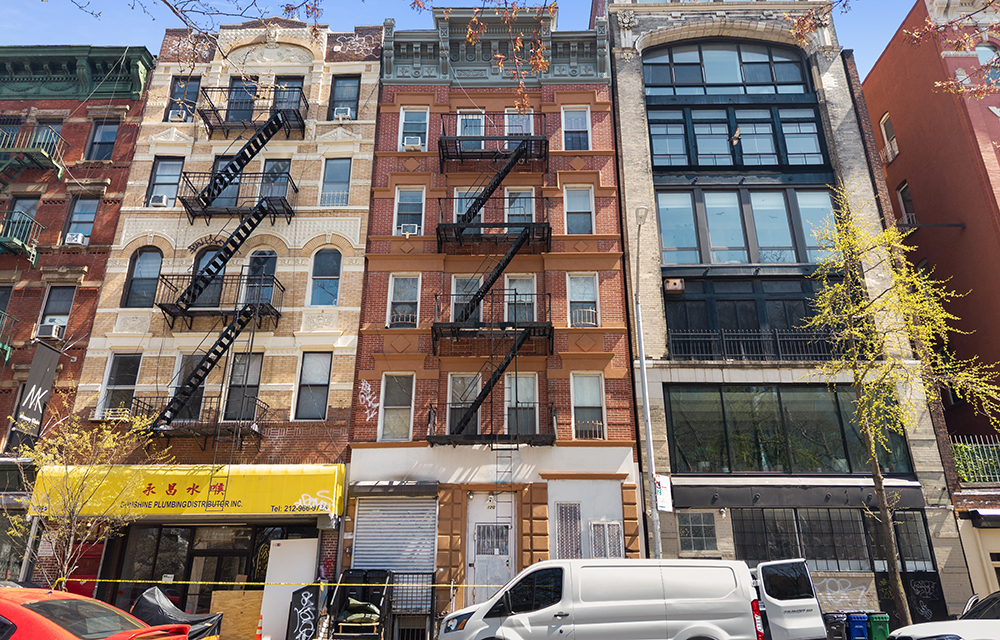
Investment Property Realty Group sells 120 Forsyth St. for $1.35 million
Manhattan, NY Investment Property Realty Group (IPRG) closed the sale of 120 Forsyth St., a mixed-use building located in the Lower East Side section of the city, for $1.35 million.



Quick Hits

Columns and Thought Leadership

New York’s streets are full again, and the retail numbers prove it - by Noam Aziz
Walk down any New York block this year and you can feel it. The sidewalks are crowded, the storefronts are lit, and the energy that defines this city is back at full volume.

Positive forecast for New York’s pro-housing push? - by Philip Butler
New York’s housing crisis remains a hot button topic despite growing consensus that varied and affordable housing is desperately needed statewide. Governor Hochul has recently introduced several initiatives to overcome N.Y.’s anti-housing

Hunt commercial real estate question and answer: Fortune 500 wisdom - by David Hunt
Yes, there are lessons to be learned from the largest companies in America when comes to managing your real estate. But the decision to buy or lease real estate may not be one of

A guide to finding the right NYC property management company - by Sanjay Gandhi
Being a small to midsize landlord in NYC is an increasingly demanding endeavor. From navigating complex regulations, increased compliance demands to dealing with tenant issues and remediating violations. It is wise to enlist the assistance of a partner, a professional
.gif)