



News:
Spotlight Content
Posted: July 27, 2010
Levine of Douglaston Development honored by the BIANYC
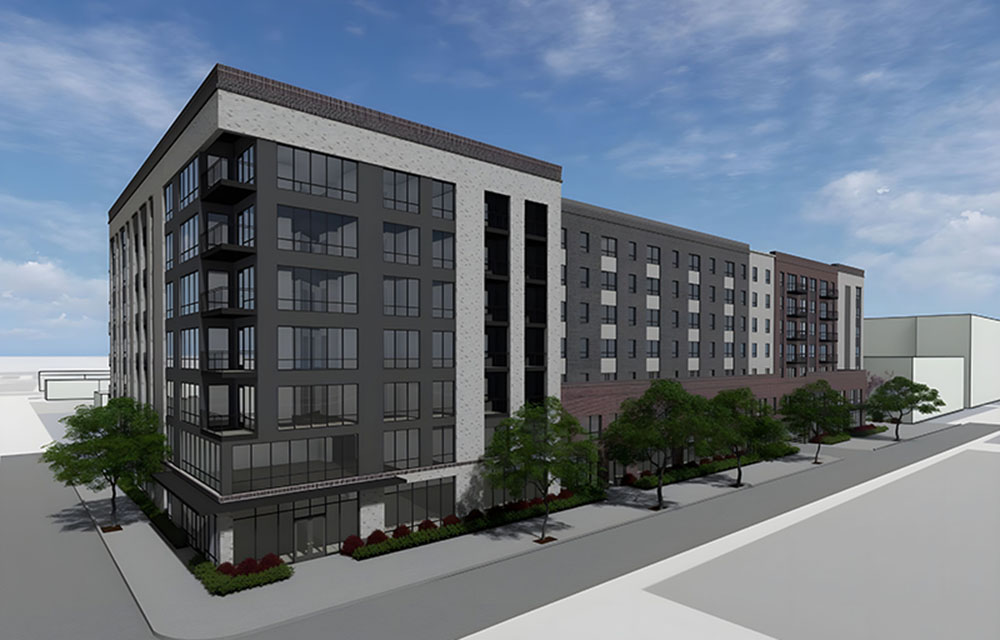
Randy Lee, chairman of The Building Industry Association of New York City (BIANYC), presented the "Chairman's Award" to Jeffrey Levine, chairman of Douglaston Development, in recognition of The Williamsburg Edge. The mixed-use project consists of two residential buildings housing 565 condos, 60,000 s/f of retail space, below-grade parking and 1.75 acres of open space.
"It is my privilege and pleasure to present this year's BIANYC's 'Chairman's Award for the Top NYC Project' to Jeff Levine. Levine's conception and development of The Williamsburg Edge is absolutely noteworthy and deserving of praise as the property is, quite frankly, the best mixed-use project in New York City at this time. Nothing else is close" said Lee, who is also CEO of Leewood Real Estate Group.
R. Randy Lee has been active in the National, New York State and the local homebuilding and real estate industries for almost forty years and has been the recipient of numerous awards himself.
The Williamsburg Edge, in Williamsburg, Brooklyn, offers studios and one to three bedroom apartments and its amenities are designed to encourage and facilitate the social lives of residents. The numerous and varied "Active, Spa and Community" amenities include: a fully-equipped game room, a party room, an all season pool with an adjacent waterfall and shallow plunge pool, fitness center with personal training services and a yoga studio, theater screening rooms, a children's playroom, spa treatment rooms, a communal fire pit, co-ed wood sauna and steam bath, healing whirlpool, terrace, lounges and chef's kitchens. The Edge also features sustainable design.
About the Building Industry Association of New York
First chartered in 1953 the Building Industry Association of New York City is a local affiliate of the National Association of Home Builders, a Washington, DC based trade association representing more than 200,000 members involved in home building, remodeling, multifamily construction, property management, subcontracting, design, housing finance, building product manufacturing, and other aspects of residential and light commercial construction.
Tags:
Spotlight Content
MORE FROM Spotlight Content

NYREJ's 2026 Developing Long Island Spotlight is here!
This spotlight showcases projects completed and currently under construction across Long Island as well as highlights improvements made to the region through Industrial and Economic Development Agencies and BIDs.


.png)

Quick Hits
 (2).gif)

Columns and Thought Leadership

From vacancy to vitality: How adaptive reuse is reshaping Long Island’s CRE landscape - by Andrea Tsoukalas Curto
Adaptive reuse has become one of the most important conversations in commercial real estate today. Long Island has a large inventory of aging retail, office and industrial

Properly serving a lien law Section 59 Demand - by Bret McCabe
Many attorneys operating within the construction space are familiar with the provisions of New York Lien Law, which allow for the discharge of a Mechanic’s Lien in the event the lienor does not commence an action to enforce following the service of a “Section 59 Demand”.

CRE Guide Featured Company: Merritt Environmental Consulting Corp.
Merritt Environmental Consulting Corp. (MECC) was established in June of 2009 after being part of a larger engineering firm for almost 20 years. The focus of the company is to assist lending institutions, attorneys, real estate investors, and property owners with environmental concerns. Today, MECC has offices in New York, Florida, and Vermont and has grown into a regional consulting firm serving clients along the East Coast.

2026 Developing Queens: Long Island Board of Realtors advances commercial growth and advocacy in Queens
The Long Island Board of Realtors (LIBOR) Commercial Network continues to play a key role in advancing opportunities and strengthening the commercial real estate landscape across Queens. Through targeted programming and global outreach