



News:
Brokerage
Posted: May 28, 2013
Leff to join McCullough, Goldberger & Staudt
According to McCullough, Goldberger & Staudt LLP, a leading full-service law firm, Meredith Leff, Esq. has joined the firm as an associate.
Focusing on commercial and residential real estate transactions, Leff comes from Feinstein & Naishtut LLP, of Rye Brook. She had previously practiced law for five years at Robinson and Cole LLP, a CT firm based in Greenwich specializing in a variety of practice areas, including real estate and environmental law.
At Robinson and Cole she assisted clients in the preservation and disposition of significant assets. She drafted wills and various types of trusts including revocable trusts, life insurance trusts, qualified personal trusts and grantor retained annuity trusts.
Leff also handled high-end purchases and sales of residential condominiums, cooperative apartments and single-family dwellings in NY and CT, representing buyers and sellers as well as lenders and title insurance companies.
"Meredith is a top-notch lawyer and will be a great addition to our firm," said Frank McCullough Jr., a partner in the firm. "Her experience in complex real estate transactions will be incredibly valuable as we continue to grow in Westchester and the Lower Hudson Valley region."
Leff was admitted to the New York State Bar and the New Jersey State Bar in 1998 and the Connecticut State Bar in 2001. She received her J.D. from Hofstra Law School in 1997, where she was an associate editor of the Law Review, and a B.S. from Cornell University in 1994. She lives in Katonah with her husband Gregg and their three daughters.
"I am thrilled to join the McCullough, Goldberger and Staudt team," Leff said. "It's a nice combination of great people and sophisticated work. It's a perfect balance."
The firm of McCullough, Goldberger & Staudt, LLP was established in 1984 by the merger of Taylor, McCullough & Geoghegan with Fredericks, Goldberger & Liberman, two firms with long, successful histories in Westchester County.
McCullough, Goldberger & Staudt, LLP's strong zoning, real estate, municipal and banking background combined with our litigation experience have resulted in a diversified firm with the depth and range to fully service client matters -- from inception, through negotiations and to conclusion, including litigation when necessary.
Tags:
Brokerage
MORE FROM Brokerage
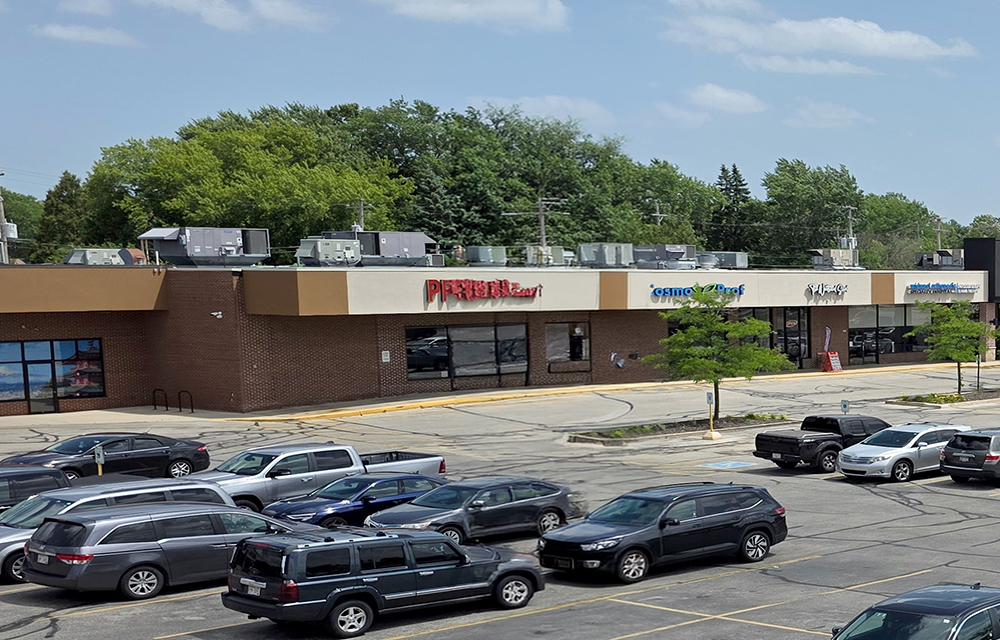
United Properties Corp. expands Wisconsin and Illinois retail presence adding 200,000 s/f
West Allis, WI United Properties Corp. completed two retail acquisitions totaling $27.4 million across Illinois and Wisconsin, adding 205,000 s/f of shopping center space to its portfolio






 (2).gif)

Columns and Thought Leadership

New York’s streets are full again, and the retail numbers prove it - by Noam Aziz
Walk down any New York block this year and you can feel it. The sidewalks are crowded, the storefronts are lit, and the energy that defines this city is back at full volume.

A guide to finding the right NYC property management company - by Sanjay Gandhi
Being a small to midsize landlord in NYC is an increasingly demanding endeavor. From navigating complex regulations, increased compliance demands to dealing with tenant issues and remediating violations. It is wise to enlist the assistance of a partner, a professional

Hunt commercial real estate question and answer: Fortune 500 wisdom - by David Hunt
Yes, there are lessons to be learned from the largest companies in America when comes to managing your real estate. But the decision to buy or lease real estate may not be one of

Positive forecast for New York’s pro-housing push? - by Philip Butler
New York’s housing crisis remains a hot button topic despite growing consensus that varied and affordable housing is desperately needed statewide. Governor Hochul has recently introduced several initiatives to overcome N.Y.’s anti-housing
.gif)