



News:
Brokerage
Posted: March 23, 2009
LaChance of SWBR Architects earns LEED accreditation
Jennifer LaChance, an architect at SWBR Architects, has recently received her Leadership in Energy and Environmental Design (LEED) Accreditation, offered through the U.S. Green Building Council. This certification recognizes those who have completed the necessary training, education and testing to apply green architecture standards to their designs. SWBR Architects now has 20 LEED accredited employees.
Sustainable architecture is a term used to describe economical, energy saving, environmentally friendly, and sustainable development. Sustainable architecture meets the needs of people today without destroying the resources that will be needed in the future. For the designer, this means being aware of the consequences of choosing particular materials, the waste created, the impact on immediate and future environments, and the health of those involved (the manufacturers, suppliers, installers, building occupants), over the life of the facility.
"We're thrilled for Jennifer and are proud of her accomplishment in obtaining LEED Accreditation. LEED principles are an everyday part of our firm's designs and she stands behind what we believe in as a company," says David Beinetti, president of SWBR. "We're strongly committed to training our entire staff in sustainable design and encourage them all to get accreditation to help us improve on the best practices we have used for years. There are a myriad of benefits to sustainable design including increased environmental quality; economic benefits such as lower operating costs; and health and community benefits including enhanced occupant health and comfort."
New York state supports green architectural practices, too. In 2001, New York State Executive Order 111 was enacted, directing state agencies, state authorities and others to be more energy efficient and environmentally aware. Specifically, it states that renewable energy must meet 10% of yearly energy use through 2005. By 2010, it must meet 20% of yearly energy use.
LaChance received her bachelor of environmental design in Architecture from Miami University and is an associate member of the American Institute of Architects and a member of the Genesee Valley Regional Assoc. of Healthcare Engineers.
LEED Accreditation is a voluntary, consensus-based national standard for developing high-performance, sustainable buildings. LEED provides a complete framework for assessing building performance and meeting sustainability goals. Â LEED emphasizes state of the art strategies for sustainable site development, water savings, energy efficiency, materials selection and indoor environmental quality. LEED also recognizes achievements and promotes expertise in green building through a comprehensive system offering project certification, professional accreditation, training and practical resources.
SWBR Architects is an award-winning architectural practice serving local and east coast clients. Â With offices in Rochester and Syracuse, the firm specializes in education, housing, health, science and technology, corporate/industrial and municipal design. Â Sustainable design principles help guide the firms practice working to meet clients' expectations as they relate to design, quality and budget.
Tags:
Brokerage
MORE FROM Brokerage
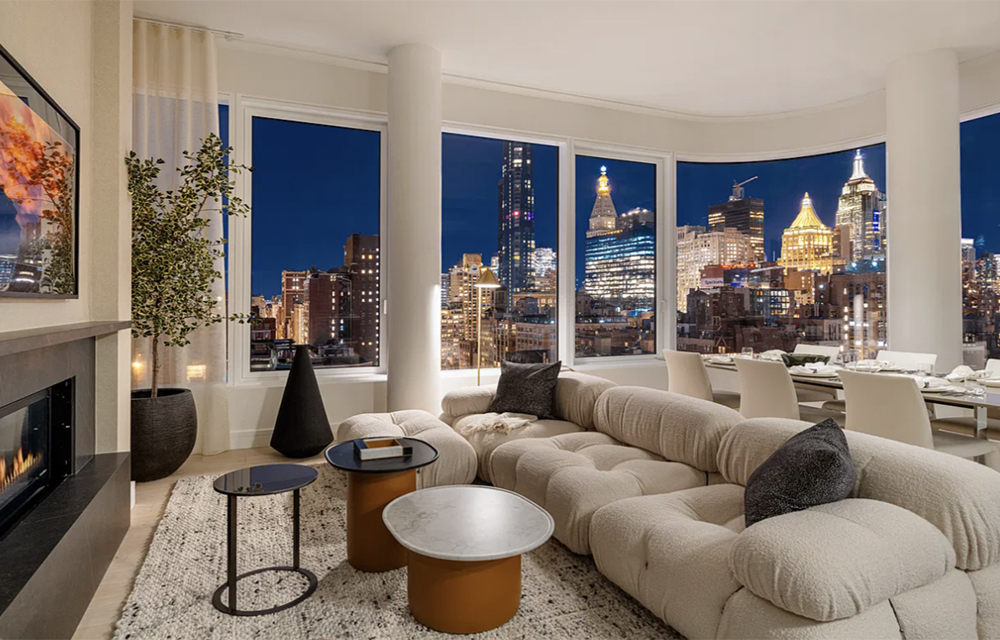
200E20TH sells out in Gramercy, penthouse A closes out sales at the CetraRuddy-designed condominium residences
Manhattan, NY 200E20TH, the CetraRuddy-designed architectural masterwork that brought a curved, contemporary sensibility to Gramercy’s Beaux-Arts streetscape, has






Columns and Thought Leadership

Hunt commercial real estate question and answer: Fortune 500 wisdom - by David Hunt
Yes, there are lessons to be learned from the largest companies in America when comes to managing your real estate. But the decision to buy or lease real estate may not be one of

Hunt CRE question and answer: Choosing a real estate agent - by David Hunt
First, we will only work with one agent exclusively. The primary reason is that we want that agent to legally represent our client’s interests. In New York State, a real estate agent has a fiduciary

The art of investing in real estate - by Thomas Donovan
Real estate investing is as much an art as it is a skill. No one can time the market, or the factors that drive it, perfectly. Location, zoning, size, transportation, and neighborhood density give you a baseline for

New York’s streets are full again, and the retail numbers prove it - by Noam Aziz
Walk down any New York block this year and you can feel it. The sidewalks are crowded, the storefronts are lit, and the energy that defines this city is back at full volume.
.gif)