



News:
Spotlight Content
Posted: January 26, 2015
Kestenbaum of Exit Realty earns Certified Buyer Representative designation
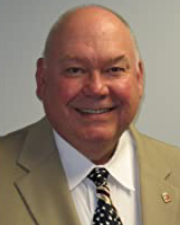
Congratulations were extended to Ray Kestenbaum, real estate salesman at Exit Realty First Choice in Fresh Meadows, by his brokers and colleagues and by LIBOR, Long Island Board of Realtors, for completing the course on Certified Buyer Representative and earning his CBR designation.
"I expect it will open a new stream of income," said Kestenbaum, who reasoned that buyers of residences, condos and co-ops will be needing representation in an atmosphere of lower housing availability and ever increasing buyer bidding wars in Queens.
"Buyers are escaping the soaring rents of Manhattan and Brooklyn. They seek the more moderate prices of Queens and its good access to Manhattan," said Kestenbaum. Kestenbaum noted that he can now represent out-of-country buyers who are moving to Queens from countries like former Russian provinces, Israel, China, India and countries in South America.
The CBR course, administered by RealNet Learning Services, educated him about the laws, responsibilities and benefits of becoming a buyer's representative.
Kestenbaum learned of the trend from his broker, Solomon Davydov, who told a group of Exit agents, "If you're a buyer's representative the commission comes from the buyer and you should let the homeowner know that when you ring his doorbell or are prospecting by phone. Chances are that It will also give you entrée into the home of a FSBO (For sale by Owner). Now if both parties agree to permit you to be a dual agent you can help reduce the seller's commission by having part of it paid for by the buyer."
Solomon's talk inspired Kestenbaum, who went ahead and registered for the LIBOR-sponsored CBR course nearby. The 3-day course was taught by long-time real estate teacher-trainer Roseann Farrow. "It has opened a wealth of opportunities in real estate sales," said Kestenbaum.
Kestenbaum has been a real estate salesperson for five years. He moved into real estate from being a journalist, a personality and science writer, and radio newscaster. "It's been a major shift in my mindset from working as a reporter to that of developing into a businessman and real estate facilitator and negotiator," said Kestenbaum.
Tags:
Spotlight Content
MORE FROM Spotlight Content
The commercial classroom: 1031 tax-deferred exchanges - by Edwad Smith Jr.
The sale of real estate may trigger capital gains taxes on the net profits of that sale. These taxes may be deferred by participating in a 1031 tax exchange, in essence, by purchasing property(s) to replace the




.png)



Columns and Thought Leadership

From vacancy to vitality: How adaptive reuse is reshaping Long Island’s CRE landscape - by Andrea Tsoukalas Curto
Adaptive reuse has become one of the most important conversations in commercial real estate today. Long Island has a large inventory of aging retail, office and industrial

2026 Developing Queens: Long Island Board of Realtors advances commercial growth and advocacy in Queens
The Long Island Board of Realtors (LIBOR) Commercial Network continues to play a key role in advancing opportunities and strengthening the commercial real estate landscape across Queens. Through targeted programming and global outreach

2026 Developing Long Island: ERG Commercial Real Estate launches its new Retail Leasing division
North Hempstead, NY ERG Retail Leasing is the dedicated leasing division of ERG Commercial Real Estate, an established full-service commercial real estate brokerage for over 35 years.

CRE Guide Featured Company: Merritt Environmental Consulting Corp.
Merritt Environmental Consulting Corp. (MECC) was established in June of 2009 after being part of a larger engineering firm for almost 20 years. The focus of the company is to assist lending institutions, attorneys, real estate investors, and property owners with environmental concerns. Today, MECC has offices in New York, Florida, and Vermont and has grown into a regional consulting firm serving clients along the East Coast.