



News:
Brokerage
Posted: January 28, 2025
Kennedy Funding closes $1.445m loan to renovate Old Mill Guest House venue
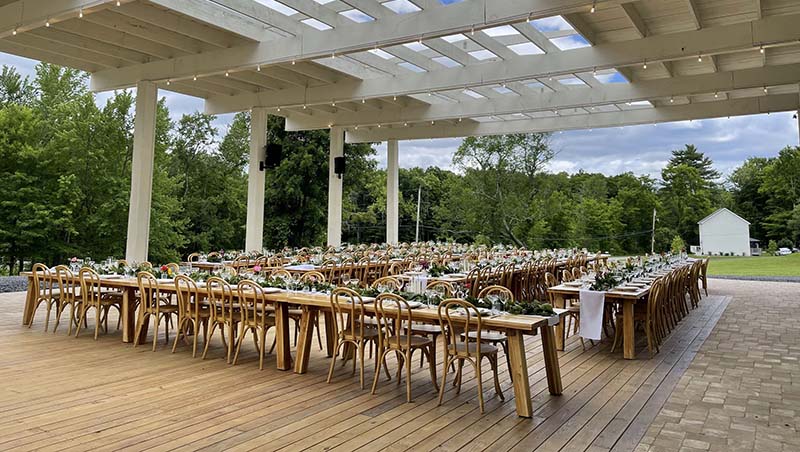
Wallkill, NY A Hudson Valley retreat is expanding its footprint in the wedding events space, with help from Kennedy Funding.
The N.J.-based, direct private lender closed a $1.445 million loan to 323 Old Mill LLC for Old Mill Guest House, a 24-acre property that hosts weddings, showers, corporate retreats, and similarly-sized events for up to 200 people, with overnight accommodations for up to 50 people.
Old Mill Guest House is part of Audrey’s Farmhouse, a hospitality group that operates several retreats and event spaces in upstate New York. Proceeds will be used as working capital and put toward improvements of Old Mill Guest House’s existing buildings.
“Old Mill Guest House is a stunning location for an unforgettable event, surrounded by old-growth trees, ponds, and the peace and quiet that the Hudson Valley is known for,” said Kevin Wolfer, CEO of Kennedy Funding.
“A charming wedding venue like this one is primed for a busy season, booking into 2025 and 2026 — just in time to debut beautifully renovated accommodations, funded by a working capital loan we were pleased to close for this borrower.”
According to Edwin Urrego, executive loan officer at Kennedy Funding, the property was purchased by Audrey’s Farmhouse in June 2019 for $275,000. The company has invested nearly $3 million into construction and other capital expenditures since purchasing the property.
“Tourism and getaways in the Hudson Valley have been on the rise ever since the COVID-19 pandemic, and it’s now the second-largest tourism market in New York,” Urrego said. “Old Mill Guest House is a vibrant part of the region’s $5 billion tourism industry, and will continue to put the Hudson Valley region on the map for intimate holiday getaways and large family celebrations alike.”
The deal was brokered by Raymond Dellovo Jr., president of Medford, MA-based International Lending Network. Audrey’s Farmhouse was referred to Dellovo by representatives from a local bank, who were in the market for a private lender who could help fund the hospitality group’s expansion efforts in Wallkill. Dellovo’’s first call was to Kennedy Funding.
“I have been working with Kennedy Funding for more than 30 years; they are the #1 company I work with,” said Dellovo, citing their long-standing track record of more than $4 billion in closings. “They are more expensive than a bank, but they deliver—they always deliver exactly what they promise. They have a lot of integrity. They know how to get approvals and are quick to close,” adds Dellovo.
Central to Kennedy Funding’s lending philosophy is the way the firm examines the merits of every deal, evaluating its impact on the community — and potential for generating revenue.
“When we evaluate a deal, we want to get a true sense of the project’s viability and future success, and that’s not something that you can tell from a rigid checklist or a set of arbitrary criteria,” Urrego said. “Because we have the freedom to fully assess an opportunity from all angles, we’re able to get clients like Audrey’s Farmhouse the funding they need to grow.”
Audrey’s Farmhouse intends to market Old Mill Guest House as a wedding venue, complete with essential services like catering and furniture rentals. The grounds of the estate include event space, a 5,000 s/f wooden pergola, a seasonal heated saltwater pool with cabanas, and a beautifully manicured central courtyard surrounded by structures that date back to the 19th century. The property is located around 90 minutes from New York City and 30 minutes from the New Jersey border, easily accessible throughout the Tri-State Area and Pennsylvania.
Renovations are planned for the lodges, totaling 19 bedrooms across four buildings.
“Kennedy Funding was able to deliver this loan when traditional lenders couldn’t,” Urrego said. “That’s the void we fill in the marketplace.”
Tags:
Brokerage
MORE FROM Brokerage
Resource Realty of Northern NJ delivers complete lease-up of 235 Franklin Rd. for Commerce Park Investors
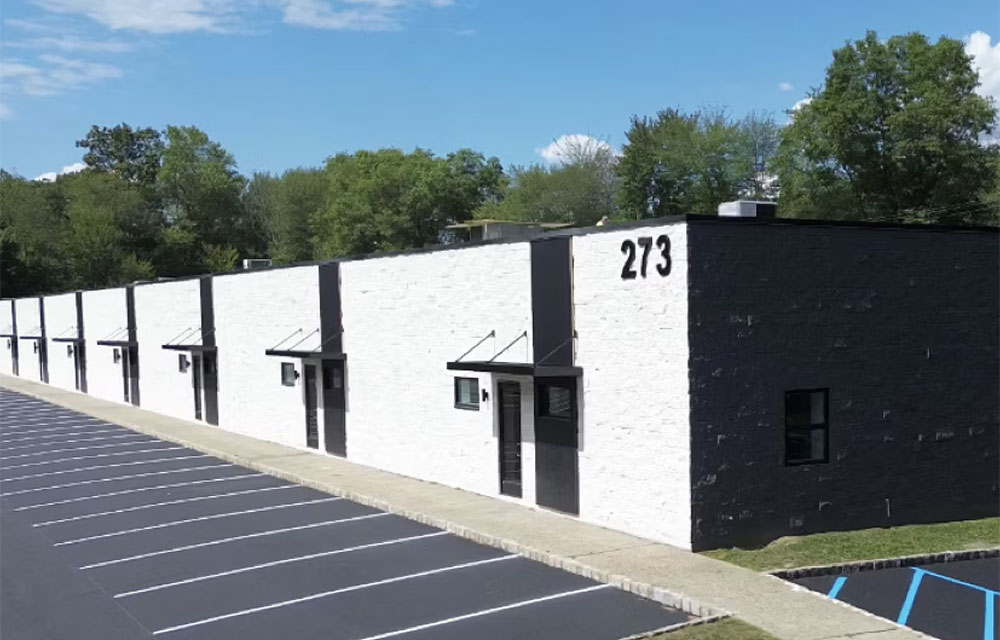
Randolph, NJ Resource Realty of Northern New Jersey (RRNNJ) has completed the lease-up of a 10-unit small-bay industrial property at 273 Franklin Rd., marking the culmination of an investment strategy that began



Quick Hits
 (2).gif)

Columns and Thought Leadership

New York’s streets are full again, and the retail numbers prove it - by Noam Aziz
Walk down any New York block this year and you can feel it. The sidewalks are crowded, the storefronts are lit, and the energy that defines this city is back at full volume.

Positive forecast for New York’s pro-housing push? - by Philip Butler
New York’s housing crisis remains a hot button topic despite growing consensus that varied and affordable housing is desperately needed statewide. Governor Hochul has recently introduced several initiatives to overcome N.Y.’s anti-housing

A guide to finding the right NYC property management company - by Sanjay Gandhi
Being a small to midsize landlord in NYC is an increasingly demanding endeavor. From navigating complex regulations, increased compliance demands to dealing with tenant issues and remediating violations. It is wise to enlist the assistance of a partner, a professional

Hunt commercial real estate question and answer: Fortune 500 wisdom - by David Hunt
Yes, there are lessons to be learned from the largest companies in America when comes to managing your real estate. But the decision to buy or lease real estate may not be one of
.gif)