Cushman & Wakefield




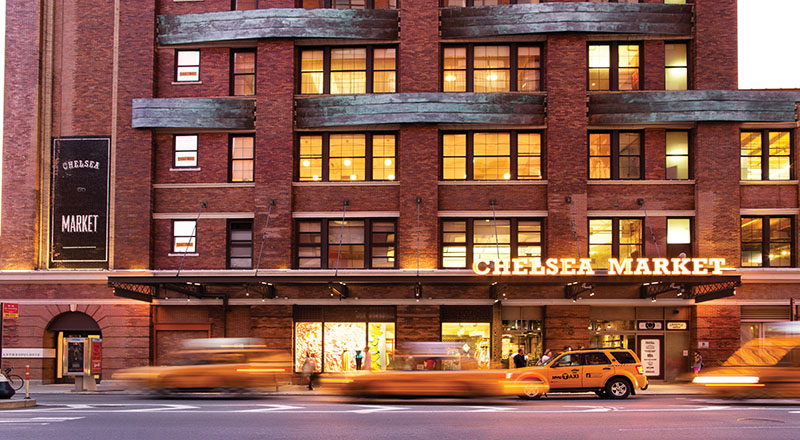
Manhattan, NY According to Jamestown, the firm has finalized the $2.4 billion sale transaction of Chelsea Market to Google Inc., which already occupies a significant portion of the 1.188 million s/f complex.
Best known for its ground-floor food hall, visited by more than 500,000 locals and tourists per month, Chelsea Market is widely credited with launching the transformation of West Chelsea and viewed as a major factor fueling the city’s “foodie” craze. The former Nabisco factory occupies the full block bound by Ninth and Tenth Aves. between 15th and 16th Sts.
With Google’s purchase of the building, the two companies have agreed to work together to ensure a smooth transition with little or no impact to the community and tenants of the building. With this goal in mind, Jamestown will continue to manage the retail and food hall.



Jamestown was represented by Doug Harmon, Adam Spies, and Kevin Donner at Cushman & Wakefield, and Google was represented by Darcy Stacom at CBRE.
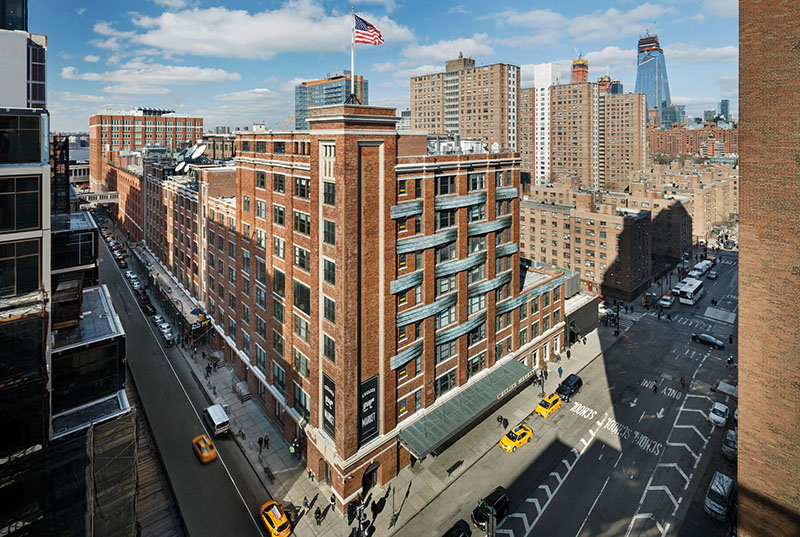 “For Jamestown, this is the highest profile example to date of our unique approach to creating value, but it’s consistent with transformative projects we’ve successfully undertaken across the country,” said Michael Phillips, president of Jamestown. “It’s a combination of identifying underutilized locations, creative and visionary repositioning, value-creating management, rigorous financial analysis, and patience.”
In 2010, Jamestown and its partners sold 111 Eighth Ave. to Google for $1.77 billion. Jamestown owned 70% of that property, which sits directly across Ninth Ave. from Chelsea Market. Since that time, Jamestown and Google have collaborated on a number of community-focused initiatives, including a computer lab for Robert Fulton Houses and most recently, the purchase of the historic Julian Binford mural that was donated to the Hudson Guild.
Redevelopment of the property began in 1995 when real estate investor Irwin Cohen purchased the site in an attempt to create a new home for the city’s flower district. In 2003, Jamestown purchased a 75% interest in Chelsea Market, further repositioning the site by reinforcing the food hall and focusing on attracting tech, media, and other creative tenants to the upper floors. In 2012, as part of a broader effort to add to the city’s inventory of available office space needed to support the recovery of New York’s economy following the global recession of 2008, the city approved a 300,000 s/f addition to Chelsea Market.
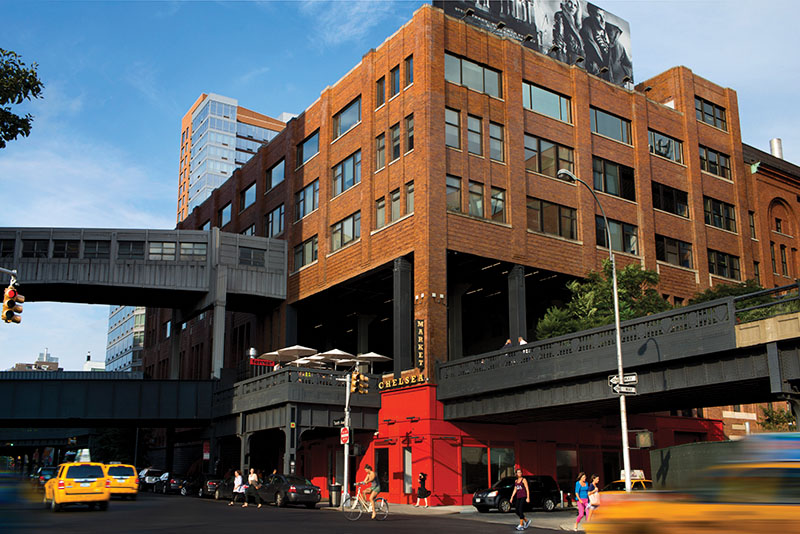 Over the last three decades, Jamestown has spearheaded several nationally-recognized adaptive reuse projects, including Chelsea Market in Manhattan, Industry City in Brooklyn, Ponce City Market in Atlanta, the Innovation and Design Building in Boston, Brunswig Square in Los Angeles, and the Falchi Building in Queens. Jamestown has been a leader in placemaking, focusing on using food and culture as a unifier to create the leading urban centers of the United States.







.gif)