


 (2).gif)
News:
Spotlight Content
Posted: April 12, 2010
Is today's boiler obsolete? Lets consider the options for upgrading and increasing efficiency
Energy bills often represent more than 30% of a building owner's operating expenses. The combination of rising energy costs, a need to improve the energy efficiency of heating systems and reduce the carbon dioxide footprint begs the question-what are our options with respect to the current heating systems for multifamily buildings? For some insight on cost efficient solutions for "tomorrow's" boiler system, I consulted with Kumar Amitt of Globotech Inc, a Combined Heat and Power (CHP) authorized vendor.
According to Amitt, the majority of the multifamily buildings built in the early 1900s run on steam boilers fired by oil. Newer buildings (built within the past 10-20 years) use hot water boilers fired by gas and are more efficient than steam boilers, which require more energy to create steam. Steam boilers operate at approximately 60% energy efficiency; the wasted heat is released into the atmosphere, increasing carbon dioxide emissions.
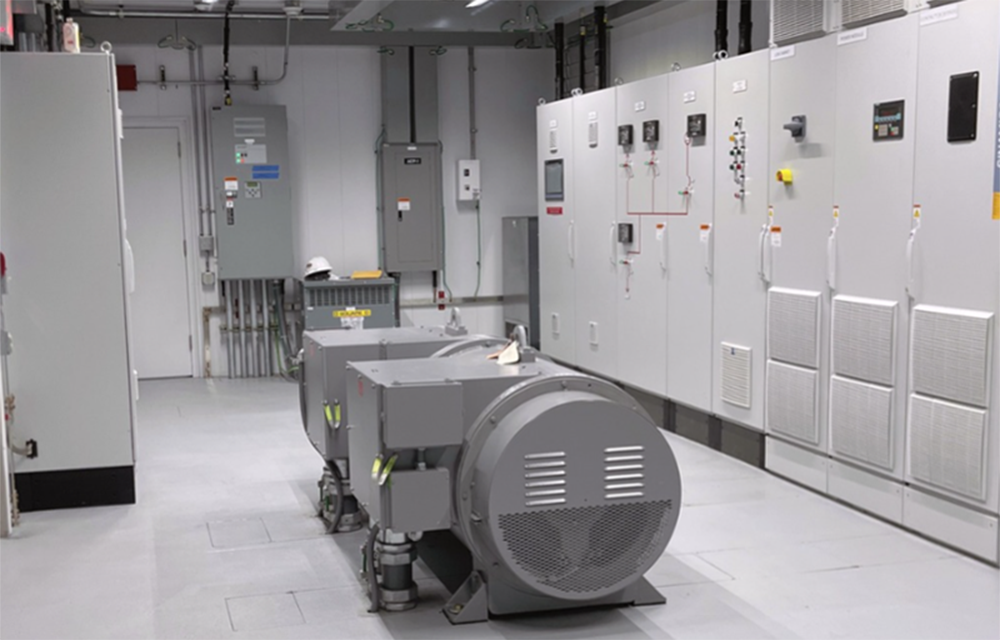
Completely converting from a steam boiler to a hot water boiler is cost prohibitive as it requires changing the boiler as well as the steam radiators in each apartment. A lower cost alternative is the Micro CHP on-site plant, which offers a partial solution to improving the overall boiler performance. The Micro CHP system is a cogeneration system and works with the existing steam boiler, providing on-site generation of electricity and heat. Most CHP systems, which are considered "green technology," run on natural gas and have the ability to achieve efficiencies of up to 90%.
An owner's utility bill is comprised of electricity for common areas, oil to provide space heating (uses approximately 60% of the total oil needed in a year) and oil to heat the water (uses estimated 40% of the total oil needed in a year). The CHP on-site plant is designed to deliver 100% of the hallway and common areas' electricity, hence reducing the electricity bill to zero. The CHP will also provide approximately 40-50% of the domestic hot water heating which equates to a reduction of approximately 20-25% of the oil needed in a year. In addition, there is excess electricity produced as the needs for the common areas are not large. The excess electricity can be used in an electric heater to heat the remaining water needs via a domestic hot water storage tank and further reduce the oil needs by another 20-25%. This design also eliminates the need to run the boiler during the summer months as the CHP is able to heat all of the domestic hot water and provide all of the common area electricity. Hence, the steam boiler is primarily running in the winter months (October - March) and the total oil needed has been reduced by approximately 40-45%.
With the hot water boiler, you can accomplish the same benefits. The CHP plant also produces 100% of the building's electricity, heats all of the domestic hot water and additionally, it provides for approximately 40-50% of the space heating using hot water, also known as hydronic space heating. Hence, the oil needs are reduced by approximately 50-55%.
Investing in a Micro CHP plant costs approximately $50,000 for the plant and the installation. The additional hot water buffer storage tanks each cost approximately $3000- $4000 and the needs depend on the size of the building. However, the cost of the CHP system is depreciable over a five year period. In addition, there are various state and federal incentives to encourage the adoption of CHP plants which include a 10% federal tax rebate, low interest loans, grants, cash rebates and favorable utility rates (www.epa.gov/CHP/funding/bio.html).
The long-term benefits appear to outweigh the upfront investment: electricity is free, boiler maintenance costs are reduced and the boiler lifespan is extended as the boiler is only being used 50% of the year, Micro CHP plants operate at 90%+ efficiency, which attract LEED points for the reduction of carbon dioxide, NOx & SOx emissions and finally, oil consumption is reduced by 40-45% for steam boilers and by 50-55% for hot water boilers. With a local and national commitment to green technologies, the adoption of combined heat and power systems will continue to penetrate the market, and is clearly the wave of the future.
Shallini Mehra is an associate broker at Besen & Associates, New York, N.Y.
Tags:
Spotlight Content
MORE FROM Spotlight Content

NYREJ's 2026 Developing Long Island Spotlight is here!
This spotlight showcases projects completed and currently under construction across Long Island as well as highlights improvements made to the region through Industrial and Economic Development Agencies and BIDs.



.png)

Quick Hits


Columns and Thought Leadership

Properly serving a lien law Section 59 Demand - by Bret McCabe
Many attorneys operating within the construction space are familiar with the provisions of New York Lien Law, which allow for the discharge of a Mechanic’s Lien in the event the lienor does not commence an action to enforce following the service of a “Section 59 Demand”.

CRE Guide Featured Company: Merritt Environmental Consulting Corp.
Merritt Environmental Consulting Corp. (MECC) was established in June of 2009 after being part of a larger engineering firm for almost 20 years. The focus of the company is to assist lending institutions, attorneys, real estate investors, and property owners with environmental concerns. Today, MECC has offices in New York, Florida, and Vermont and has grown into a regional consulting firm serving clients along the East Coast.

2026 Developing Queens: Long Island Board of Realtors advances commercial growth and advocacy in Queens
The Long Island Board of Realtors (LIBOR) Commercial Network continues to play a key role in advancing opportunities and strengthening the commercial real estate landscape across Queens. Through targeted programming and global outreach

From vacancy to vitality: How adaptive reuse is reshaping Long Island’s CRE landscape - by Andrea Tsoukalas Curto
Adaptive reuse has become one of the most important conversations in commercial real estate today. Long Island has a large inventory of aging retail, office and industrial