



News:
Brokerage
Posted: September 20, 2016
How to structure a reverse 1031 exchange - by Pierre Debbas
 Pierre Debbas, Romer Debbas, LLP
A reverse 1031 exchange must be done in compliance with rev. proc. 2000-37, which provides the “Safe Harbor” rules for a reverse exchange. A reverse exchange is a transaction in which the replacement property is acquired before the relinquished property is sold. This tax planning procedure permits you to acquire the replacement property before you are able to sell the relinquished property.
This type of transaction is typically utilized in a bullish market or if the taxpayer finds an opportunity to acquire a property below market value.
Step 1: Acquiring the replacement property – exchange accommodation titleholder:
A) An Exchange Accommodation Titleholder (EAT) must take title to the replacement property. The EAT will “park” the property until you sell your property.
B) Within five days from when the EAT takes title to the property, you must enter into a Qualified Exchange Accommodation Agreement (QEAA) with the EAT. The QEAA must specify the intentions of both parties and the rules that must be followed to complete the exchange.
C) You must identify the property you wish to relinquish within 45 days of signing the QEAA and close on the sale of your property within 180 days of signing the QEAA.
Step 2: Financing the EAT’s acquisition of the replacement property
Negotiate a loan with your lender on behalf of the EAT. The loan is usually secured by the new property. The EAT signs the note and the deed of trust. Your lender will require the investor to guarantee the loan. Sometimes the lender also takes a security interest in your old property. Be sure that there is an assumption clause in the Deed of Trust allowing you to assume the loan made to the EAT.
A) Loan structure: The EAT will purchase the relinquished property by borrowing 100% of the needed funds. EAT can borrow the funds from any source authorized by the exchanger.
i) Lease: The EAT will enter into a triple net lease with the exchanger for the property and this will correspond with the amount of the mortgage/loan, real estate taxes, insurance and maintenance. The term of the lease will be for six months (180 days).
ii) Financing: Financing for the purchase of the replacement property can be done through one of the following four methods: 1. The exchanger can provide financing to the EAT; 2. The seller of the replacement property can provide the financing; 3. The EAT can assume the current loan on the property; and 4. The EAT can enter into a new loan with an institutional lender.
Step 3: Closing of the relinquished property and purchase of the replacement property from the EAT.
A) Sale of relinquished property: The sale must take place within 180 days from the purchase of the replacement property. The net proceeds from the sale of the relinquished property will be used to buy replacement property from the EAT.
i) The QEAA will state that the EAT will be obligated to sell the replacement property to the qualified intermediary (QI) when the QI holds the proceeds from the sale of the exchanger’s relinquished property that were obtained from a third-party (buyer of the relinquished property).
ii) Once the exchanger enters into a binding contract with the buyer of the relinquished property, then the exchanger will assign the contract for the sale of the relinquished property to the QI.
iii) The QI will cause the relinquished property to be sold, with a deed directly from the exchanger to the buyer and with the net sales proceeds delivered to the QI.
B) Purchasing the replacement property from the EAT: The QI will use the proceeds that it has obtained from the sale of the relinquished property to purchase the replacement property from the EAT.
i) The deed for the property will come from the EAT and go directly to the exchanger. Once this is done, the reverse exchange will be completed.
Pierre Debbas, Esq. is a founding partner at Romer Debbas, LLP, New York, N.Y.
Tags:
Brokerage
MORE FROM Brokerage
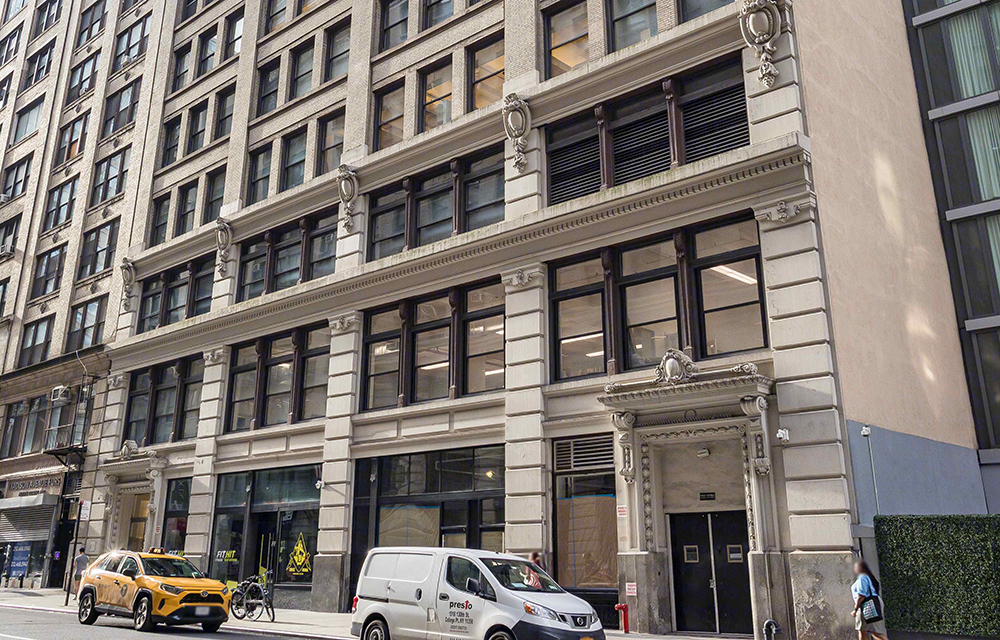
Koeppel Rosen inks 16-year 33,783 s/f lease for coworking firm Nomadworks at 122 West 27th St.
Manhattan, NY According to Koeppel Rosen LLC, leasing and management agent for the Rosen family portfolio, Nomadworks has signed a new 16-year, two-month lease totaling 33,783 s/f at 122 West




Quick Hits
 (2).gif)

Columns and Thought Leadership

Hunt commercial real estate question and answer: Fortune 500 wisdom - by David Hunt
Yes, there are lessons to be learned from the largest companies in America when comes to managing your real estate. But the decision to buy or lease real estate may not be one of

New York’s streets are full again, and the retail numbers prove it - by Noam Aziz
Walk down any New York block this year and you can feel it. The sidewalks are crowded, the storefronts are lit, and the energy that defines this city is back at full volume.

Hunt CRE question and answer: Choosing a real estate agent - by David Hunt
First, we will only work with one agent exclusively. The primary reason is that we want that agent to legally represent our client’s interests. In New York State, a real estate agent has a fiduciary

The art of investing in real estate - by Thomas Donovan
Real estate investing is as much an art as it is a skill. No one can time the market, or the factors that drive it, perfectly. Location, zoning, size, transportation, and neighborhood density give you a baseline for
.gif)