


News:
Owners Developers & Managers
Posted: May 26, 2026
From lords to luxury hosts: The transformation of Manhattan office real estate - by Joseph Aquino

For decades in New York City commercial real estate, landlords acted like Lords.
Tenants were expected to feel fortunate simply to occupy space in their buildings. The power dynamic heavily favored ownership, particularly among Manhattan’s institutional landlords, old real estate families, pension funds, insurance companies, and major developers. The attitude was clear: the landlord controlled the castle, and the tenant was merely a guest fortunate enough to be allowed inside.
But COVID changed everything.
Almost overnight, office buildings emptied, companies reassessed their real estate needs, and landlords faced something many had not experienced in decades — competition for tenants. Suddenly, ownership groups realized they could no longer rely solely on prestige addresses and marble lobbies. They had to create environments people actually wanted to return to.
Coming from the health club industry before entering commercial real estate in 1985, I recognized the shift immediately. In the fitness business, service was always the product. Hotels understood this long ago as well. Guests paid not only for a room, but for hospitality, convenience, comfort, and experience.
For years, many office landlords ignored those principles.
Today, they have finally caught up to the hospitality industry.
Modern Class A office towers in Manhattan now resemble luxury hotels more than traditional office buildings. Landlords are investing heavily in fine dining, gyms, wellness centers, conference facilities, lounges, outdoor terraces, concierge services, golf simulators, rock climbing walls, and every convenience imaginable to attract and retain tenants.
The modern office building has become an amenity-driven experience.
Landlords finally realized that tenants are no longer simply leasing square footage — they are choosing environments that help recruit talent, improve morale, and reflect corporate culture.
Ironically, these hospitality-style buildings are now achieving office rents north of $200 per s/f — numbers once considered almost unimaginable. Trophy towers offering elite amenities and premium services are commanding extraordinary pricing despite uncertainty in the broader office market.
But an important question remains:
Are these true market rents, or inflated rents fueled by temporary market forces?
One major driver is the rapid rise of artificial intelligence companies. Many of these firms are run by young entrepreneurs backed by enormous amounts of venture capital funding. Unlike prior generations who carefully watched every dollar, some of today’s startup culture appears willing to spend aggressively in pursuit of growth, image, and prestige.
Their cash flow often seems limitless.
As a result, many AI firms are willing to pay premium rents for trophy office space in Midtown Manhattan, helping push pricing to historic levels. A prestigious address has become part of their branding strategy.
At the same time, established companies that have occupied Manhattan office space for decades are beginning to search for greener pastures. Many long-term tenants simply cannot justify paying these elevated rental rates and are migrating downtown to the Financial District — what old New Yorkers still proudly call Wall Street — in search of value and affordability.
This is creating a two-tier office market.
On one side are elite hospitality-driven towers attracting hedge funds, AI firms, law firms, and prestige-oriented tenants willing to pay almost any price for experience and branding. On the other side are practical companies focused on efficiency, cost savings, and long-term stability.
The office market is not dead.
It has transformed.
The old landlord mentality of acting like Lords over their tenants has given way to something entirely different. Today, the smartest landlords understand that office buildings must operate like luxury hospitality environments where service, amenities, and experience matter just as much as location.
In today’s New York office market, the tenant is no longer simply occupying space.
The tenant is the customer.
And in many cases, the King and Queen.
Joseph Aquino is president of JAACRES, Manhattan, N.Y.
MORE FROM Owners Developers & Managers
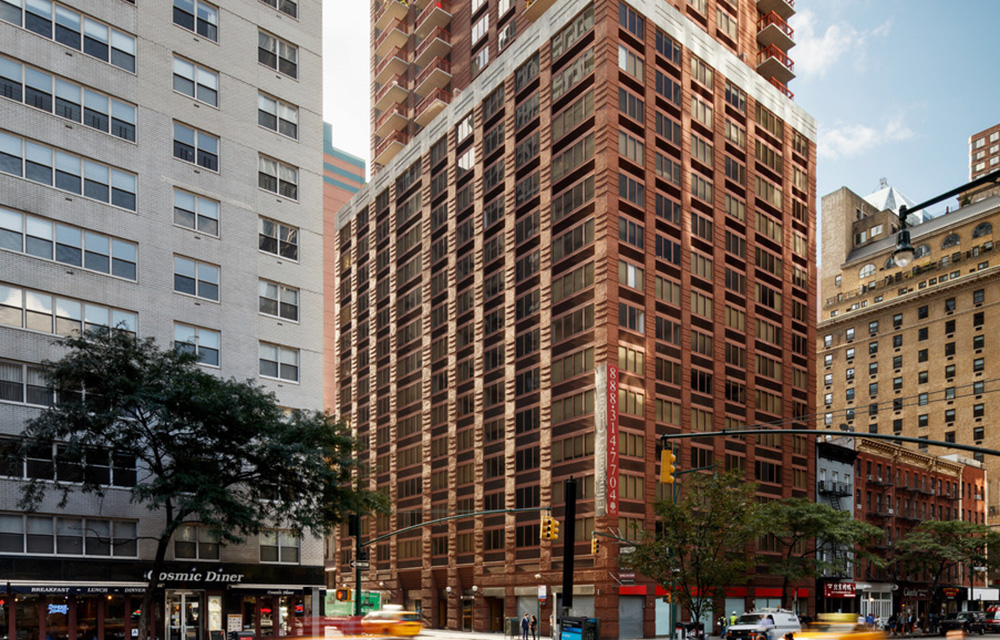
Rose Assocs. partners with Morgan Stanley Real Estate Investing to recapitalize The Ellington
Manhattan, NY Rose Associates, Inc., the New York-based multifamily real estate developer and manager, has partnered with a fund managed by Morgan Stanley Real Estate Investing (MSREI) in the recent recapitalization



Quick Hits
 (2).gif)

Columns and Thought Leadership

New York City’s historic rent freeze now rests with the courts - by Ron Cohen
New York City’s first-ever two-year rent freeze is now in the hands of a state Supreme Court judge, and the decision could reset income for owners of roughly one million rent-stabilized apartments housing some 2.4 million residents.

Hunt Commercial Real Estate Q&A: Location, location, location? - by David Hunt
In working with our clients, we break down our search objectives into two categories. The first category involves the specific needs of your business such as warehouse height, amount of office space and number of loading

Don’t leave severance damages behind - by Sebastian Jablonski
When the government takes a portion of a landowner’s property, most assume just compensation stops at the value of the land taken. However, in partial takings, that is only half of the equation.
NYC's Community Opportunity to Purchase Act is back - and multifamily owners should pay attention - by Ron Cohen
New York City’s Community Opportunity to Purchase Act (COPA) is back, and this latest version could have a much better chance of becoming law. The proposal would give qualified nonprofit organizations