



News:
Brokerage
Posted: April 22, 2016
From concept to business: Asking key questions - by Richard Du
 Richard Du, Agorafy, Inc.
A founder starts a company from pretty much nothing more than a simple idea, there is a process where the concept becomes a business, but the reality of executing the concept at a business level poses many real challenges. If a business is going to transform itself and fill the gaps within a specific sector, then we have to explore the fundamental questions. In this case, let’s think about technology. Agorafy is a real estate tech company that is building communities and democratizing data on-line.
First, we need to think about the real world, about our real problems. This means recognizing that our concept must solve problems. They must fill a gap and a need. Our concept should be something that is needed. Why? Business must be profitable, yes, but business also needs to have a purpose.
Everything starts with the purpose. From that very moment when someone writes an idea on a piece of paper, from drafting to building a product that is successful, there is a transition process that is lengthy and challenging. Thus, we need to face the problem. How can technology contribute to solving that problem? Is somebody else doing it? Is my product really needed within the short and long term?
All founders should ask themselves before they start their new company this question: If you could solve any problem in the world, what would it be? With this not so simple question in mind, a direction with a purpose can be established in the very beginning.
Strategic planning is key. Questioning and exploring the realities of a market from both the financial and social points of view is a smart move. For example, how is technology solving the problem for people to find a home or an office? How do we transition from a mere search and list platform to one that connects and generates benefits to the real estate community?
Second, we have to understand the world as it is. Therefore, we have to start exploring our chances of being effective at making our concept a successful business. What can we do better? Is somebody doing it? What is our level of contribution to solving a need?
A lot of people in the world have many ideas about creating a company with the perfect product or service, but it takes time, patience, vision and above all, understanding that real products deal with real people. As Steve Blank mentions on 10 Steps to Building a Web Startup, companies need to write a value proposition. When you have a company, you have to be ready to build a team, furthermore to define a corporate culture that will make your concept and team thrive. Once things start moving, we think of diversifying our opportunities. We did it! We started, slowly but surely. Let’s get it right! Finally, are we financially making sense? We started growing at a small scale. Can we do it better?
Third, your business model has to work. The best one isn’t just the well-written one, or the most innovative one; it is the one that makes money. Chris Zook and James Allen talk about “differentiation” as the “the essence of strategy, the prime source of competitive advantage. You earn money not just by performing a valuable task but by being different from your competitors in a manner that lets you serve your core customers better and more profitably.”
When you start scaling and your timing seems to be in the right place, never treat customers as numbers. Scaling might seem tricky, because at this point, many founders start to realize and that the market opportunity is bigger than they imagined and believe that with growth capital, they could assertively take the market leadership. On the other hand, there are the ones that believe in the strategic acquisition that could increase the scope and outreach of the company.
Regardless, growing a business is a good move, but it has to be well planned, realistic, and effective. At the end of the day, a company that successfully scales is the one that knows how to answer the key questions, recognizes opportunities, are problem solving and knows how to differentiate.
Richard Du is the founder and CEO of Agorafy, New York, N.Y.
Tags:
Brokerage
MORE FROM Brokerage
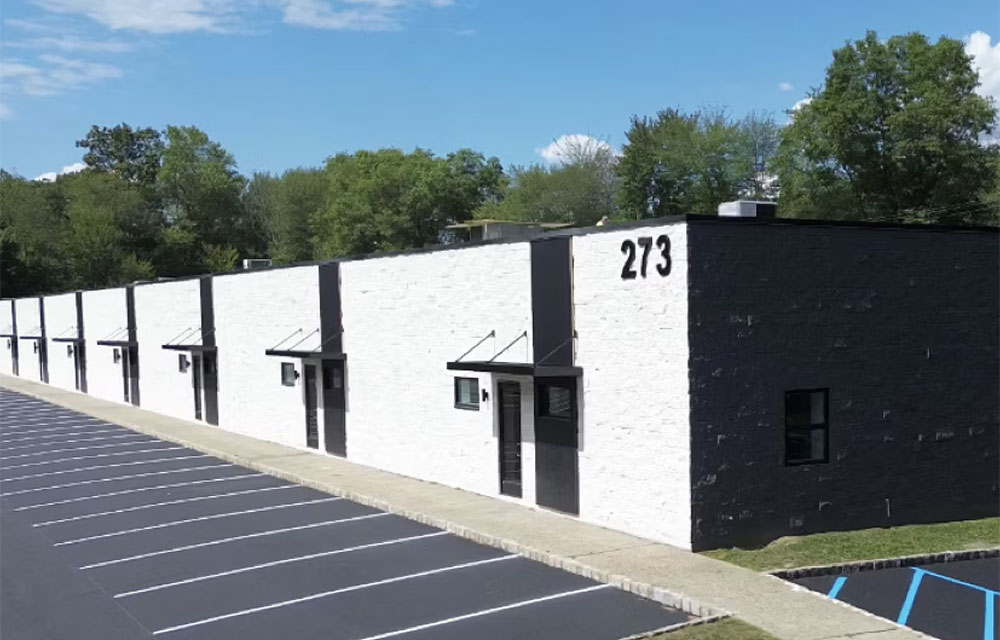
Resource Realty of Northern NJ delivers complete lease-up of 235 Franklin Rd. for Commerce Park Investors
Randolph, NJ Resource Realty of Northern New Jersey (RRNNJ) has completed the lease-up of a 10-unit small-bay industrial property at 273 Franklin Rd., marking the culmination of an investment strategy that began






Quick Hits

Columns and Thought Leadership

A guide to finding the right NYC property management company - by Sanjay Gandhi
Being a small to midsize landlord in NYC is an increasingly demanding endeavor. From navigating complex regulations, increased compliance demands to dealing with tenant issues and remediating violations. It is wise to enlist the assistance of a partner, a professional

Positive forecast for New York’s pro-housing push? - by Philip Butler
New York’s housing crisis remains a hot button topic despite growing consensus that varied and affordable housing is desperately needed statewide. Governor Hochul has recently introduced several initiatives to overcome N.Y.’s anti-housing

New York’s streets are full again, and the retail numbers prove it - by Noam Aziz
Walk down any New York block this year and you can feel it. The sidewalks are crowded, the storefronts are lit, and the energy that defines this city is back at full volume.

Hunt commercial real estate question and answer: Fortune 500 wisdom - by David Hunt
Yes, there are lessons to be learned from the largest companies in America when comes to managing your real estate. But the decision to buy or lease real estate may not be one of
.gif)