



News:
Brokerage
Posted: September 20, 2016
Faith-based development transactions: Bringing a different dynamic to affordable housing - by Osei Rubie
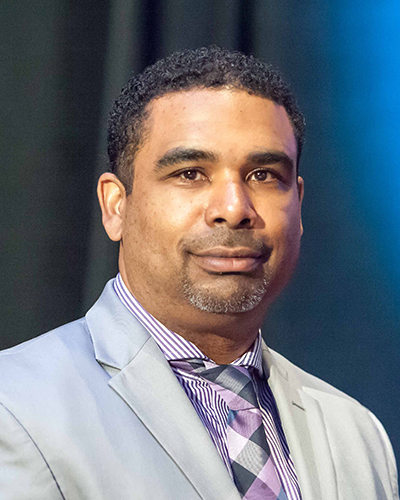 Osei Rubie, National Standard Abstract
Over a 10-year career, most recently as founder of National Standard Abstract having closed $142 million in the first year, I’ve worked on a variety of development transactions including faith-based development. The participation of faith-based organizations (FBO), those with affiliations to religious groups or supported by religious groups, brings a different dynamic to affordable housing development. These transactions raise unique considerations for the parties to each deal that require creative solutions.
How is a faith-based transaction different?
The organizations involved vary. Churches, coalitions of congregations, and entities within larger parent organizations can be the FBO in a faith-based transaction often in partnership with a developer. Experienced lenders, title companies, development partners, and the FBOs themselves cite an understanding of the needs, the structures, and the decision making processes of the FBO as critical to a successful project. Malcolm Punter, president and CEO of Harlem Congregations for Community Improvement says of FBOs, “Navigating the variety of systems within these groups require advanced knowledge of the framework of the religious order in general and the specific faith based group in particular down to the faith leader and its governing body on the local and national levels, if applicable.” Dawanna Williams, founder and principal of for-profit developer Dabar Development and chair of the New York Real Estate Chamber (NYREC), expands on this point, “It’s imperative that the developer determine upfront the consent process for any development transaction...When working with FBOs, all parties to the team, e.g. banks, architects and consultants, will need extra time to consider the needs of the FBO. While private developers create a product without input from the general public, an FBO must consider and may need consent from it’s members. The members’ needs or requests can have a major impact on the transaction.” That impact often translates directly to structure and makeup of the project. The needs of the organization as whole must also be considered. For example, that need may be for the development project to align with the organization’s mission. Lawrence Hammond, VP and mortgage officer with The Community Preservation Corporation, which finances development projects, highlights this potential challenge, “A challenge faced by faith-based development is the ability to achieve mission-oriented focus …that benefits both the faith community and its constituents. A successful development project...must endeavor to create value that achieves both financial and mission oriented goals.” In addition to their internal processes, as non-profit organizations FBOs are required to submit any potential sale or lease of assets to the state attorney general’s office for legal review. A challenge can also arise in the negotiating process. Many organizations own land in areas desirable for development but do not have the resources or capacity to develop the land without engaging a development partner. This makes the transaction attractive to both parties. Understanding the value of that land, current and future, helps to optimize the FBO’s negotiating position. That value maybe difficult to ascertain.
Benefits
FBOs are typically concerned with maintaining stable communities. To that end, affordable development projects increase the stock of housing available within the community. A community facility may also be included in the development project. The income from the project may be used to improve the institution’s own facilities. That income may even be made a long term income source by structuring the deal as a ground lease rather than an outright sale, allowing the FBO to retain ownership of the land while the developer improves on the land as a tenant. Malcolm Punter offered this scenario as an example “One transaction, in which I was advising a faith-based group, started out as the faith leader selling the property out-right to the developer. After discussing his options, the faith based leader decided that their best option was a land lease...The faith based group achieved a long term income stream they would not have gotten access to in a sale.” Gabriel Gerbi, an attorney with the firm Goldstein Hall, points to the ground lease as a solution to the issue of church and state separation that can also arise. Because city and state funds cannot be used directly to build religious institutions, he explains, “A potential solution...is to either front load the lease payments on a ground lease or to use the acquisition proceeds to strictly build the faith-based institution.” Developers, for their part, can realize significant tax benefits and gain access to both desirable development sites and more funding sources by partnering with faith-based organizations. Williams said, “Since FBOs often provide social services in neglected communities, their development projects may be eligible to receive philanthropic or government sponsored grants to help facilitate their mission.” Developers benefit from the reduction in overall cost.
Osei Rubie is the founder & president of National Standard Abstract LLC, Floral Park, N.Y.
Tags:
Brokerage
MORE FROM Brokerage

200E20TH sells out in Gramercy, penthouse A closes out sales at the CetraRuddy-designed condominium residences
Manhattan, NY 200E20TH, the CetraRuddy-designed architectural masterwork that brought a curved, contemporary sensibility to Gramercy’s Beaux-Arts streetscape, has





 (2).gif)

Columns and Thought Leadership

Hunt CRE question and answer: Choosing a real estate agent - by David Hunt
First, we will only work with one agent exclusively. The primary reason is that we want that agent to legally represent our client’s interests. In New York State, a real estate agent has a fiduciary

The art of investing in real estate - by Thomas Donovan
Real estate investing is as much an art as it is a skill. No one can time the market, or the factors that drive it, perfectly. Location, zoning, size, transportation, and neighborhood density give you a baseline for

Hunt commercial real estate question and answer: Fortune 500 wisdom - by David Hunt
Yes, there are lessons to be learned from the largest companies in America when comes to managing your real estate. But the decision to buy or lease real estate may not be one of

New York’s streets are full again, and the retail numbers prove it - by Noam Aziz
Walk down any New York block this year and you can feel it. The sidewalks are crowded, the storefronts are lit, and the energy that defines this city is back at full volume.
.gif)