



News:
Brokerage
Posted: March 25, 2013
Executive of the Month: Jacob Frydman, chairman and CEO of United Realty Partners, started his career at age 14
How did you start your career in real estate?
When I was 14, I began working for my father's real estate company reading contracts and proposals to him related to a few housing projects he was constructing. My affinity for real estate only grew from there and I bought and sold my first property during my senior year of high school.
Can you name some of the most notable real estate investments?
I'm most proud of the development of Two Dag Hammarskjold Plaza, an office-condominium building at 866 Second Ave. in Manhattan that is used by foreign governments as missions for the United Nations. Another notable milestone was the acquisition and redevelopment of the old Global Crossing Building in Manhattan into a mixed-use property. The property at 636 11th Ave. was purchased in 2003 for $46.2 million and sold in 2005 for $91.2 million.
Why did you establish United Realty Partners?
To help investors capitalize on smart and sound commercial real estate opportunities. At the company we believe that real estate will always be an important component of a diversified investment portfolio, and we look forward to taking advantage of opportunities in the market that benefit our clients.
What is United Realty Partners' mission?
We want to identify opportunistic real estate investments, develop creative strategies for adding value and effectively implement those strategies to generate exceptional returns while simultaneously providing a consistent and stable cash flow.
What are the dangers that face investors with the significant spending cuts due to the sequestration?
The automatic spending cuts will have a downward spiral on our economy. There is a multiplier effect on our economy that is the result of both job creation and curtailment. Each new job brings additional spending which in turn creates additional jobs, which in turn creates additional spending and so on. The reverse is true with the loss of jobs. Each lost job will have a multiplier effect on the economy and reduce overall spending, causing the loss of additional jobs, and so on. Depending on the depth of the cuts, and the number of jobs which will be lost, the automatic cuts which will result from sequestration, will have a negative effect on our economy, and will likely cause the Fed to increase its stimulus by printing even more money. While that stimulus might increase values of the stock market in the short-term, it will likely lead to further devaluation of our currency, further pressure on increasing interest rates, and ultimately a potentially double digit inflationary cycle.
How has the Fiscal Cliff issue impacted commercial real estate?
The Fiscal Cliff, or more appropriately the reason we are dealing with the Fiscal Cliff, will undoubtedly impact our economy in such a way that opportunities will abound in commercial real estate. Interest rates should increase dramatically. Rising interest rates will have a significant impact on commercial real estate. Rising interest rates will bring inflation. They will also bring with them increasing rates. Properties, such as triple net lease single tenant assets which have very nominal rent increases, typically lower than CPI, will start to act and look like bonds, diminishing in value with rising interest and capitalization rates. By contrast, inflation protected real estate, those assets with underlying leases that adjust for inflation, should be able to maintain or increase in value.
Jacob Frydman is chairman and CEO of United Realty Partners, New York, NY
Tags:
Brokerage
MORE FROM Brokerage
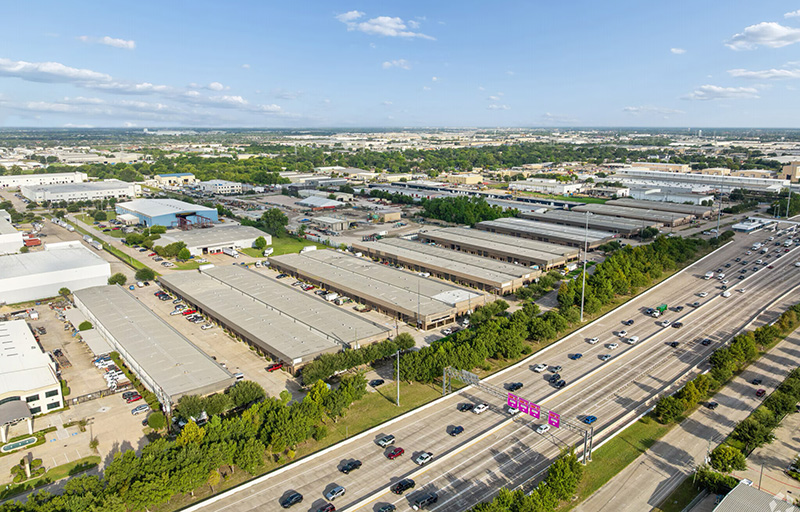
Simi Capital enters Texas with acquisition of 359,000 s/f small-bay industrial portfolio in Northwest Houston
Houston, TX Simi Capital acquired a three-property, 359,000 s/f small-bay industrial portfolio. The transaction, completed in a joint venture with Decker Capital, marks Simi


 (2).gif)

Columns and Thought Leadership

A guide to finding the right NYC property management company - by Sanjay Gandhi
Being a small to midsize landlord in NYC is an increasingly demanding endeavor. From navigating complex regulations, increased compliance demands to dealing with tenant issues and remediating violations. It is wise to enlist the assistance of a partner, a professional

New York’s streets are full again, and the retail numbers prove it - by Noam Aziz
Walk down any New York block this year and you can feel it. The sidewalks are crowded, the storefronts are lit, and the energy that defines this city is back at full volume.

Hunt commercial real estate question and answer: Fortune 500 wisdom - by David Hunt
Yes, there are lessons to be learned from the largest companies in America when comes to managing your real estate. But the decision to buy or lease real estate may not be one of

Hunt CRE question and answer: Choosing a real estate agent - by David Hunt
First, we will only work with one agent exclusively. The primary reason is that we want that agent to legally represent our client’s interests. In New York State, a real estate agent has a fiduciary
.gif)