



News:
Brokerage
Posted: August 12, 2013
Executive of the Month: Adler, president of GFI Management Services; The small, detailed and continuous wins create success
The New York Real Estate Journal recently sat down with Jeffrey Adler, president of GFI Management Services for a question and answer session.
Q: You recently joined GFI Management Services from AIMCO, a Denver-based apartment REIT. What attracted you to this new position at GFI?
A: I have always had a passion for consumer-based service businesses. I worked at Progressive Insurance for 10 years building its brand, and then at AIMCO as chief property operations officer for eight years. I see in GFI a great opportunity to expand throughout the U.S., including the New York metro area, on a strong and growing business with a legacy in multifamily housing. The fact that Allen Gross, founder of GFI, was a property manager himself, has a big impact on the depth and quality of decision making that is rare in a very finance oriented industry. GFI is also a smaller organization than those I have worked with in the past, and that's a real advantage; the decision making process is rapid and intensely personal. The operating scale advantages enjoyed by the larger REITs are now available to everyone through technology vendors, leveling the playing field. At the same time, GFI has a much broader asset class reach, encompassing office, retail, mixed-use, condos, and hotels. This is a significant advantage when thinking about how to add value, and approach an opportunity using a broader perspective. In addition, GFI's various facets, including insurance brokerage, development, commercial real estate brokerage, and residential mortgage banking, enables a much broader cross-sell and cross-fertilization opportunity.
Q: What are your main goals in spearheading the firm?
A: Well first, I believe at GFI we have a goal of investing in growing our business platform by expanding its executive talent pool. I joined the company at the same time that Jennifer McLean, our new chief financial officer, joined and I'm thrilled to work alongside her. The mix of talents from both outside and inside the family ownership really provides a great combination. Initially, my goal is to re-tool the existing operating, asset management, and investment management platforms to increase the level of quantitative analyses and improve asset performance. For example, our Kansas City acquisitions of class A multifamily garden apartments, closed in December 2012, are performing extremely well by applying revenue management principles of unit level price segmentation. We're currently deploying the Yardi operating suite, which will allow us to better manage and track lead data, maximize leasing opportunities and automate our work flow. Right here in New York City, our 1125 Banner Ave. highrise in Sheepshead Bay, Brooklyn is leasing up very nicely at close to Manhattan type rents. In addition, I plan to grow the business by acquiring and managing new assets. We're six months into that effort and things are beginning to bear fruit. As we refine our current operating platform, we'll be expanding it in target markets we've selected to take advantage of some secular shifts in U.S. economic activity that are aligned with our demonstrated skills set. From there, we'll benefit from the cross-fertilization opportunities within each of our lines of business. Another example of this is one of our developments in Kansas City, The Gateway, that combines big box retail with multifamily over small commercial units—something a traditional multifamily developer or acquirer simply couldn't tackle.
Q: How do you feel your background as chief property operations officer will help better GFI's current position?
A: I am a native New Yorker. I left New York to go to Yale, and then never came back, living in DC, Ohio and Colorado. I've operated in about 100 city markets, including New York City rent stabilized apartments, so I have a broad background of the cultural diversity all across North America. I think my experience enables me to translate between New York and non- New York culture and extract the right lessons from each. In addition, both at AIMCO and Progressive, I've run large organizations, re-casted them around a customer driven culture, and built data and scale driven platforms. Specifically, at AIMCO that platform encompassed up to 200,000 units across all types of business lines. I think that gives me a clear road map of where and how I want to take GFI's multifamily platform.
Q: What are some important New York-based projects that GFI has undertaken? What advantages do you bring to these projects?
A: GFI's current multifamily/ residential New York City projects include 144 North 8th St. in Williamsburg, which is a mixed-use condo/ retail project and 1125 Banner Ave., a 102-unit rental property in Sheepshead Bay. For each, we're applying customer driven and data driven tools to improve the customer experience and raise income. The Banner Avenue apartments are really luxury homes and for that I am applying many of the lessons developed in managing luxury apartments in West Los Angeles.
Q: What is GFI's competitive edge in the marketplace and how do you plan to leverage that edge?
A: GFI's biggest advantage is our multi-faceted platform that crosses asset classes and real estate/insurance services. It allows us to bring a broader perspective and level of creativity to the table. GFI also has developed a very broad range of relationships at every part of the capital stack over nearly 30 years as well as a great infrastructure. The combination is pretty amazing.
Q: What advice do you have for property managers and owners trying to reposition their real estate assets?
A: Understand your customers and build your offering around a tightly defined value proposition to that set of customers. Be proud of your value proposition and do not fear to charge for it. Then, operate using data to track every single step in the set of processes that are always being repeated inside a property. Surround yourself with those who have a balanced appreciation for people as well as data - too much weight in either direction will destroy value. It may not be rocket science but it is the small, detailed and continuous wins stacked together that create success.Jeffrey Adler, GFI Management Services
Tags:
Brokerage
MORE FROM Brokerage
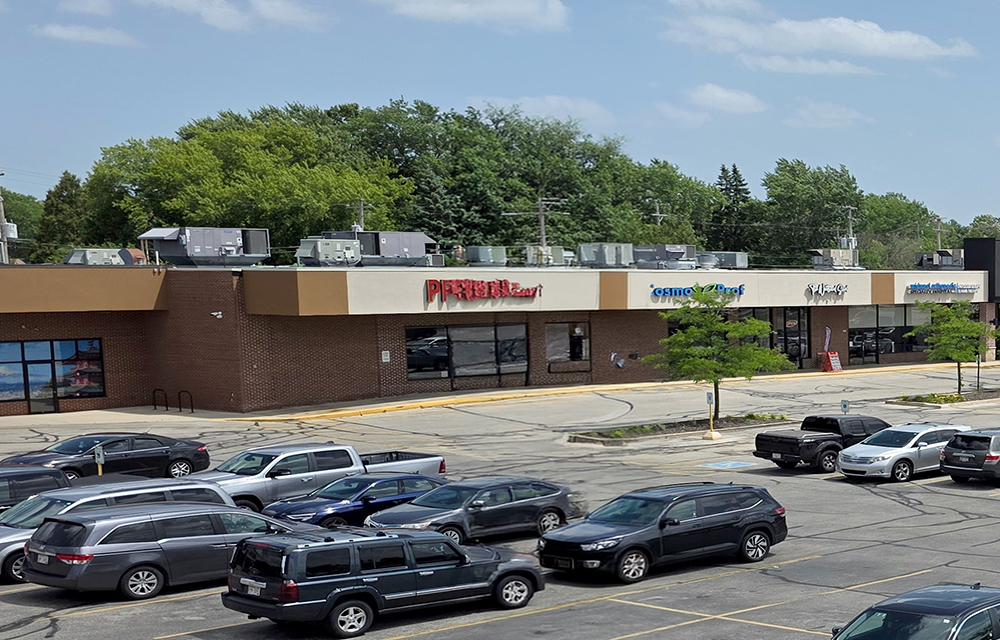
United Properties Corp. expands Wisconsin and Illinois retail presence adding 200,000 s/f
West Allis, WI United Properties Corp. completed two retail acquisitions totaling $27.4 million across Illinois and Wisconsin, adding 205,000 s/f of shopping center space to its portfolio





 (2).gif)

Columns and Thought Leadership

New York’s streets are full again, and the retail numbers prove it - by Noam Aziz
Walk down any New York block this year and you can feel it. The sidewalks are crowded, the storefronts are lit, and the energy that defines this city is back at full volume.

Hunt commercial real estate question and answer: Fortune 500 wisdom - by David Hunt
Yes, there are lessons to be learned from the largest companies in America when comes to managing your real estate. But the decision to buy or lease real estate may not be one of

A guide to finding the right NYC property management company - by Sanjay Gandhi
Being a small to midsize landlord in NYC is an increasingly demanding endeavor. From navigating complex regulations, increased compliance demands to dealing with tenant issues and remediating violations. It is wise to enlist the assistance of a partner, a professional

Positive forecast for New York’s pro-housing push? - by Philip Butler
New York’s housing crisis remains a hot button topic despite growing consensus that varied and affordable housing is desperately needed statewide. Governor Hochul has recently introduced several initiatives to overcome N.Y.’s anti-housing
.gif)